Minnesota Practice Permit Test 5

4.7 out of 5 (481 votes)
80% Passing score
20 Questions
4 Mistakes allowed
Minnesota’s Class D knowledge test is the written permit test for a standard passenger-vehicle instruction permit, and it asks about a broader slice of driving than people usually expect. The official study source is the Minnesota Driver’s Manual, which means the real test can move from road signs and right-of-way rules into winter driving, school buses, emergency vehicles, basic equipment requirements, and then—without much ceremony—DWI laws and alcohol-related driver responsibility. This MN permit test practice gives you 20 questions with a strong focus on DUI and DWI rules, including BAC limits, impaired-driving consequences, and the kinds of safety judgment Minnesota wants new drivers to understand before they are out there dealing with icy roads, rural highways, Minneapolis traffic, and all the ordinary weirdness of actual driving. It is not meant to replace the manual. It is meant to make the manual less foggy, especially when the rule sounds simple in print but gets tested in a slightly different way. The real Minnesota Class D knowledge test has 40 questions, and a passing score is 32 correct answers, or 80%. So this shorter MN practice permit test works best as a serious check on whether the material is sticking. Miss a question here, and the explanation matters more than the miss itself. That is where the useful learning happens, irritating as that sounds. Hints can help when you are stuck, and detailed answer feedback can keep you from memorizing the wrong thing with great confidence, which is a surprisingly common study method and not a great one. There is also the licensing-process stuff, which is not exciting, but it does affect your day. Before getting an instruction permit, applicants need to pass the knowledge test and a vision screening. Minnesota’s standard is at least 20/40 vision, with or without corrective lenses, plus at least 105 degrees of peripheral vision. Turn signals only help if you can see them before they are already next to you, so yes, the eye check has a point. Minnesota allows one knowledge-test attempt per day. The first two Class D knowledge-test attempts do not carry the state retest fee, but later attempts can cost $10, and third-party testing locations may add their own administration fee. You can test at a state exam station, online with an eligible proctor, or through an approved third-party site, though interpreter access and language options may depend on where you test. Study the manual, use the practice test, and treat any “DMV cheat sheet” shortcut with suspicion. The real advantage is knowing the rules well enough to recognize them when they show up wearing different wording.
FREE DMV Practice Test App
Study for your Minnesota permit test or driver’s license with the NextDoorDriving app. 700+ DMV questions and answers, 100% free!
Download on the App Store

Sample Minnesota Permit Test Questions

Question 1

Why are alcohol-impaired drivers a concern to everyone using the road?

  1. A. They endanger only themselves
  2. B. Their impaired abilities can place other road users at risk
  3. C. They are a concern only for law enforcement
  4. D. They are harmless when traveling slowly

Correct answer: B. – Their impaired abilities can place other road users at risk

Alcohol can impair judgment, vision, reaction time, steering, perception, coordination and attention. These effects interfere with the driver’s ability to respond safely to vehicles, pedestrians and changing road conditions. Crashes involving impaired drivers kill and injure people throughout Minnesota, not only the impaired drivers themselves.

Source: Minnesota Driver’s Manual — Ch. 8, “Impaired drivers” and “Types of effects”
Question 2

A Lane Ends sign appears, and the white lane dashes on your right become shorter and thicker. What should you expect?

  1. A. An intersection immediately ahead
  2. B. A railroad crossing
  3. C. A required left turn
  4. D. The right lane will end and traffic must merge

Correct answer: D. – The right lane will end and traffic must merge

Shorter, thicker white dashes indicate that a lane is ending. A Lane Ends warning sign shows that two lanes will become one and identifies which lane must merge. Watch surrounding traffic and merge safely before the lane disappears.

Source: Minnesota Driver’s Manual — Ch. 5, “Warning signs—Lane Ends”, Minnesota Driver’s Manual — Ch. 5, “Pavement markings—White lines”

Question 3

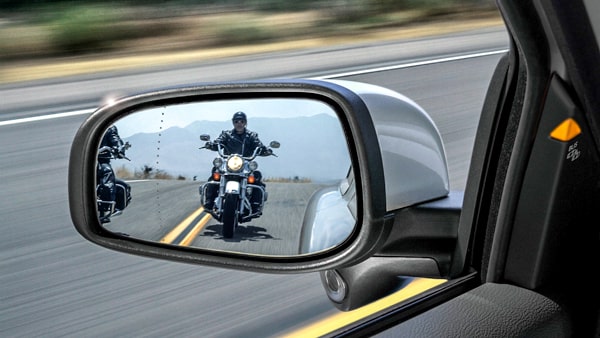
Why should you check carefully for motorcycles before changing lanes?

Look carefully for motorcycles before you change lanes because:
  1. A. Motorcycles may never use a full traffic lane
  2. B. Their smaller size makes their speed and distance harder to judge
  3. C. Motorcycles always have priority over other vehicles
  4. D. Motorcycles are not required to obey lane markings

Correct answer: B. – Their smaller size makes their speed and distance harder to judge

Motorcycles are smaller than cars, making their presence, speed and distance more difficult to judge. Check mirrors and blind spots carefully before moving into another lane. Motorcyclists generally obey the same traffic laws as other drivers and are entitled to use the roadway.

Source: Minnesota Driver’s Manual — Ch. 4, “Sharing the road with motorcyclists”

Question 4

Which situation describes a lawful U-turn in Minnesota?

  1. A. Near a curve where approaching drivers can see you from only 500 feet away
  2. B. Near a hill crest where your vehicle is visible for only 800 feet
  3. C. Where the movement is safe, does not interfere with traffic and is not prohibited by a sign
  4. D. Through an emergency crossover marked with a No U-Turn sign

Correct answer: C. – Where the movement is safe, does not interfere with traffic and is not prohibited by a sign

A U-turn may be made only when it can be completed safely and without interfering with traffic. It is prohibited near a curve or hill crest when approaching drivers cannot see the turning vehicle from at least 1,000 feet away. A driver also may not use a controlled-access highway crossover marked to prohibit U-turns.

Source: Minn. Stat. § 169.19, subd. 2 — Turning, Starting, and Signaling, Minn. Stat. § 169.305, subd. 1(b) — Controlled-Access Rules and Penalties

Question 5

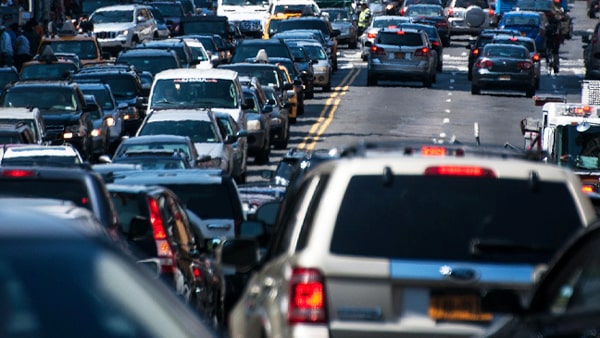
Which choice is most effective at reducing the number of automobiles contributing to traffic congestion?

Choose the situation that would have the best impact on reducing traffic congestion:
  1. A. Using public transportation
  2. B. Following other vehicles more closely
  3. C. Reducing the space between traffic lanes
  4. D. Driving alone during the busiest travel periods

Correct answer: A. – Using public transportation

Minnesota law identifies alleviating automobile congestion as one purpose of public transportation assistance and transportation management. Public transportation allows multiple travelers to share a vehicle rather than each adding a separate automobile to traffic. Tailgating does not reduce congestion and creates an unsafe following distance.

Source: Minn. Stat. § 174.21(3) — Public Transportation Assistance and Transportation Management; Purpose

Question 6

May a Minnesota driver go around a lowered railroad crossing gate when no train is visible?

  1. A. Yes, after stopping and looking both ways
  2. B. Yes, if the vehicle will not touch the gate
  3. C. Yes, when another vehicle crosses first
  4. D. No, a driver may not pass a lowered crossing gate

Correct answer: D. – No, a driver may not pass a lowered crossing gate

A driver must stop and remain stopped when a crossing gate is lowered to warn of a train or other on-track equipment. Driving past the lowered gate is prohibited even if the driver cannot see a train. Wait until the warning devices are no longer activated and the crossing can be cleared safely.

Source: Minn. Stat. § 169.26, subd. 1(c) — Special Stops at Railroad Crossing, Minnesota Driver’s Manual — Ch. 4, “Railroad crossing warning devices”