Montana DMV Practice Test

4.8 out of 5 (52 votes)
80% Passing score
20 Questions
4 Mistakes allowed
Montana gives drivers plenty of room, but the written knowledge test still expects you to know the details. Not the vague “I’ve been around roads before” kind of knowing, either. The official Class D knowledge test is based on the Montana Driver Manual from the Motor Vehicle Division, and it reaches into the everyday rules that actually matter: traffic laws, road signs, right-of-way, signals, pavement markings, safe driving habits, impaired driving rules, and how to share the road without turning ordinary traffic into a small public event. This Montana DMV practice test is meant to make that material easier to work with before you sit for the real exam. The official Montana Class D knowledge test has 33 multiple-choice questions, and you need 27 correct answers to pass. That means six misses, then the cushion is gone. So, yes, the math is simple, but the preparation should be a little more serious than skimming the manual once and assuming the rest will feel obvious when it counts. The practice questions keep the focus where Montana keeps it: standard warning signs, regulatory signs, highway laws, traffic signals, pavement markings, safe decisions, and the kind of judgment that gets tested because it also gets used. And Montana driving does bring its own extra layer. Rural highways run long. Gravel roads do not behave like city streets. Winter weather can turn a normal drive into a slower, more deliberate version of the same trip. Wildlife, mountain passes, and those stretches where the next service stop is not especially close all make the rules feel less like trivia and more like something you would rather already understand. For teen applicants, the knowledge test fits into Montana’s Graduated Driver Licensing program, with learner permit options depending on age and state-approved traffic education. Adults usually need to pass the written test before moving on to the road test. New residents with a valid out-of-state license generally need to start the Montana licensing process within 60 days, and having the proper hard-copy license can matter if you want to avoid extra testing. You can retake this Montana DMV permit practice test as often as you need, which is useful in the plainest possible way. Each round gives you another look at the signs, laws, and wording patterns that tend to expose weak spots. Use it to tighten up your knowledge, get comfortable with the multiple-choice format, and walk into the MT DMV test with fewer loose ends.
FREE DMV Practice Test App
Study for your Montana permit test or driver’s license with the NextDoorDriving app. 700+ DMV questions and answers, 100% free!
Download on the App Store

Sample Montana Permit Test Questions

Question 1

What is the main benefit of maintaining a space cushion around your vehicle?
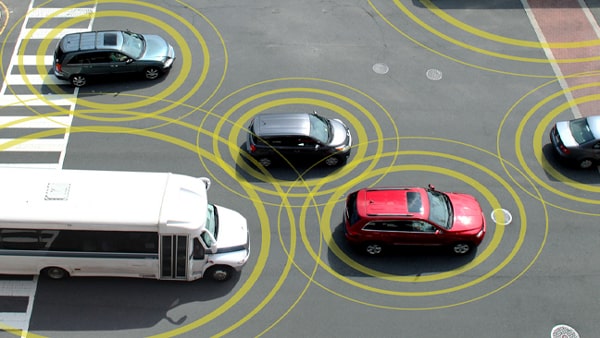
What is the benefit of a "space cushion" around your vehicle?
  1. A It prevents every driver from entering your lane
  2. B It is needed only outside cities
  3. C It gives you more time and room to react
  4. D It allows you to stop monitoring nearby traffic

Correct answer: C – It gives you more time and room to react

The more distance you maintain from other road users, the more time you have to respond to a hazard or mistake. Space ahead helps with braking, while space to the sides provides room to steer or change lanes. Increase the cushion when roads are slippery or visibility is limited.

Source: Montana Driver Manual — Ch. 5, “Sharing Space”
Question 2

If oncoming headlights create glare at night, where should you direct your gaze?

When a car with bright headlights comes toward you at night, you should:
  1. A Toward the center line
  2. B Above the approaching headlights
  3. C Directly below the headlights
  4. D Toward the right edge of the roadway

Correct answer: D – Toward the right edge of the roadway

Do not look directly into bright oncoming headlights. Watch the right edge of the roadway until the vehicle passes, using it as a guide for your lane position. Do not respond by switching on your own high beams because that increases glare and crash risk for both drivers.

Source: Montana Driver Manual — Ch. 5, “Night Driving”, Montana Commercial Driver’s License Manual — § 2.11.5, “Night Driving Procedures”

Question 3

If you must drive in fog, which lights should you use?

  1. A Parking lights only
  2. B High-beam headlights
  3. C Low-beam headlights

Correct answer: C – Low-beam headlights

Use low-beam headlights when driving in fog; fog lights may also be used if the vehicle has them. Reduce speed before entering fog and be prepared for visibility to deteriorate quickly. Parking lights alone are intended for parked vehicles, not for normal driving.

Source: Montana Commercial Driver’s License Manual — § 2.12, “Driving in Fog”, Montana Driver Manual — Ch. 5, “Rain, Fog, or Snow” and “Use Headlights”

Question 4

A dashed white line separating traffic lanes means:

A broken white center line on the roadway means:
  1. A Turning is prohibited
  2. B A reduced speed zone begins
  3. C Passing is prohibited in both directions
  4. D You may change lanes when it is safe

Correct answer: D – You may change lanes when it is safe

White lines separate lanes moving in the same direction. A dashed white line may be crossed to change lanes when the movement can be made safely. Check surrounding traffic and signal before moving into the adjacent lane.

Source: Montana Driver Manual — Ch. 3, “White Lane Markings”

Question 5

Traffic is stopped on the far side of an intersection. Even if your light is green, you should:

  1. A Enter if some cross traffic can pass around you
  2. B Wait until there is enough room to clear the intersection
  3. C Enter because the green light gives you priority
  4. D Proceed only if you are operating a motorcycle

Correct answer: B – Wait until there is enough room to clear the intersection

A driver may not enter an intersection unless there is enough space to travel through without stopping in it. Wait behind the intersection until traffic ahead clears. A green signal permits movement but does not make it acceptable to obstruct crossing traffic.

Source: Montana Driver Manual — Ch. 4, “Right-of-Way”, Montana Driver Manual — Ch. 5, “Intersections”

Question 6

Before moving into another lane, which condition must you verify?

Before changing lanes, you must:
  1. A The movement can be completed safely and the lane is clear
  2. B Your signal has given you the right-of-way
  3. C You are traveling faster than every nearby vehicle
  4. D Traffic behind you has come to a stop

Correct answer: A – The movement can be completed safely and the lane is clear

Before changing lanes, you must determine that the movement can be made safely. Signal, check the rearview and side mirrors, and look over your shoulder for vehicles in the blind spot. Do not leave your lane until there is adequate room; activating a signal does not give you the right-of-way.

Source: MCA § 61-8-328(1) – Driving on Roadways Laned for Traffic, MCA § 61-8-336(1) – Turning Movements and Required Signals, Montana Driver Manual — Ch. 5, “When Changing Lanes”