


Montana DMV Practice Test 2

4.8 out of 5 (47 votes)
80% Passing score
20 Questions
4 Mistakes allowed
This Montana DMV practice test is built for the study phase, before the appointment, before the counter, before anyone is checking documents or asking you to look into a vision-screening device. It gives you 20 multiple-choice questions focused on the road-rule material Montana drivers are expected to know: traffic signals, seat belt requirements, speed limits, right-of-way, safe following distance, and the ordinary driving decisions that do not feel especially dramatic until weather, distance, hills, traffic, or wildlife get involved. Montana roads can make simple rules feel less simple, frankly, and that is part of why practicing with realistic questions is worth doing. The practice test also helps you get comfortable with the format of the official DMV written test. That part matters more than people like to admit. The Montana permit test is not just a memory check where every answer jumps off the page waving at you. Some questions are direct, sure. Others depend on reading the situation carefully and noticing the detail that changes what a safe or legal answer should be. Using a Montana DMV practice permit test gives you a chance to work through that rhythm ahead of time — read, pause, eliminate the answers that are clearly wrong, and then choose the one that actually fits the rule. The official permit test is part of Montana’s knowledge-testing process, handled through MVD driver license exam stations. Applicants may be able to save time with Montana’s online pre-application service, but the permit or driver license process still involves an in-person visit. Montana’s rules allow the highway-laws portion of the exam to be answered orally or in writing, and accommodation resources may be available, including having the knowledge test read aloud by an examiner or approved proctor in certain driver education contexts. Written exams may be taken no more than once per day, so a rushed first try is not exactly ideal. Then there is the licensing process around the test, which is its own bundle of requirements. Applicants must complete document review, testing, vision screening, and issuance steps. The vision screening checks visual acuity, depth perception, and color blindness; glasses or contacts may be worn if you normally use them. Depending on the results, Montana may issue a corrective-lens restriction or add limits such as daylight driving, lower speed limits, or no driving in poor weather. Paperwork is just as important. Montana applicants generally need proof of identity, authorized presence, Social Security verification, and Montana residency. REAL ID requires additional documentation, including two residency documents with a current physical address. For the road test later, bring your learner permit, vehicle registration, proof of insurance, and a vehicle that is safe to test in. Use the practice test for the written exam, but keep the full licensing path in view.
FREE DMV Practice Test App
Study for your Montana permit test or driver’s license with the NextDoorDriving app. 700+ DMV questions and answers, 100% free!
Download on the App Store

Sample Montana Permit Test Questions

Question 1

Even with a green light, when should you wait before entering an intersection?

  1. A When traffic ahead prevents you from clearing the intersection
  2. B When the lane beyond the intersection is open
  3. C Whenever the signal has just changed from red
  4. D Whenever another vehicle is waiting behind you

Correct answer: A – When traffic ahead prevents you from clearing the intersection

Do not enter an intersection unless you can travel through it without having to stop in the intersection. A green signal does not make it safe to proceed when vehicles are blocking the roadway ahead. Wait behind the intersection until enough space opens for your vehicle to clear it completely.

Source: Montana Driver Manual — Ch. 4, “Right-of-Way—Intersections”, Montana Driver Manual — Ch. 5, “Sharing Space—Space to Cross or Enter”
Question 2

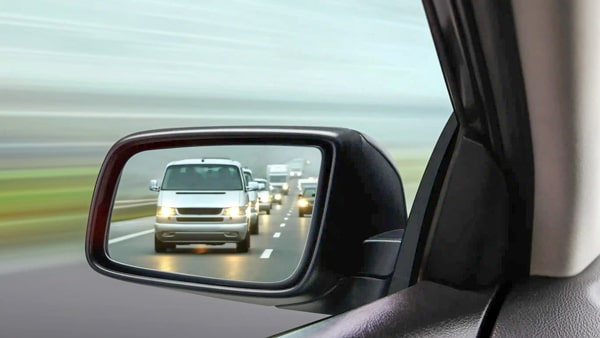
Which behavior is not a safe driving practice?

  1. A Keeping at least a three-second following interval in ordinary conditions
  2. B Fixing your eyes only on the roadway immediately ahead
  3. C Using headlights during rain, fog, or snow
  4. D Maintaining space around your vehicle

Correct answer: B – Fixing your eyes only on the roadway immediately ahead

Staring only at the area immediately ahead limits your awareness of developing hazards. Drivers should scan ahead, to the sides, and behind while avoiding any prolonged look away from the road ahead. A suitable following interval, headlights in poor weather, and a space cushion provide additional time and visibility for responding safely.

Source: Montana Driver Manual — Ch. 5, “Seeing Well—Scanning”, Montana Driver Manual — Ch. 5, “Sharing Space—Space Ahead”, Montana Driver Manual — Ch. 5, “Adjusting to How Well You Can See—Rain, Fog, or Snow”

Question 3

Following another vehicle too closely:

  1. A Is permitted whenever traffic is moving slowly
  2. B Increases the risk of a rear-end crash if the vehicle ahead stops
  3. C Prevents other drivers from entering your lane
  4. D Is the recommended way to reduce congestion

Correct answer: B – Increases the risk of a rear-end crash if the vehicle ahead stops

Montana law prohibits following more closely than is reasonable and prudent after considering vehicle speed, traffic, and roadway conditions. Following too closely may leave too little distance to stop when the vehicle ahead brakes suddenly. Use at least the manual’s three-second interval in ordinary conditions and increase the distance when conditions require more stopping room.

Source: MCA § 61-8-329(1) – Following Too Closely, Montana Driver Manual — Ch. 5, “Sharing Space—Space Ahead”

Question 4

Why should you regularly check traffic behind your vehicle?

Checking traffic behind you:
  1. A To avoid observing the road ahead
  2. B To notice a vehicle following too closely or approaching rapidly
  3. C Only to prepare for backing
  4. D Only when you intend to stop immediately

Correct answer: B – To notice a vehicle following too closely or approaching rapidly

Checking behind helps you recognize a vehicle that is following too closely or approaching too fast. This information gives you time to adjust your driving safely. Rear checks are especially important in heavy traffic and before changing lanes, slowing, backing, or traveling down a long or steep hill.

Source: Montana Driver Manual — Ch. 5, “Seeing Well—Look Behind”

Question 5

Before beginning a left turn across oncoming traffic, how long must you yield?

  1. A Until only one approaching vehicle remains
  2. B Until approaching vehicles are at least 500 feet away
  3. C Unless an approaching vehicle is signaling a right turn
  4. D Until no approaching vehicle presents an immediate hazard

Correct answer: D – Until no approaching vehicle presents an immediate hazard

Montana law requires a left-turning driver to yield to an opposing vehicle that is already in the intersection or close enough to constitute an immediate hazard. After yielding and giving the required signal, the driver may complete the turn. At that point, operators approaching from the opposite direction must yield to the vehicle making the turn.

Source: MCA § 61-8-340 – Vehicle Turning Left at Intersection

Question 6

Which driving error most directly leaves too little room to stop before striking the vehicle ahead?

  1. A Checking the rearview mirror periodically
  2. B Driving in a steady lane position
  3. C Following too closely
  4. D Leaving additional space in bad weather

Correct answer: C – Following too closely

Following too closely reduces the time and distance available to respond when the vehicle ahead brakes or stops. The driver manual identifies this behavior as a cause of rear-end crashes and recommends at least a three-second interval in ordinary conditions. The legally required distance must remain reasonable and prudent for the speed, traffic, and roadway conditions.

Source: MCA § 61-8-329(1) – Following Too Closely, Montana Driver Manual — Ch. 5, “Sharing Space—Space Ahead”