


Nebraska Learners Permit Practice Test 7

4.9 out of 5 (36 votes)
80% Passing score
20 Questions
4 Mistakes allowed
By the seventh practice test, you are usually past the “what is a Stop sign?” stage, which is good, because Nebraska expects more than basic symbol recognition. This Nebraska DMV practice test gives you 20 multiple-choice questions pulled from the Nebraska Driver’s Manual, with the kind of material that tends to separate casual studying from actual readiness: road rules, safe driving judgment, proof of insurance, legal responsibilities, and the small handbook details that are easy to nod along with and then promptly misremember. Not a crisis. Just something worth catching before the DMV catches it for you. The goal here is at least 16 correct answers, but the score is only part of the value. A Nebraska learners practice test is useful because it shows the shape of your knowledge. Maybe you are solid on signs but shaky on permit restrictions. Maybe you remember the big rules and miss the fine print. That is normal, slightly irritating, and fixable. Use the test as a diagnostic tool, then go back through the Driver’s Manual where the missed answers came from instead of just memorizing the correct option and moving on like that will magically hold under pressure. The official Nebraska DMV written test is based on the same manual, which keeps the study target fairly clear. The real test is not supposed to pull material from nowhere; it checks whether you understand the rules Nebraska drivers are expected to follow. Pairing this DMV learner’s permit practice test with a drivers ed course, handbook review, or another round of practice questions gives you a better read on whether you are ready for the official permit test or simply tired of looking at traffic laws. Sadly, those two feelings can look very similar after a while. After that comes the licensing path, and Nebraska’s version has several steps depending on age and situation. The written test can apply to a School Learner’s Permit at 14, a Learner’s Permit at 15, and many first-time Class O applicants age 18 or older. Teen drivers may move through the School Learner’s Permit, School Permit, Learner’s Permit, Provisional Operator’s Permit, and then the Class O license. Along the way, there may be supervised driving requirements, permit-holding periods, nighttime and passenger restrictions, or the choice between a DMV-approved driver safety course and a 50-hour certification form with at least 10 hours after sunset. So this practice test does a fairly specific job: it helps connect the handbook material to the real Nebraska permit test, and then to the licensing steps that come after it. That sounds plain, maybe even too plain, but plain is useful when the paperwork starts multiplying.
FREE DMV Practice Test App
Study for your Nebraska permit test or driver’s license with the NextDoorDriving app. 700+ DMV questions and answers, 100% free!
Download on the App Store

Sample Nebraska Permit Test Questions

Question 1

A round yellow sign displaying a black “X” and the letters “RR” warns of:
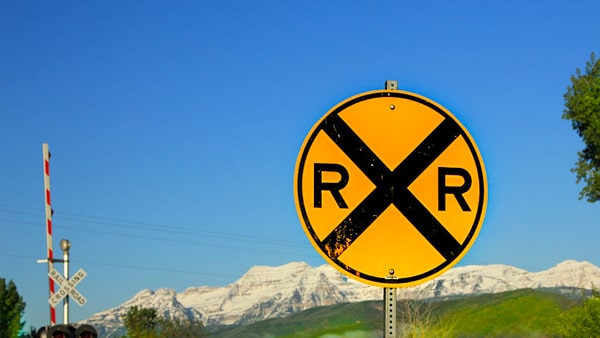
This sign is a warning that you are approaching:
  1. A A highway intersection
  2. B A pedestrian crosswalk
  3. C A railroad crossing ahead
  4. D A blasting area

Correct answer: C – A railroad crossing ahead

The round advance-warning sign tells drivers that a railroad crossing is ahead. Look both ways, listen for trains, yield when required, and be prepared to stop if a train or on-track equipment is approaching. The crossbuck is normally located at the crossing itself.

Source: Nebraska Driver's Manual — § 3B-2, “Sign Shapes”, Nebraska Driver's Manual — § 3B-4, “Warning Signs”

Question 2

When children are present near a park or residential street, which hazard should you watch for?

When you drive through an area where children are playing, you should expect them:
  1. A Children crossing only when an adult directs them
  2. B Children remaining on the sidewalk until all vehicles pass
  3. C A child entering the street between intersections
  4. D Children using only marked crosswalks

Correct answer: C – A child entering the street between intersections

Drivers should expect pedestrians in many locations and watch especially for people crossing in the middle of the street near parks, schools, and residential areas. Children may be harder to notice around parked vehicles or other obstructions. Scan ahead, reduce speed as needed, and be prepared to yield.

Source: Nebraska Driver's Manual — § 6C, “Pedestrians”, Nebraska Driver's Manual — § 4D-4, “Passing Parked Cars”

Question 3

Alcohol can impair which driving abilities?

  1. A Reaction time
  2. B Vision and attention
  3. C Judgment of speed and distance
  4. D All of these abilities

Correct answer: D – All of these abilities

Alcohol can impair reaction time, attention, vision, coordination, and the ability to track objects. It also reduces road-test performance, including steering, braking, speed control, and judgment of speed and distance. Impairment of some driving skills begins below the per se BAC limit.

Source: Nebraska Driver's Manual — § 2A, “Alcohol, Drugs, and Driving”

Question 4

When may a motorist enter or cross a marked bicycle lane?

  1. A Whenever traffic in the regular lane is congested
  2. B When needed for a permitted turn or property access after yielding to bicyclists
  3. C Whenever no bicycle is immediately visible
  4. D Any time the motorist activates a turn signal

Correct answer: B – When needed for a permitted turn or property access after yielding to bicyclists

Nebraska's manual states that bicycle lanes are designated for bicyclists and motorists may not use them as ordinary travel lanes. A motorist may cross or enter one when necessary for a turn, another appropriate lane, parking access, or private-property access. Before doing so, verify that the lane is clear, yield to approaching bicyclists, and signal the maneuver.

Source: Nebraska Driver's Manual — § 3C, “Bike Lanes”, Nebraska Driver's Manual — § 6B, “Bicyclists”

Question 5

Which statement about safety belts is correct?

  1. A They are useful only at highway speeds
  2. B An air bag makes wearing a safety belt unnecessary
  3. C They should be unfastened when driving near water
  4. D When properly fastened, they improve crash protection

Correct answer: D – When properly fastened, they improve crash protection

Properly fastened safety belts provide crash protection, and air bags do not replace them. Nebraska generally requires the driver and each front-seat occupant to wear a properly adjusted and fastened occupant-protection system, subject to statutory exceptions. A violation is a traffic infraction carrying a $25 fine, with no court costs or driver's-license points assessed.

Source: Neb. Rev. Stat. § 60-6,270 – Occupant protection system; three-point safety belt system; use required; when; exceptions, Neb. Rev. Stat. § 60-6,272 – Occupant protection system; three-point safety belt system; violation; penalty, Nebraska Driver's Manual — § 2B, “Air Bags – Child Restraints and Seat Belts”

Question 6

Which methods may drivers use to communicate their movements or warn of hazards?

  1. A Turn signals before turning or moving between lanes
  2. B The horn as a reasonable warning
  3. C Four-way flashers during an emergency roadside stop
  4. D All of these methods

Correct answer: D – All of these methods

Nebraska requires an appropriate signal before turning or moving right or left, including a continuous signal for at least the final 100 feet. A horn may be used as a reasonable warning but not for unnecessary or unreasonably loud noise. The driver's manual also instructs motorists to activate four-way flashers during an emergency roadside stop.

Source: Neb. Rev. Stat. § 60-6,161 – Turning or moving right or left upon a roadway; required signals; signals prohibited, Neb. Rev. Stat. § 60-6,285 – Horn; requirements; prohibited acts, Nebraska Driver's Manual — § 4F-1, “Emergency Roadside Stop”