Nevada DMV Practice Test 2

4.8 out of 5 (707 votes)
80% Passing score
20 Questions
4 Mistakes allowed
A good Nevada DMV practice test should feel close enough to the real thing that you start noticing where the traps are, but not so stiff that studying turns into punishment. This one gives you 20 focused questions covering the material Nevada drivers are actually expected to know: seat belt rules, road signs, pavement markings, right-of-way habits, traffic safety, and the kind of everyday driving judgment that does not always look complicated on paper, but still catches people when they skim. Because this Nevada DMV permit practice test is untimed, you can treat it like a proper study session instead of a race. Read the question, think through the answer, and—slightly boring but important—pay attention to the answers you almost chose. That is usually where the useful studying happens. The point is not just to click through familiar-looking questions. It is to sharpen the parts of your knowledge that still feel a little soft before you sit for the official DMV permit test. The real Nevada permit knowledge test is the Class C, non-commercial written knowledge test administered by the Nevada Department of Motor Vehicles. It is based on the Nevada Driver’s Handbook, so the official exam can pull from traffic laws, highway signs, pavement markings, safe driving practices, defensive driving, DUI laws, rules of the road, and licensing requirements. The official test has 25 multiple-choice questions. You need 20 correct answers to pass, which means an 80% score. Miss 6, and the test can stop there. Get 20 right, and it can stop there too. So the margin is not huge, even if the format looks simple. This Nevada practice DMV permit test is useful for more than one kind of applicant. Teens can apply for a Nevada instruction permit at age 15½ and must pass the written knowledge test first, with applicants under 18 also needing to satisfy Nevada school attendance requirements. Adults 18 and older who are getting licensed for the first time generally need the vision, knowledge, and skills tests, though an instruction permit is optional for adults. New residents may face different requirements depending on age, license status, and where the previous license was issued. Use this DMV learners permit practice test alongside the Nevada Driver’s Handbook, not instead of it. That sounds like the official line, and, fine, it is—but it is also the practical one. The handbook gives you the rules. The practice test shows you whether those rules are actually sticking.
FREE DMV Practice Test App
Study for your Nevada permit test or driver’s license with the NextDoorDriving app. 700+ DMV questions and answers, 100% free!
Download on the App Store

Sample Nevada Permit Test Questions

Question 1

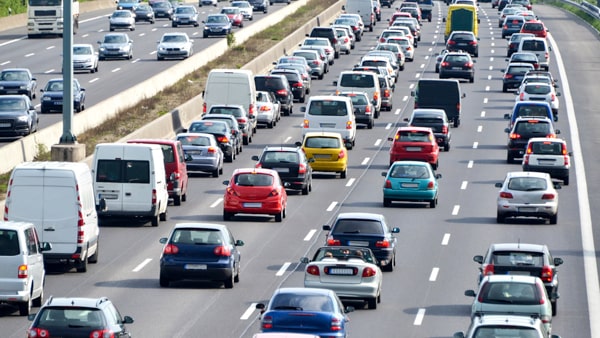
Why should you maintain a cushion of open space around your vehicle when possible?

Should you try to keep a "space cushion" around your vehicle whenever possible?
  1. A It provides time and room to respond to changing traffic
  2. B It reserves part of the freeway for your vehicle
  3. C It prevents other drivers from entering your lane
  4. D It is useful only when driving on city streets

Correct answer: A – It provides time and room to respond to changing traffic

Adequate space gives you more time to recognize a hazard, brake, or choose another safe path. The handbook recommends a safe following interval and a lane position that provides room to maneuver. State law also prohibits following another vehicle more closely than is reasonable and prudent for the speed, traffic, and highway conditions.

Source: NRS 484B.127(1) — Following too closely, Nevada Driver’s Handbook — Driving Safely, “Defensive Driving Tips”

Question 2

According to the Nevada Driver’s Handbook, how far in advance should you signal before changing lanes on a freeway?

When changing lanes on a freeway, you should:
  1. A At least 300 feet
  2. B Only after beginning to cross the lane line
  3. C Only when another vehicle is beside you
  4. D No signal is needed if the lane appears open

Correct answer: A – At least 300 feet

The handbook instructs drivers to signal 300 feet before changing lanes on a highway or freeway. A signal communicates your intended movement but does not establish that the next lane is clear. Check the mirrors, look over your shoulder for vehicles in the blind spot, and move only when traffic is clear.

Source: Nevada Driver’s Handbook — Driving Safely, “Lane Changes”

Question 3

A five-sided traffic sign is used to warn drivers about:

This road sign means:
  1. A A stop sign ahead
  2. B A school zone or school crossing
  3. C A nearby shopping area
  4. D A sidewalk closed to pedestrians

Correct answer: B – A school zone or school crossing

A pentagon-shaped sign identifies a school zone or school crossing. Its distinctive shape helps drivers recognize the warning quickly, even before they can see every detail on the sign. Slow down as required by posted controls and watch carefully for children and crossing activity.

Source: Nevada Driver’s Handbook — Driving Safely, “Signs” and “School Areas”

Question 4

What do red raised pavement reflectors facing your vehicle indicate?

  1. A A busy intersection is ahead
  2. B A stop sign is ahead
  3. C You are traveling in a prohibited direction
  4. D A passing zone begins

Correct answer: C – You are traveling in a prohibited direction

Raised pavement markers may show red to traffic moving in the wrong direction. Seeing the red faces of these markers warns that you may have entered a one-way roadway, ramp, or lane against the lawful traffic flow. Stop in a safe location and correct your direction without creating another hazard.

Source: NAC 408.411 — Adoption by reference of Manual on Uniform Traffic Control Devices, Manual on Uniform Traffic Control Devices, 11th ed., Rev. 1 — § 3B.14, “Raised Pavement Markers—General”

Question 5

What should you do when the traffic lights at an intersection are not operating?

  1. A Remain stopped until the lights are repaired
  2. B Wait for a police officer before moving
  3. C Stop, yield as required, and proceed cautiously
  4. D Drive through at your normal speed

Correct answer: C – Stop, yield as required, and proceed cautiously

The Nevada handbook requires drivers to come to a full stop when traffic-control lights are not working. Yield to pedestrians and to vehicles that have already stopped or are within the intersection. Proceed cautiously only after determining that it is your turn and the path is clear.

Source: Nevada Driver’s Handbook — Driving Safely, “Signals”

Question 6

A steady downward green arrow displayed over a traffic lane means:

This green arrow on a lane use control signal means that:
  1. A You may drive in the lane beneath the arrow
  2. B The lane is closed to traffic
  3. C You have unconditional right-of-way at the next intersection
  4. D You must immediately merge into that lane

Correct answer: A – You may drive in the lane beneath the arrow

A downward-pointing green arrow permits drivers to use the lane over which the signal appears. It identifies an open lane; it does not require you to merge into it or grant unrestricted right-of-way elsewhere. Continue obeying other signs, signals, and right-of-way rules.

Source: NRS 484B.307(12)(a) — Traffic controlled by official traffic-control devices; signals placed over individual lanes, Nevada Driver’s Handbook — Driving Safely, “Overhead Freeway Signals”