


New Hampshire DMV Practice 4

4.9 out of 5 (141 votes)
80% Passing score
20 Questions
4 Mistakes allowed
New Hampshire is one of those states where the licensing process has a few details people tend to miss, mostly because they expect it to work like every other state. It does not, at least not exactly. First-time non-commercial drivers do not get a standard learner permit in New Hampshire; they practice under the state’s supervised-driving law. So when you use an NH DMV practice test, you are not just warming up for a formality. You are getting familiar with the rules and safety judgment the state expects you to already understand by the time you sit for the New Hampshire DMV written test. This New Hampshire DMV written test practice covers general driving knowledge and puts a clear spotlight on child safety seats, including proper use, installation, and the kinds of everyday situations where people make small mistakes that matter. And, yes, that topic is especially important for parents and caregivers, but it is not limited to them. Any driver who transports children needs to know the basics, and honestly, the basics can get more specific than people remember from casual reading. The DMV permit practice test includes 20 multiple-choice questions, with 16 correct answers needed to pass. The questions are written and reviewed by professional driving instructors, which gives the test a more practical feel than a random quiz pulled together from handbook scraps. After you finish, you can review your answers, check what you missed, and read the explanations and hints. That review step is where a lot of the actual learning happens, because a wrong answer by itself does not teach much. It just sits there, mildly accusing you. For drivers under 18, New Hampshire adds more structure. Applicants must complete a Certification of Additional Supervised Driving showing at least 40 hours of practice, including 10 nighttime hours from one-half hour after sunset to one-half hour before sunrise. A Parent or Guardian Authorization Certificate is also required, and minors who completed driver education out of state need to check with the New Hampshire Driver Education office because the state does not honor or transfer out-of-state driving permits. This NH DMV learners permit practice test can help first-time drivers, renewing drivers, seniors brushing up, and non-US citizen applicants who need to understand the process more carefully. Requirements for non-US citizens vary by immigration status and length of stay, and temporary residents may need an appointment at the Concord DMV office. So, no, this is not just about passing a test. It is about knowing how New Hampshire wants you to drive before you are out there doing it.
FREE DMV Practice Test App
Study for your New Hampshire permit test or driver’s license with the NextDoorDriving app. 700+ DMV questions and answers, 100% free!
Download on the App Store

Sample New Hampshire Permit Test Questions

Question 1

After stopping at a stop line, your view of cross traffic is blocked. What should you do next?

  1. A Wait five seconds and then enter the intersection
  2. B Sound the horn and proceed
  3. C Listen for traffic and proceed without looking again
  4. D Move forward slowly, continue checking, and proceed only when clear

Correct answer: D – Move forward slowly, continue checking, and proceed only when clear

In New Hampshire, first make a complete stop at the required stop line. The driver’s manual permits moving forward after that initial stop while looking both ways and confirming that entry is safe. Continue yielding to pedestrians and to vehicles in or approaching the intersection closely enough to present an immediate hazard.

Source: RSA 265:30, I – Vehicle Entering Stop or Yield Intersection or Highway, RSA 265:31, II – Stop Signs; Yield Signs, New Hampshire Driver’s Manual — § 6, “Pavement Markings—Stop Lines”
Question 2

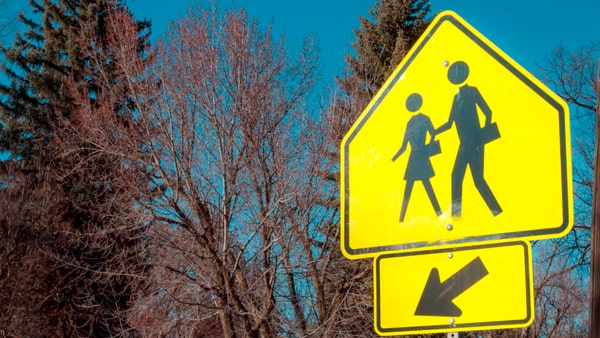
A five-sided warning sign showing people walking identifies:

This road sign means:
  1. A A school zone or school crossing
  2. B A business district
  3. C A sidewalk-only area
  4. D A location where crossing is prohibited

Correct answer: A – A school zone or school crossing

A pentagon-shaped sign identifies a school zone or school crossing. Watch for students who may be entering or crossing the roadway and be prepared to stop when necessary. Drivers must also obey the instructions of an authorized school crossing guard directing traffic.

Source: New Hampshire Driver’s Manual — § 6, “Traffic Signs”, RSA 265:3-a, I – Obedience to School Crossing Guards

Question 3

Which behavior is not a safe visual-search practice?

  1. A Maintaining at least a four-second following interval
  2. B Staring only at the center of the road ahead
  3. C Checking mirrors before changing lanes
  4. D Keeping space around the vehicle

Correct answer: B – Staring only at the center of the road ahead

Fixing your attention only on the center of the road can cause you to miss traffic, pedestrians, and hazards approaching from other directions. Safe drivers keep their eyes moving, look well ahead, search the sides, and check mirrors regularly. A minimum four-second following interval also improves visibility and provides additional time to respond.

Source: New Hampshire Driver’s Manual — § 8, “Visual Search”, New Hampshire Driver’s Manual — § 8, “Space Management”

Question 4

On average, the body can eliminate the alcohol in one standard drink, such as 12 ounces of 5% beer, in about:

  1. A One hour
  2. B One day
  3. C Five minutes
  4. D Five hours

Correct answer: A – One hour

The body generally eliminates alcohol at a rate of about one standard drink per hour. This is only an average; body weight, drinking rate, physical condition, and other factors affect alcohol concentration. Drinking at one drink per hour can still allow alcohol to accumulate, and even one drink may impair judgment or driving ability.

Source: New Hampshire Commercial Driver License Manual — § 2.22.1, “Alcohol and Driving”

Question 5

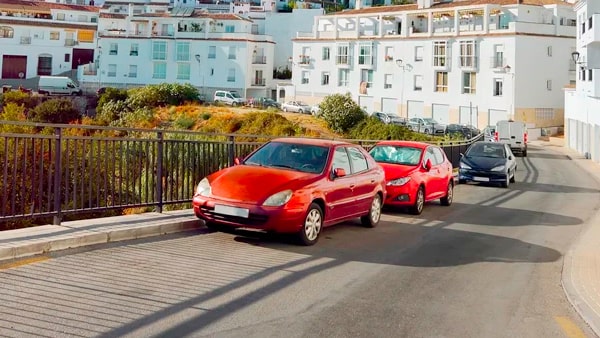
When parking on a hill beside a curb in New Hampshire, where should you turn the front wheels?

When parking your vehicle facing uphill with a curb, you should point your front wheels:
  1. A Toward the curb
  2. B Away from the curb
  3. C Parallel to the curb
  4. D Straight ahead

Correct answer: A – Toward the curb

The state driver’s manual instructs drivers parking on a hill to turn the wheels into the curb. The vehicle should also be placed in Park if it has an automatic transmission or left in gear if it has a manual transmission. Always set the parking brake before leaving the vehicle.

Source: New Hampshire Driver’s Manual — § 7, “Parking”

Question 6

When making a left turn, which oncoming vehicles must you yield to?

  1. A Only vehicles already in the intersection
  2. B Only vehicles traveling above the speed limit
  3. C All vehicles more than 500 feet away
  4. D Vehicles close enough to create an immediate hazard

Correct answer: D – Vehicles close enough to create an immediate hazard

A driver turning left in New Hampshire must yield to an oncoming vehicle that is within the intersection or close enough to be an immediate hazard. Begin the turn only after the required right-of-way has been yielded. The rule also applies when turning left into an alley, private road, or driveway.

Source: RSA 265:29 – Vehicle Turning Left