New Hampshire DMV Practice 6

4.9 out of 5 (92 votes)
80% Passing score
20 Questions
4 Mistakes allowed
New Hampshire’s licensing process has a few quirks, and the big one catches people early: most first-time non-commercial drivers are not handed a standard learner’s permit the way they might be in another state. Eligible new drivers can practice under New Hampshire’s supervised-practice rules, then move toward the driver license process when they are ready. That detail matters because it changes the way “permit test prep” feels here. You are still studying for the knowledge test, still learning the rules, still trying not to get tripped up by an official exam — just inside New Hampshire’s slightly different system. This NH DMV practice test is built around that reality. The official knowledge test is based on the New Hampshire Driver’s Manual and includes traffic laws, road signs, signals, pavement markings, safe driving practices, impaired driving rules, sharing the road, and basic driver responsibility. The real exam is taken in person on a touch-screen computer system. It has 40 multiple-choice questions, and you need 32 correct answers to pass. Miss too many or run out of time, and the system can end the test automatically, which is a very efficient way for the DMV to ruin your momentum. This particular DMV written test practice focuses on turn signal use, which sounds almost too basic until you remember how much confusion one lazy signal can create. New Hampshire driving is full of places where clear communication matters: tight rural roads, snow-slick pavement, busy Manchester intersections, tourist traffic near the Lakes Region, and those winding stretches where another driver’s guesswork is not something you want to depend on. Signaling is not decorative. It tells everyone else what your vehicle is about to do before you actually do it. You’ll answer 20 questions in a lower-pressure format that gives you room to slow down, read carefully, and notice the wording before the official test is sitting in front of you. A score of 16 correct answers is the target for passing this drivers permit practice test. That is not the DMV’s 40-question requirement, but it is a useful checkpoint while you are building toward the real 80% passing score. The knowledge test is only one piece of the licensing process, too. New Hampshire applicants also complete a vision screening and, after passing the knowledge test, a road test. The vision screening checks whether you can read the 20/40 line, and corrective lenses are allowed — though if you use them to pass, you must wear them when driving. First-time applicants should also be ready with identity and residency documents, the completed license application, and any extra paperwork tied to age, REAL ID status, or license type. So, no, this New Hampshire drivers ed practice test is not just a random quiz with a few turn-signal questions sprinkled in. It is a focused rehearsal for one part of a larger appointment-based DMV process, and it gives you a cleaner way to find the small mistakes here, before they cost you time at the counter.
FREE DMV Practice Test App
Study for your New Hampshire permit test or driver’s license with the NextDoorDriving app. 700+ DMV questions and answers, 100% free!
Download on the App Store

Sample New Hampshire Permit Test Questions

Question 1

At a New Hampshire intersection, a police officer directs you through a red light. What must you do?
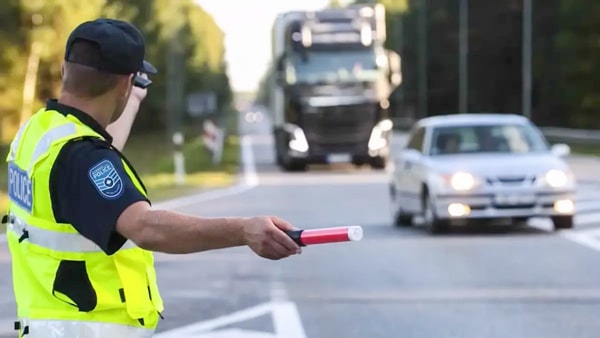
A traffic light is red, but a police officer is telling you to go ahead anyway. What should you do?
  1. A Remain stopped until the light turns green
  2. B Ignore the officer and follow the signal
  3. C Follow the officer’s lawful direction
  4. D Wait for the officer to approach your window

Correct answer: C – Follow the officer’s lawful direction

Drivers must comply with the lawful orders or directions of a police officer authorized to control traffic. This duty applies even when the officer’s direction differs from the indication displayed by a traffic signal. Willfully refusing to comply violates RSA 265:3 and carries a $100 fine.

Source: RSA 265:3, I, II – Obedience to Police Officers
Question 2

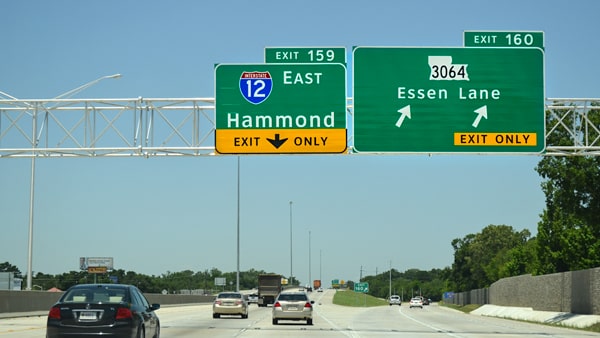
What does a yellow “EXIT ONLY” panel above your lane mean?

If you see this sign above your lane, you:
  1. A The lane cannot be used to reach the exit
  2. B The lane continues through and also serves the exit
  3. C The lane becomes a passing lane after the interchange
  4. D The lane leaves the highway at the exit

Correct answer: D – The lane leaves the highway at the exit

An “EXIT ONLY” panel identifies a lane that becomes an exit ramp rather than continuing along the main highway. A driver who remains in that lane must follow it off the highway. Change lanes safely and early if you intend to continue through the interchange.

Source: New Hampshire Driver’s Manual — “Traffic Signs, Signals and Road Markings,” “Guide Signs”

Question 3

What is a primary safety benefit of wearing a properly adjusted seat belt?

  1. A It prevents traffic crashes
  2. B It decreases the chance of injury or death in a crash
  3. C It eliminates the need for airbags
  4. D It increases the chance of being thrown from the vehicle

Correct answer: B – It decreases the chance of injury or death in a crash

The driver’s manual states that safety belts greatly decrease the chance of injury or death and help prevent occupants from being ejected. New Hampshire requires properly adjusted and fastened restraints for drivers under 18 and passengers under 18, subject to statutory exceptions. Violations carry a $50 first-offense fine and a $100 fine for later offenses.

Source: RSA 265:107-a, I, I-a, III – Child Passenger Restraints Required, New Hampshire Driver’s Manual — § 4, “Using Safety Belts”

Question 4

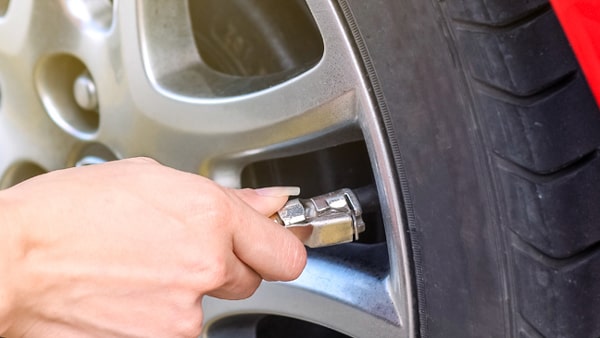
Improper tire inflation can contribute to which problems?

If your tires are not inflated to the pressure recommended by the manufacturer, it may cause:
  1. A Excess heat and a greater blowout risk when underinflated
  2. B Reduced traction when overinflated
  3. C Tire failure and possible loss of vehicle control
  4. D All of the above

Correct answer: D – All of the above

Underinflation can cause excessive tire flexing, heat buildup, and a greater chance of a blowout. Overinflation can reduce the amount of tread contacting the roadway and increase susceptibility to damage. Check tire pressure regularly and use the vehicle manufacturer’s recommended pressure.

Source: New Hampshire Driver’s Manual — § 4, “Vehicle Inspection”, New Hampshire Commercial Driver’s License Manual — § 11.5.2, “Axle Components/Steering Axle—Tires”

Question 5

What should you do first if your accelerator becomes stuck while driving?

  1. A Shift into Neutral and apply the brakes firmly
  2. B Apply the parking brake immediately and fully
  3. C Reach down and pull the pedal upward
  4. D Turn off the ignition before shifting gears

Correct answer: A – Shift into Neutral and apply the brakes firmly

Keep your eyes on the road and shift the transmission into Neutral if the accelerator sticks. Apply the brakes firmly to counter the acceleration, then move off the roadway when it is safe. After bringing the vehicle to a stop, turn off the engine.

Source: New Hampshire Driver’s Manual — “Emergency Situations,” “Stuck Accelerator”

Question 6

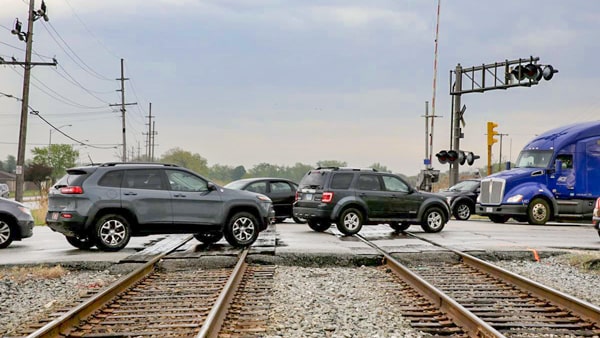
Heavy traffic is backed up beyond a railroad crossing. When may you enter the crossing?

When traffic is slow and heavy and you must cross railroad tracks before reaching the upcoming intersection, you should:
  1. A When the vehicle ahead begins moving
  2. B When no train is currently visible
  3. C When there is enough room beyond the tracks to cross without stopping on them
  4. D When the crossing gates are fully raised, regardless of traffic ahead

Correct answer: C – When there is enough room beyond the tracks to cross without stopping on them

New Hampshire law prohibits stopping, standing, or parking a vehicle on railroad tracks. Before entering a crossing in congested traffic, verify that enough open space exists beyond the tracks for your entire vehicle. Wait before the crossing if traffic ahead could force you to stop on the rails.

Source: RSA 265:69, I(h) – Stopping, Standing or Parking Prohibited in Specified Places, New Hampshire Commercial Driver’s License Manual — § 2.15.5, “Crossing the Tracks”