


New Jersey DMV Practice Test 3

4.8 out of 5 (949 votes)
80% Passing score
20 Questions
4 Mistakes allowed
This New Jersey permit practice test is built for the part of studying where the details start to matter. The NJ DMV permit test is based on the official NJ Driver’s Manual, and this practice version follows that same lane: 20 questions, a passing score of 16 correct answers, and a clear focus on the road rules, signs, safety habits, and licensing requirements that new drivers are expected to know before they move any further through the MVC process. And, yes, New Jersey’s process does have layers. A 16-year-old usually begins with a Special Learner’s Permit through a high school driver education program or licensed driving school, including 6 hours of behind-the-wheel instruction in a dual-controlled vehicle. Applicants who are 17 or older generally move through the Examination Permit route instead. First-time adult applicants age 21 and up also start with an examination permit, but their supervised-practice period before the road test is at least 3 months. Different ages, different timelines, same general expectation: know the rules before the state lets you prove yourself on the road. This NJ DMV practice test also helps reinforce the rules that tend to show up beyond the written exam. New Jersey takes mobile device use seriously, and permit or probationary drivers are not allowed to use handheld or hands-free interactive wireless devices while driving. Seat belts are required. Supervised drivers need a qualified licensed driver in the front seat. Drivers under 21 must complete at least 50 supervised driving hours, including 10 hours at night, before receiving a probationary license. It is a lot to keep in your head at once, frankly, which is why practicing in smaller, test-style chunks makes more sense than trying to absorb everything in one heroic reading session. The Graduated Driver License program is not just paperwork sitting in the background. It shapes the whole path from permit to probationary license to basic license, with passenger limits, nighttime driving restrictions, and, for drivers under 21, those red GDL decals on the front and rear plates. Missing the decal requirement can lead to a fine, so that tiny detail is not as tiny as it looks. Use this New Jersey DMV permit test online as a practical check against the manual. Not a replacement for it, but a sharper way to see what you know, what you almost know, and what needs another pass before test day.
FREE DMV Practice Test App
Study for your New Jersey permit test or driver’s license with the NextDoorDriving app. 700+ DMV questions and answers, 100% free!
Download on the App Store

Sample New Jersey Permit Test Questions

Question 1

Which listed vehicles must stop at railroad crossings even when the warning devices do not indicate an approaching train?

What vehicles must stop at all railroad crossings?
  1. A Pickup trucks
  2. B School buses and buses carrying passengers
  3. C Motorcycles
  4. D Passenger vehicles towing small trailers

Correct answer: B – School buses and buses carrying passengers

The New Jersey manual states that school buses, buses, and vehicles carrying hazardous materials must stop at railroad crossings. A school bus must stop whether or not passengers are aboard, while other buses are included when carrying passengers. Drivers following these vehicles should expect them to stop even when no train warning is active.

Source: New Jersey Driver Manual — “Safe Driving Rules and Regulations,” “Stop at Railroad Crossings”
Question 2

At an intersection, an approaching driver must yield first to:

  1. A A vehicle that has already entered the intersection
  2. B Every vehicle approaching from the right, regardless of position
  3. C A vehicle approaching in the opposite lane in every situation
  4. D Every vehicle approaching from the left

Correct answer: A – A vehicle that has already entered the intersection

A driver approaching an intersection must yield to a vehicle that has already entered it. If two vehicles enter at the same time, the driver on the left must yield to the driver on the right. A driver turning left within the intersection must also yield to sufficiently close traffic approaching from the opposite direction.

Source: N.J.S.A. 39:4-90 – Right of way at intersections

Question 3

Your signal changes from red to green. What should you do before entering the intersection?

  1. A Proceed immediately because green gives you unconditional right-of-way
  2. B Check for conflicts and yield to anyone still lawfully in the intersection
  3. C Proceed because pedestrians and cross traffic must move out of your way
  4. D Proceed without checking if you are traveling straight

Correct answer: B – Check for conflicts and yield to anyone still lawfully in the intersection

A green indication permits traffic to proceed, but it does not eliminate conflicts already in the intersection. New Jersey requires a driver facing green to yield to vehicles and pedestrians lawfully within the intersection or an adjacent crosswalk. Check in every direction and begin moving only when the path is clear.

Source: N.J.S.A. 39:4-105 — Color system; New Jersey Driver Manual — Safe Driving Rules and Regulations, “Stopping Regulations”

Question 4

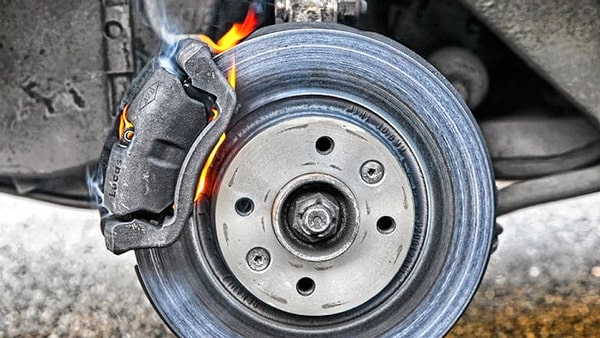
If conventional brakes fail while you are driving, which response is recommended?

If you experience brake failure while driving, you should:
  1. A Shift to a lower gear and look for a safe place to stop
  2. B Pump the brake pedal; if necessary, carefully use the parking brake
  3. C Pull safely off the roadway and call for assistance after stopping
  4. D All of the above

Correct answer: D – All of the above

For conventional disc-and-drum brake failure, shift to a lower gear and pump the brake pedal fast and hard several times to try to restore pressure. If that fails, apply the parking brake while holding its release so you can ease off if the rear wheels lock. While slowing, select a safe place off the roadway, stop, and call for help.

Source: New Jersey Driver Manual — Defensive Driving, “Vehicle Failure—Brake Failure”

Question 5

At an uncontrolled New Jersey intersection, where may a pedestrian have the right-of-way?

  1. A Only inside a crosswalk controlled by a traffic signal
  2. B In either a marked crosswalk or an unmarked crosswalk at the corner
  3. C Only where crosswalk lines are painted
  4. D Only while a green traffic signal is displayed

Correct answer: B – In either a marked crosswalk or an unmarked crosswalk at the corner

At an uncontrolled intersection, a crosswalk may exist even without pavement markings. Drivers must stop as required for pedestrians in marked crosswalks and yield to pedestrians in unmarked crosswalks at intersections. Traffic signals or an officer control movement at regulated crossings. Pedestrians may not suddenly enter the path of a vehicle that is too close to yield or stop.

Source: N.J.S.A. 39:4-36 — Driver to yield to pedestrians, exceptions; violations, penalties, New Jersey Driver Manual — Sharing the Road with Others, “Pedestrians”

Question 6

Even when traffic law gives you the right-of-way, what is the safest response to an immediate conflict?

  1. A Accelerate to establish your priority
  2. B Be prepared to yield rather than force the issue
  3. C Stop and wave every other road user through, even without a conflict

Correct answer: B – Be prepared to yield rather than force the issue

Right-of-way rules establish who should proceed first, but they do not guarantee that every road user will follow the rule. The driver manual says motorists should always be prepared to yield. If another vehicle or pedestrian enters your path, slowing or stopping is safer than insisting on priority.

Source: New Jersey Driver Manual — Safe Driving Rules and Regulations, “Yielding the Right-of-Way”