


New Jersey MVC Practice Test 5

4.8 out of 5 (721 votes)
80% Passing score
20 Questions
4 Mistakes allowed
This New Jersey MVC practice test is the fifth test in our series, and it goes straight into one of the more serious areas of the NJ DMV permit test: alcohol, impairment, and DUI rules. The test includes 20 questions covering BAC limits, the penalties for driving under the influence, and the way alcohol affects reaction time, coordination, judgment, and decision-making. Some of it may sound familiar at first, which is exactly where people get a little too comfortable. New Jersey expects drivers to know the law, but also to understand the reason behind it — because impairment is not just a legal topic, it is a driving-safety topic with real consequences attached. You can take this DMV permit practice test online whenever studying actually fits your day. Use a phone, tablet, or computer; sit down for a full review or work through a few questions when you have a quiet minute. That flexibility matters more than people admit, because most permit test prep does not happen in one perfect, organized study session. It happens in pieces. A few questions here, a missed answer there, then another pass through the material until the weak spots stop looking so weak. For adult first-time drivers, this NJ DMV driving test practice also fits into a bigger licensing path. In New Jersey, an applicant age 21 or older must obtain an examination permit, provide the required identity and residency documents, pass the knowledge test and vision test, complete at least 3 months of supervised driving practice, schedule and pass the road test, receive a probationary license, drive unsupervised for 1 year, and then upgrade to a basic license. It is a lot when written out like that — maybe more than anyone wants to read in one breath — but the important part is simple: the knowledge test comes early, and it matters. Adult applicants should also know that the 6-hour behind-the-wheel training course is not required for first-time drivers age 21 or older. That requirement belongs to the Special Learner’s Permit route for 16-year-olds. Still, this DMV learners permit practice test is not a replacement for the New Jersey Driver Manual or real supervised practice. It is a focused study tool for the NJ MVC knowledge test, built to help you review the rules, catch gaps in your understanding, and walk into the official exam with fewer surprises.
FREE DMV Practice Test App
Study for your New Jersey permit test or driver’s license with the NextDoorDriving app. 700+ DMV questions and answers, 100% free!
Download on the App Store

Sample New Jersey Permit Test Questions

Question 1

If you are already inside an intersection when an emergency vehicle approaches with its siren and warning lights, you should:
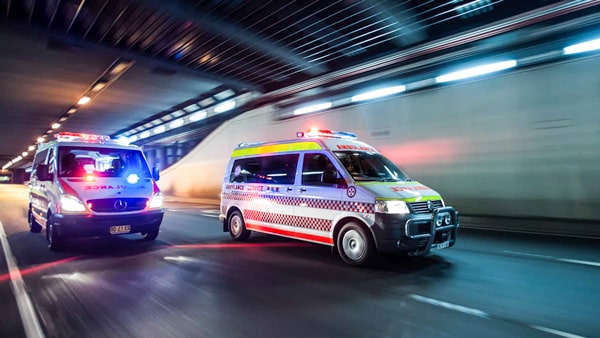
When you hear the sirens or see the red emergency lights of a closely approaching emergency vehicle, you must:
  1. A Accelerate and follow the emergency vehicle
  2. B Stop immediately inside the intersection
  3. C Clear the intersection, then pull right and stop
  4. D Reverse to the nearest curb

Correct answer: C – Clear the intersection, then pull right and stop

Do not stop and block an intersection. Continue through it, then move as close as possible to the right-hand curb or roadway edge and stop. Remain there until the emergency vehicle passes unless a police or traffic officer directs you to do something else.

Source: N.J.S.A. 39:4-92 — Authorized emergency vehicles; clearance for; following or parking near

Question 2

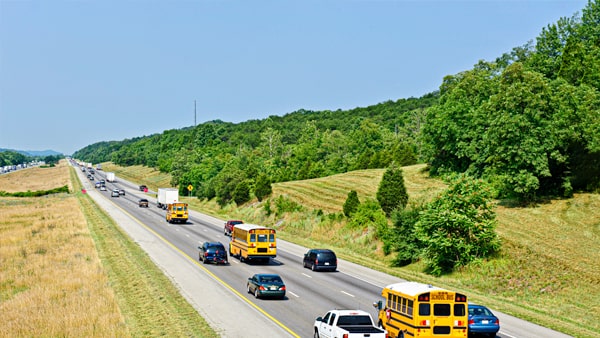
In New Jersey, a school bus stops with flashing red lights on a four-lane road separated only by a four-foot paved strip. What must opposite-direction traffic do?

If a school bus stops to unload children on a four-lane highway, divided by a four-foot paved strip, vehicles traveling in the opposite direction are:
  1. A Stop at least 25 feet from the bus and remain stopped as required
  2. B Stop briefly, then pass at 10 mph
  3. C Move onto the shoulder and pass cautiously
  4. D Continue without stopping

Correct answer: A – Stop at least 25 feet from the bus and remain stopped as required

Drivers in both directions must stop at least 25 feet from a school bus displaying flashing red lights when the roadway is not divided by a safety island or physical traffic-separation installation. Lanes separated only by painted lines or a flat paved strip do not create that physical division. Proceed only when the statutory stopping conditions have ended.

Source: N.J.S.A. 39:4-128.1 — Passing school bus; driving through safety zone, New Jersey Driver Manual (2025) — Ch. 4, “Stop for School Buses”

Question 3

At night, where should you direct your eyes if an approaching driver fails to dim high-beam headlights?

At night, if an oncoming vehicle fails to dim its high-beams, look:
  1. A Toward the roadway centerline
  2. B Slightly toward the right edge of your lane
  3. C Toward the left edge of your lane
  4. D Directly at the approaching headlights

Correct answer: B – Slightly toward the right edge of your lane

Do not stare into the approaching headlights. Look slightly toward the right edge or right-side lane marking while maintaining awareness of the roadway ahead. Do not respond by switching on your own high beams because doing so increases glare and the risk that both drivers will have difficulty seeing.

Source: New Jersey Driver Manual (2025) — Ch. 5, “Night Driving”

Question 4

Before moving left to overtake another vehicle, you should:

  1. A Wait for the other driver to signal permission
  2. B Move left quickly before signaling
  3. C Signal and begin passing only when the maneuver is safe
  4. D Follow closely to shorten the passing distance

Correct answer: C – Signal and begin passing only when the maneuver is safe

Check mirrors and blind spots, signal before changing lanes, and pass only where the maneuver is permitted and can be completed safely. The New Jersey driver manual warns drivers to maintain adequate space rather than following closely. A signal communicates intent but does not by itself give the signaling driver the right-of-way.

Source: New Jersey Driver Manual (2025) — Ch. 5, “Changing Lanes and Passing”

Question 5

What is the primary purpose of a posted minimum speed?

  1. A To prevent unnecessarily slow driving from impeding traffic flow
  2. B To report changing roadway conditions
  3. C To determine whether a traffic signal is needed
  4. D To establish pedestrian crossing times

Correct answer: A – To prevent unnecessarily slow driving from impeding traffic flow

A posted minimum speed establishes the lowest speed normally permitted on that roadway. The rule is intended to prevent slow vehicles from impeding or blocking normal and reasonable traffic movement. A driver may travel more slowly when reduced speed is necessary for safe operation or compliance with the law.

Source: N.J.S.A. 39:4-98.1 — Slow speeds; regulations

Question 6

Your light turns green, but vehicles are still occupying the intersection. What should you do?

  1. A Enter and wait inside the intersection
  2. B Drive around the vehicles if space appears available
  3. C Wait until the intersection clears before proceeding
  4. D Enter immediately because the signal is green

Correct answer: C – Wait until the intersection clears before proceeding

The New Jersey driver manual cautions motorists to check for vehicles still in an intersection after a light turns green. Wait until the crossing area and your path beyond it are clear, then proceed cautiously. Entering immediately could obstruct traffic or place your vehicle in the path of someone finishing a movement through the intersection.

Source: New Jersey Driver Manual (2025) — Ch. 4, “Stopping Regulations”