


New Jersey Road Signs Test 2

4.8 out of 5 (395 votes)
80% Passing score
20 Questions
4 Mistakes allowed
Road signs are a regular part of the New Jersey MVC knowledge test, and they are worth studying on their own because they are some of the easiest questions to miss through overconfidence. A sign may look familiar, but the test often expects you to know the exact meaning of its shape, color, symbol, or instruction. That is where a focused New Jersey road signs practice test can do some real work before your MVC appointment. This NJ road signs practice test includes 20 multiple-choice questions covering the signs and signals New Jersey drivers are expected to recognize: warning signs, regulatory and prohibitive signs, directional signs, traffic signals, sign colors, shapes, and the visual cues that tell you what action to take. It is useful for permit test preparation, license renewal review, or a simple knowledge refresh if it has been a while since you studied the New Jersey Driver Manual closely. The point is not to drag you through the entire licensing process. It is to give the road sign material its own clear, concentrated review. On the actual New Jersey auto knowledge test, applicants answer 50 questions and need 40 correct answers to pass, which is an 80% score. Road sign questions are included in that same written driver test, along with New Jersey traffic laws, safe driving rules, GDL restrictions, DUI and alcohol laws, school bus rules, emergency vehicle rules, and general driver responsibility topics. New Jersey does not publish a separate road-sign-only passing score for the standard auto test, so every missed sign question counts against the same overall result. Small detail, maybe. Still a detail worth respecting. The practice test gives you a hint when a question is not clicking, and if you answer incorrectly, the explanation helps you understand the rule behind the sign instead of just showing the correct choice and leaving it there. After finishing, you can review your answers, find the weak spots, and study with a little more direction before you deal with the official MVC steps—6 Points of ID, proof of New Jersey address, the examination permit, vision screening, appointments, and, if needed, the 7-day wait before retaking a failed knowledge test. Use this New Jersey MVC road signs practice test as targeted preparation. It does not replace the Driver Manual, but it does make the sign portion easier to recognize, understand, and answer correctly when it matters.
FREE DMV Practice Test App
Study for your New Jersey permit test or driver’s license with the NextDoorDriving app. 700+ DMV questions and answers, 100% free!
Download on the App Store

Sample New Jersey Permit Test Questions

Question 1

At an intersection, what does a steady green arrow pointing left permit you to do?
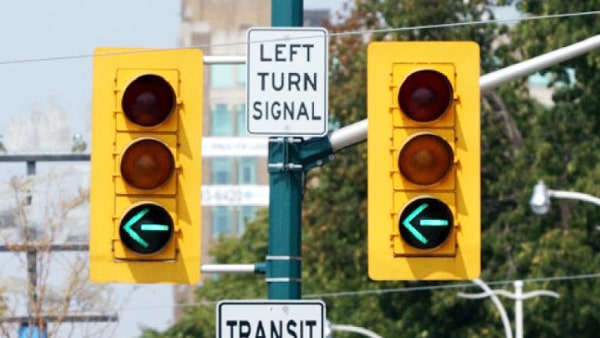
On the intersection, if you see a green arrow pointing to the left, you can:
  1. A Travel in any direction
  2. B Turn left in the direction of the arrow
  3. C Turn left or continue straight
  4. D Turn left only after yielding to opposing traffic with a green light

Correct answer: B – Turn left in the direction of the arrow

A steady green arrow permits movement only in the direction shown. A left-pointing arrow allows the driver to make the indicated left turn, whether the arrow appears alone or with a red signal. The driver must remain cautious and yield to pedestrians in the crossing.

Source: New Jersey Driver Manual — Appendix: Driver Safety, “Traffic Signals”
Question 2

What may you do when facing a steady green traffic light?

  1. A Slow and prepare to stop before entering
  2. B Stop before proceeding through the intersection
  3. C Enter the intersection if the way is clear
  4. D Continue straight but never turn right

Correct answer: C – Enter the intersection if the way is clear

In New Jersey, a steady green light allows a motorist to proceed through the intersection. Vehicles and pedestrians still within the intersection must be given time and space to clear. A driver making a turn must also yield when required and obey any posted turn restrictions.

Source: New Jersey Driver Manual — Appendix: Driver Safety, “Traffic Signals”
Question 3

How must you respond to a flashing yellow traffic signal?

  1. A Merge with traffic
  2. B Proceed cautiously
  3. C Stop for a pedestrian crossing
  4. D Come to a complete stop

Correct answer: B – Proceed cautiously

A flashing yellow or amber signal warns of possible danger. Reduce speed as conditions require, observe the intersection or roadway carefully, and proceed only with caution. Unlike a flashing red signal, it does not require every driver to make a complete stop.

Source: N.J.S.A. 39:4-119 – Flashing Red, Amber Signals, New Jersey Driver Manual — Appendix: Driver Safety, “Traffic Signals”

Question 4

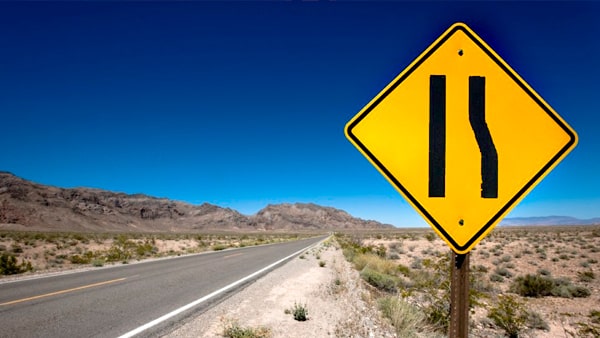
The warning sign shown indicates that:

This sign means:
  1. A The roadway narrows because the right lane ends
  2. B A divided highway begins ahead
  3. C A steep grade begins ahead
  4. D Trucks may enter the roadway

Correct answer: A – The roadway narrows because the right lane ends

This warning sign shows that the right lane ends and the number of available travel lanes will decrease. Drivers in the ending lane must merge into a continuing lane. Before changing lanes, the driver must determine that the movement can be completed safely.

Source: New Jersey Driver Manual — Appendix: Driver Safety, “Traffic Signs, Signals and Road Markings”, N.J.S.A. 39:4-88 – Traffic on Marked Lanes

Question 5

What do orange, diamond-shaped roadway signs usually warn drivers about?

  1. A Workers, equipment, or temporary road conditions ahead
  2. B Food, fuel, or lodging services ahead
  3. C A reported collision at the next intersection
  4. D A mandatory stop at every work-zone sign

Correct answer: A – Workers, equipment, or temporary road conditions ahead

In New Jersey, orange warning signs identify construction, maintenance, and other temporary traffic-control conditions. They may warn of workers, lane closures, lane shifts, flaggers, uneven pavement, or detours. Drivers should remain alert and follow all posted signs and flagger directions.

Source: New Jersey Driver Manual — Defensive Driving, “Construction Zones/Work Zones”, New Jersey Driver Manual — Appendix: Driver Safety, “Traffic Signs, Signals and Road Markings”

Question 6

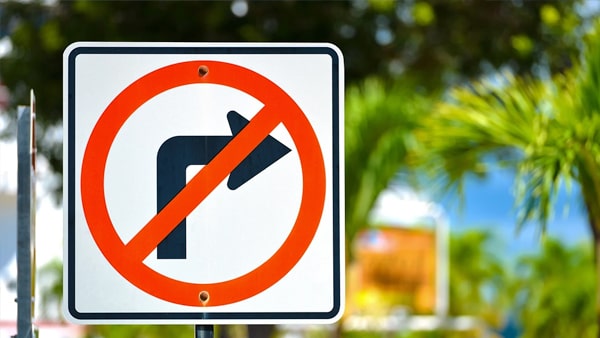
What maneuver is prohibited by the sign shown?

This sign means:
  1. A Making a U-turn
  2. B Turning left
  3. C Turning right
  4. D Making any turn

Correct answer: C – Turning right

The sign shown is a NO RIGHT TURN regulatory sign. A driver may not make a right turn at the location governed by the sign. Other movements are permitted only when they are consistent with lane markings, traffic signals, and any additional signs.

Source: New Jersey Driver Manual — Appendix: Driver Safety, “Traffic Signs, Signals and Road Markings”