New Mexico MVD Practice Test

4.7 out of 5 (160 votes)
80% Passing score
20 Questions
4 Mistakes allowed
A good New Mexico DMV practice test should do more than toss random driving questions at you and call it preparation. This one is aimed at the real written knowledge test, which is handled by the New Mexico Motor Vehicle Division — MVD, if we are being precise — and it keeps the questions centered on the material that actually matters: traffic laws, road signs, signals, pavement markings, right-of-way rules, school zones, speed limits, safe driving habits, and DWI-related rules. Not every question is dramatic. Some are plain. Some are weirdly easy to second-guess. That is exactly why practice helps. The official New Mexico permit test is a multiple-choice exam with 25 questions, and you need 18 correct answers to pass. So, yes, you can miss up to 7, but that margin disappears faster than people expect when the wording starts leaning into small details. This NM DMV permit practice test gives you a calmer place to work through those details before you are dealing with the actual testing setup at an MVD office, an authorized partner, or a contracted driver education provider. The questions cover the same general territory as the real MVD knowledge test. Road signs are worked into the broader exam rather than treated as a separate road-sign-only test, which is worth knowing before you study. You may see regulatory signs, warning signs, traffic signals, lane markings, construction-zone rules, and questions about sharing the road with pedestrians, bicyclists, motorcycles, emergency vehicles, and large vehicles. It is all part of the same pool of knowledge, slightly unglamorous maybe, but important in the way things become important when you are actually behind the wheel. What makes the practice test useful is the feedback. You can take your time, choose an answer, see what you missed, and use the summary at the end to tighten up the weak spots instead of just hoping repetition magically does the job. It is helpful for teens preparing for an instructional permit, adults applying for a first New Mexico license, and drivers who simply need a refresher. The licensing process still has its own pieces, of course. Teens under 18 deal with New Mexico’s Graduated Driver Licensing program, driver education, supervised driving, and a vision screening. First-time applicants ages 18 to 24 must complete the None for the Road DWI Awareness Class. Those are separate requirements. The practice test does one job: it helps you walk into the written exam knowing the rules, the format, and the kinds of answers that can trip you up if you only skimmed the manual.

FREE DMV Practice Test App
Study for your New Mexico permit test or driver’s license with the NextDoorDriving app. 700+ DMV questions and answers, 100% free!
Download on the App Store

Sample New Mexico Permit Test Questions

Question 1

If your engine dies while the vehicle is moving, what is the safest response?

  1. A Turn sharply toward the nearest shoulder
  2. B Stop immediately in your travel lane
  3. C Keep a firm grip on the wheel and steer off the roadway
  4. D Pump the accelerator until power returns

Correct answer: C – Keep a firm grip on the wheel and steer off the roadway

Maintain a strong grip and guide the vehicle toward a safe place off the roadway. Loss of engine power can make the steering difficult, although the vehicle can still be steered. The brakes should also continue to work, but considerably more pressure may be required on the pedal.

Source: New Mexico Driver Manual — “Emergencies: Power Failure” | https://www.mvd.newmexico.gov/wp-content/uploads/2020/12/English-Drivers-Manualver11.19.19.pdf

Question 2

You hear an approaching emergency siren but cannot yet see the vehicle. What should you do?

  1. A Continue until the emergency vehicle becomes visible
  2. B Pull as far right as practicable, clear of an intersection, and stop
  3. C Reduce speed but remain in your lane
  4. D Accelerate and turn at the next intersection

Correct answer: B – Pull as far right as practicable, clear of an intersection, and stop

When a moving emergency vehicle approaches using emergency lights or an audible signal, New Mexico law requires other drivers to yield. Pull parallel to and as close as practicable to the right-hand edge or curb, remain clear of an intersection and stop. Stay there until the emergency vehicle has passed unless a police officer directs otherwise.

Source: NMSA 1978 § 66-7-332(A) – Operation of Vehicles on Approach of Moving Authorized Emergency Vehicles—Operation of Vehicles on Approach of Certain Stationary Vehicles | https://nmonesource.com/nmos/nmsa/en/item/4362/index.do#!fragment/zoupio-_Toc144794063/BQCwhgziBcwMYgK4DsDWszIQewE4BUBTADwBdoByCgSgBpltTCIBFRQ3AT0otokLC4EbDtyp8BQkAGU8pAEJqASgFEAMioBqAQQByAYUcTSKQDCQAGmYFWxanSat35fFQgBhMcXMHaiITRhVCR4jALKEq5ycgpgQnIibAAqBaTklIA | https://realfile.tax.newmexico.gov/Motor%20Vehicle%20Code.pdf, New Mexico Driver Manual — “Rules of the Road: Right-of-Way” | https://www.mvd.newmexico.gov/wp-content/uploads/2020/12/English-Drivers-Manualver11.19.19.pdf

Question 3

What should you do when you become too sleepy to drive safely?

  1. A Move to the right lane and continue
  2. B Depend on coffee to remain alert
  3. C Stop in a safe place and sleep or rest before continuing
  4. D Increase speed to shorten the trip

Correct answer: C – Stop in a safe place and sleep or rest before continuing

Fatigue reduces alertness, slows decision-making and can cause a driver to fall asleep at the wheel. If you become sleepy, leave the roadway and stop in a safe location rather than attempting to push on. Rest or change drivers before continuing the trip.

Source: New Mexico Driver Manual — “Be in Shape to Drive: Fatigue” | https://www.mvd.newmexico.gov/wp-content/uploads/2020/12/English-Drivers-Manualver11.19.19.pdf

Question 4

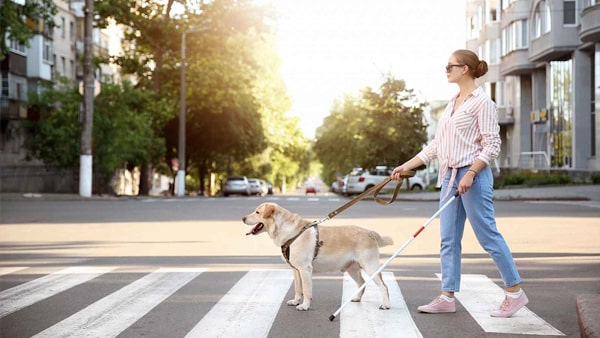
You are preparing to turn right while a pedestrian using a guide dog is about to cross your path. What must you do?

You want to make a right turn at the corner. A pedestrian with a guide dog is at the corner ready to cross the street in front of you. Before making your right turn, you should:
  1. A Turn off the engine and remain stopped
  2. B Give the pedestrian verbal directions
  3. C Wait until the pedestrian has cleared your intended path
  4. D Sound the horn before beginning the turn

Correct answer: C – Wait until the pedestrian has cleared your intended path

A driver approaching a blind pedestrian using a guide dog must take all necessary precautions to prevent injury. In New Mexico, wait until the pedestrian has cleared the path of your turn before proceeding. Avoid sounding the horn merely to announce your presence because it may confuse or frighten the pedestrian.

Source: New Mexico Driver Manual — “Rules of the Road: Right-of-Way” | https://www.mvd.newmexico.gov/wp-content/uploads/2020/12/English-Drivers-Manualver11.19.19.pdf

Question 5

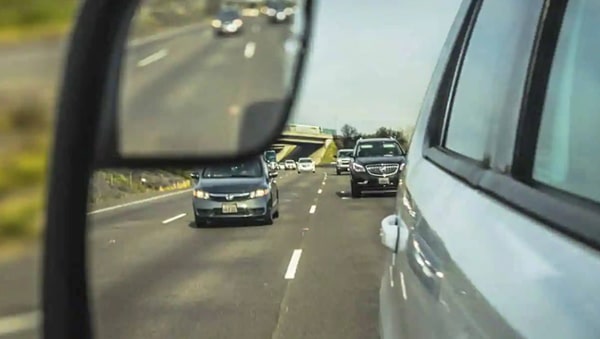
Why should you regularly check the traffic behind your vehicle?

You should check traffic behind you:
  1. A Because rear checks are required only on highways
  2. B To detect a vehicle following too closely or approaching too quickly
  3. C Because mirrors are needed only when slowing
  4. D To determine whether passengers are watching traffic

Correct answer: B – To detect a vehicle following too closely or approaching too quickly

Checking behind helps you notice a driver who is following too closely or approaching at an unsafe rate. This gives you more time to respond to developing conditions. Rear checks are especially important in heavy traffic and before changing lanes, slowing, backing or traveling down a long or steep hill.

Source: New Mexico Driver Manual — “Safe Driving Tips: Scanning—Look Behind” | https://www.mvd.newmexico.gov/wp-content/uploads/2020/12/English-Drivers-Manualver11.19.19.pdf

Question 6

Which color pavement markings separate lanes traveling in the same direction?

  1. A Yellow
  2. B White
  3. C Red
  4. D Black

Correct answer: B – White

In New Mexico, white lane markings separate traffic moving in the same direction. A dashed white line may be crossed for a lane change when it is safe. A solid white line indicates that drivers should remain in their lane unless a special situation requires a change.

Source: New Mexico Driver Manual — “Rules of the Road: Pavement Markings” | https://www.mvd.newmexico.gov/wp-content/uploads/2020/12/English-Drivers-Manualver11.19.19.pdf