New Mexico MVD Practice Test 3

4.9 out of 5 (73 votes)
80% Passing score
20 Questions
4 Mistakes allowed
The real New Mexico DMV permit test is not just a simple little quiz about Stop signs and turn signals. It pulls from NM driving laws, MVD procedures, and the sort of tiny licensing details people usually discover too late, generally while holding paperwork, checking the time, and wondering whether vision screening counts as “testing” in the emotional sense. This practice DMV permit test keeps the focus where it belongs: 20 questions based on current 2026 New Mexico driving rules, including signs, right-of-way, safe following distance, mobile device restrictions, weather judgment, and the everyday choices that show up on I-25, rural highways, Albuquerque traffic, and those long stretches where the road looks simple until your attention starts wandering. A good New Mexico learners permit practice test should make the official NM MVD test feel less like a cold surprise. Not easy, necessarily. Just less weird. The goal is to get used to how the questions are built, how the wording points you toward one answer while making another answer look almost respectable, and how road rules turn into real decisions once you are not just reading them in the manual. New Mexico knowledge testing may happen at MVD field offices, through contracted driver education schools, or on computerized testing systems, so practicing ahead of time is not exactly overpreparing. It is more like giving yourself a decent chance to be calm, which is underrated. And then there is the licensing process around the test. First-time applicants, along with drivers transferring a license from another state or country, must pass a vision test. For a noncommercial license, New Mexico generally requires 20/40 vision or better in at least one eye, and corrective lenses can be used if that is what gets you there. Some applicants may also run into medical or vision review forms, road-test requirements, or teen testing through an MVD-contracted driver education school. The practical stuff matters, too, even if nobody gets excited about it. MVD state offices require appointments, and showing up more than 10 minutes late can get that appointment cancelled. If you need a road test, you provide the vehicle, and it has to be registered, insured, in good working condition, and in the correct license class. Fees are part of the deal as well: $10 for an instructional permit, $18 for a provisional license, and full licenses issued in 4-year or 8-year terms. Use this driving test practice before the real thing, between study sessions, or when you want to find out what you actually know before the MVD does. It is desktop- and mobile-friendly, built around New Mexico-specific rules, and much better than learning the process one mildly inconvenient surprise at a time.

FREE DMV Practice Test App
Study for your New Mexico permit test or driver’s license with the NextDoorDriving app. 700+ DMV questions and answers, 100% free!
Download on the App Store

Sample New Mexico Permit Test Questions

Question 1

At night, when is it appropriate to use high-beam headlights?

  1. A Only for brief periods on rural roads
  2. B Only where there are no streetlights
  3. C When they improve visibility and will not glare into another driver's eyes
  4. D At all times while driving on a highway

Correct answer: C – When they improve visibility and will not glare into another driver's eyes

New Mexico requires low beams within 500 feet of an oncoming vehicle and within 200 feet when following another vehicle. At other times, high beams can provide greater visibility on dark roads. Your speed must still allow you to stop within the distance illuminated by your headlights.

Source: NMSA 1978 § 66-3-831(A)–(B) – Use of Multiple-Beam Road-Lighting Equipment; New Mexico Driver Manual — “Safe Driving Tips: Use Your Lights”

Question 2

On a four-lane street without a center turn lane, where should you begin a permitted U-turn?

  1. A From the center of the roadway
  2. B From the far-left lane
  3. C From the far-right lane
  4. D From whichever lane has the least traffic

Correct answer: B – From the far-left lane

For a permitted U-turn in New Mexico, position your vehicle in the far-left lane unless signs or pavement markings direct otherwise. This begins the maneuver from the lane closest to the turn. Signal, check for approaching traffic and pedestrians, and turn only when it can be completed safely.

Source: New Mexico Driver Manual — “Rules of the Road: Turning”

Question 3

What colors are normally used on a freeway guide sign showing the distance to an upcoming exit?

  1. A Black lettering on yellow
  2. B White lettering on black
  3. C White lettering on red
  4. D White lettering on green

Correct answer: D – White lettering on green

Standard freeway destination and exit-distance signs use a green background with white lettering. These guide signs identify routes, destinations, exits and distances. Brown guide signs are generally associated with recreational, historic or cultural destinations rather than ordinary highway interchanges.

Source: New Mexico Driver Manual — “Rules of the Road: Destination Signs”

Question 4

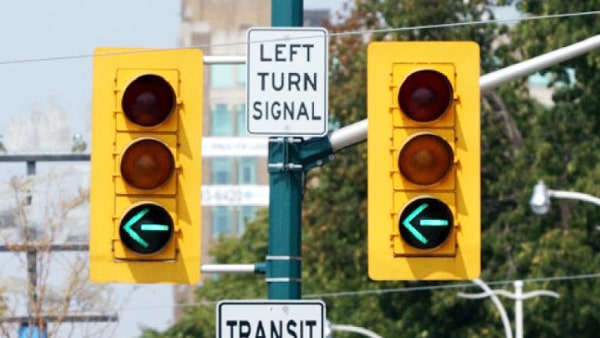
What does a green left-pointing arrow at an intersection authorize you to do?

A green arrow pointing to the left on a traffic light means you may:
  1. A Turn left or proceed straight through
  2. B Stop before turning in the arrow's direction
  3. C Make a protected left turn after ensuring the intersection is clear
  4. D Turn without regard for anyone already in the intersection

Correct answer: C – Make a protected left turn after ensuring the intersection is clear

A green arrow authorizes a protected movement in the arrow's direction. In New Mexico, opposing and crossing traffic should be stopped while the arrow is displayed. Before turning, allow any vehicle or pedestrian already lawfully within the intersection or crosswalk to clear your path.

Source: New Mexico Driver Manual — “Rules of the Road: Traffic Signals”

Question 5

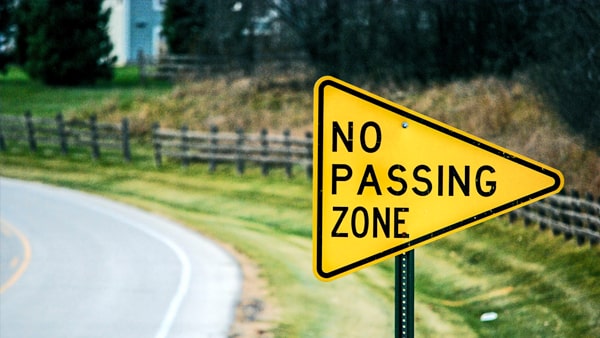
A yellow, pennant-shaped sign posted on the left side of the road identifies:

The sign with this shape and color is a _____________ sign.
  1. A The beginning of a no-passing zone
  2. B A wrong-way entrance
  3. C A railroad crossing
  4. D A required stop

Correct answer: A – The beginning of a no-passing zone

The sideways pennant is used to warn that a no-passing zone begins. It is yellow with black lettering or symbols and is normally placed on the left side of the roadway. Drivers must also follow any solid yellow centerline or other pavement marking that prohibits passing.

Source: New Mexico Driver Manual — “Rules of the Road: No Passing Signs”

Question 6

If vehicle trouble forces you to stop on or beside a roadway, what should you do?

  1. A Turn on the emergency warning flashers
  2. B Leave the vehicle angled toward traffic
  3. C Keep one turn signal flashing
  4. D Use only the parking lights

Correct answer: A – Turn on the emergency warning flashers

Get the vehicle off the roadway and away from traffic whenever possible. The New Mexico manual directs drivers to turn on their emergency flashers when vehicle trouble requires a stop. If the vehicle cannot be moved completely off the road, stop where approaching drivers have a clear view of it and stay out of travel lanes.

Source: New Mexico Driver Manual — “Safe Driving Tips: Use Emergency Signals”