


New Mexico Driving Test Practice 6

4.8 out of 5 (48 votes)
80% Passing score
20 Questions
4 Mistakes allowed
This New Mexico MVD practice test is built for the part of the exam where small details matter more than people expect. It includes 20 multiple-choice questions, and this sixth test puts special emphasis on turn signals: when to use them, how early to signal, and what your signal is supposed to tell the drivers around you. That sounds basic, maybe too basic, but New Mexico’s written test is partly about proving you understand the ordinary rules well enough to apply them without overthinking every move. You will need 16 correct answers to pass this NM learners permit practice test. The official New Mexico knowledge test is longer, with 25 questions, and the passing score is 18 correct. That gives you room to miss 7, but not much room to drift through the material casually. Road signs are included in the main knowledge test, so your study time should not stop at signals alone. Lane position, right-of-way, signs, pavement markings, alcohol-related rules, and basic safe-driving judgment all belong in the same pile, slightly messy as that pile may be. Now, separate from the practice test itself, the licensing process has its own set of numbers to keep straight. A teen can apply for an instructional permit at 15, and the next step, the provisional license, can come at 15½ after holding the permit for 6 months. Before that, New Mexico requires 50 hours of supervised driving practice, including 10 hours at night. The supervising driver must be at least 21 and licensed for at least 3 years, which is the kind of detail people skim once and then have to look up again later. For drivers under 18, driver education is required and must include DWI prevention and education. When you go through the permit or license process, expect the document side too: proof of identity and age, two proofs of New Mexico residency, and proof of driver education enrollment or completion for a teen permit. Vision screening is also part of it, with 20/40 or better in at least one eye as the usual standard. The point of this New Mexico drivers practice test is not to dress up studying as something dramatic. It is simply a steady, online, 24/7 way to rehearse the rules before the real MVD test asks for 18 correct answers and gives you no extra credit for “pretty close.”
FREE DMV Practice Test App
Study for your New Mexico permit test or driver’s license with the NextDoorDriving app. 700+ DMV questions and answers, 100% free!
Download on the App Store

Sample New Mexico Permit Test Questions

Question 1

At night, an approaching driver fails to dim bright headlights. Where should you direct your vision?
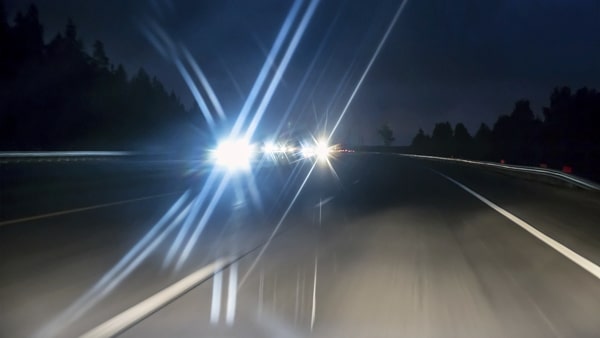
At night, if an oncoming vehicle fails to dim its high-beams, look:
  1. A Toward the roadway centerline
  2. B Slightly right, toward the right lane or edge marking
  3. C Toward the left edge of your lane
  4. D Directly at the approaching headlights

Correct answer: B – Slightly right, toward the right lane or edge marking

Do not look directly into the headlights of an approaching vehicle. Look slightly to the right, using the right lane or edge marking as a visual reference if one is available. Do not retaliate with your own high beams because that increases glare and the risk of a collision.

Source: New Mexico Commercial Driver’s License Manual — § 2.11.5, “Night Driving Procedures—Avoid Glare from Oncoming Vehicles”
Question 2

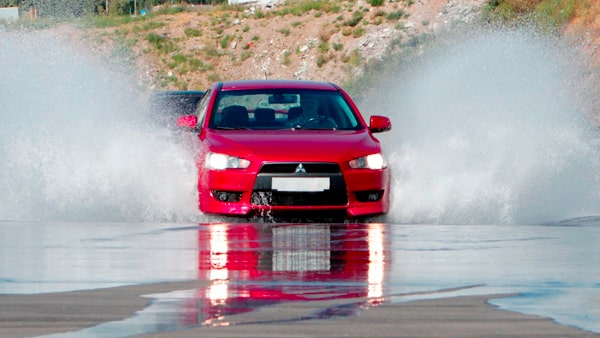
If your tires lose traction on a water-covered roadway, your first response should be to:

If the roadway is wet and your car starts to skid, you should:
  1. A Ease your foot off the accelerator
  2. B Shift immediately into a lower gear
  3. C Pump the brakes firmly and rapidly
  4. D Shift into neutral

Correct answer: A – Ease your foot off the accelerator

If your vehicle begins to hydroplane, gradually ease off the accelerator. Keep the steering wheel straight and avoid braking or turning until the tires regain traction. Abrupt steering or braking while the tires are riding on water can cause the vehicle to skid.

Source: New Mexico Driver Manual — Adjusting to Road Conditions, “Water on the Roadway”

Question 3

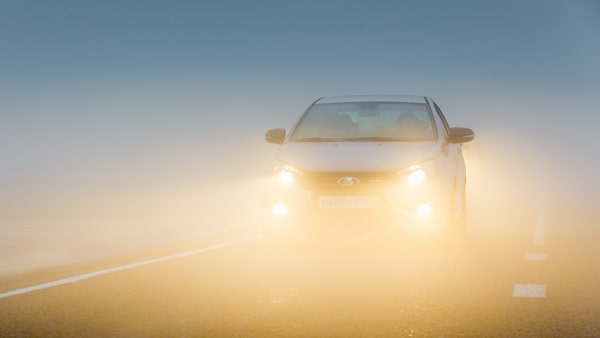
When driving through thick fog, which headlights should you use?

When it is very foggy, you should slow down and turn on your:
  1. A Low-beam headlights
  2. B High-beam headlights
  3. C Hazard flashers instead of headlights
  4. D Parking lights only

Correct answer: A – Low-beam headlights

Use low-beam headlights in fog and reduce your speed for the limited visibility. High beams reflect from the fog, producing glare and making it harder to see ahead. Do not drive using only parking lights; they are intended for parking rather than normal travel.

Source: New Mexico Driver Manual — Driving Safely, “Use Your Lights”, New Mexico Driver Manual — Adjusting to Visibility, “Rain, Fog or Snow”

Question 4

Which practice is an important part of defensive driving?

  1. A Keep your attention fixed on the vehicle directly ahead
  2. B Remain alert and scan ahead, beside, and behind your vehicle
  3. C Depend on other drivers to correct your mistakes
  4. D Wait until the last moment to respond to hazards

Correct answer: B – Remain alert and scan ahead, beside, and behind your vehicle

Safe drivers continually monitor what is happening around their vehicles. Look well ahead, check both sides at places where traffic may cross, and use your mirrors to monitor conditions behind you. Scanning helps identify hazards early enough to slow down, stop, or change position smoothly.

Source: New Mexico Driver Manual — Driving Safely, “Scanning”

Question 5

Without a valid special registration plate or parking placard, a driver:

  1. A May use an accessible space briefly during an emergency
  2. B May park there if the driver remains in the vehicle
  3. C May park in the adjacent access aisle
  4. D May not park in a designated accessible parking space

Correct answer: D – May not park in a designated accessible parking space

New Mexico law prohibits parking in a designated accessible space unless the vehicle displays the required special registration plate or parking placard. Remaining inside the vehicle does not change whether it is legally parked. A vehicle also may not block an access aisle or curb cut serving the space.

Source: NMSA 1978 § 66-7-352.5 – Unauthorized Use—Penalty

Question 6

At an intersection without an operating traffic signal, a driver must yield to a pedestrian in:

  1. A A marked crosswalk only
  2. B Either a marked or an unmarked crosswalk
  3. C A crosswalk beside a stop sign only
  4. D A crosswalk controlled by a pedestrian signal only

Correct answer: B – Either a marked or an unmarked crosswalk

Crosswalks at intersections may be marked or unmarked. When signals are absent or not operating, New Mexico law requires a driver to yield to a pedestrian in the crosswalk. A pedestrian may not suddenly enter the path of a vehicle that is too close for the driver to yield.

Source: NMSA 1978 § 66-7-334(A)–(B) – Pedestrians’ Right of Way in Crosswalks, New Mexico Driver Manual — Pavement Markings, “Crosswalks and Stop Lines”