


New York DMV Practice Test 2

4.7 out of 5 (1168 votes)
80% Passing score
20 Questions
4 Mistakes allowed
This New York DMV practice test starts where your studying should start: with the rules the DMV actually expects you to know. The 20 questions are based on the official New York State Driver’s Manual, so this is not just a loose quiz dressed up with permit-test language. It is DMV permit test practice built around the same subjects that show up on the real NY DMV permit test — traffic laws, signs, right-of-way rules, safe driving habits, and the New York-specific details that tend to separate a decent guess from the right answer. And New York does have details. A lot of them, actually. Drivers can apply for a learner permit at 16, but younger drivers are not stepping into a simple one-rule-fits-everywhere system. If you are under 18, the Graduated Driver Licensing rules matter from the beginning. A junior permit holder generally needs a supervising driver who is at least 21, licensed for the vehicle, and sitting in the front seat. That sounds straightforward until you add the regional rules — upstate New York, New York City, and Long Island each handle junior driving restrictions differently. In the five boroughs, for example, junior permit driving is much tighter, and nighttime driving is not allowed under any circumstances. The NY practice permit test also gives useful attention to passenger and seat belt rules, because those are not throwaway details. Junior drivers face limits on passengers under 21, with exceptions for immediate family and certain supervising adults. Every passenger must wear a seat belt, one person per belt. It is basic safety, yes, but it is also testable, and the DMV is perfectly willing to ask about the part people skim. Before a junior driver can take the road test, New York requires at least 6 months with a learner permit, 50 hours of supervised driving, and 15 of those hours after sunset. A parent or guardian must sign form MV-262, and new drivers need either the DMV-approved 5-hour Pre-Licensing Course or a 48-hour driver education program through a high school or college. Use this New York DMV practice test as a serious final pass through the material. It will not replace driver education, and it should not be treated like a shortcut. But it can make the weak spots obvious before the real DMV written test does, which is the better order of events.
FREE DMV Practice Test App
Study for your New York permit test or driver’s license with the NextDoorDriving app. 700+ DMV questions and answers, 100% free!
Download on the App Store

Sample New York Permit Test Questions

Question 1

You are traveling below the normal speed of traffic in the left lane of a multilane highway. What should you do?

  1. A Move to an available right-hand lane when the movement can be made safely
  2. B Wait until at least five vehicles are behind you
  3. C Remain in the left lane whenever you are below the speed limit
  4. D Activate your four-way flashers and remain in the lane

Correct answer: A – Move to an available right-hand lane when the movement can be made safely

New York requires a vehicle traveling below the normal speed of traffic to use the available right-hand lane or remain as close as practicable to the right edge. Exceptions apply when passing another vehicle or preparing for a left turn. Verify that the lane change can be made safely before moving right.

Source: N.Y. VTL § 1120(b) – Drive on right side of roadway; exceptions, N.Y. VTL § 1128(a) – Driving on roadways laned for traffic
Question 2

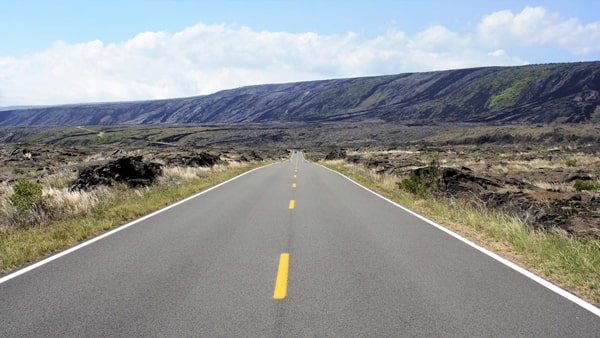
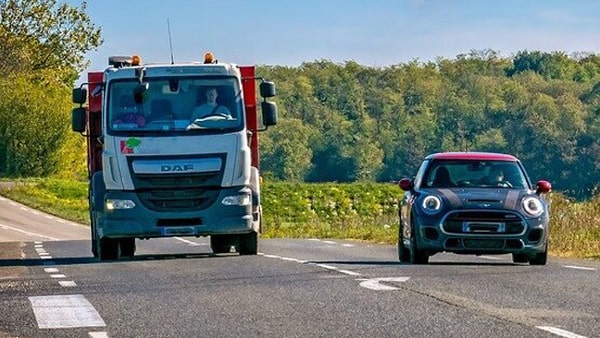
What does a broken yellow centerline indicate?

A broken yellow center line on the roadway means:
  1. A Passing is prohibited in both directions
  2. B You may cross to pass when the maneuver is legal and safe
  3. C A mandatory speed reduction begins ahead
  4. D Turning is prohibited

Correct answer: B – You may cross to pass when the maneuver is legal and safe

A broken yellow line separates traffic moving in opposite directions. You may temporarily cross it to pass when you can do so safely without interfering with traffic and no other passing restriction applies. You must return to the proper lane after completing the pass safely.

Source: New York State Driver’s Manual — Ch. 4, “Pavement Markings—Edge and Lane Lines”, New York State Driver’s Manual — Ch. 6, “How to Pass on the Left”

Question 3

When turning right from a two-way street onto another two-way street, you should normally enter:

  1. A The left lane
  2. B The lane farthest from the right curb
  3. C The right lane nearest the curb
  4. D Any open lane

Correct answer: C – The right lane nearest the curb

The approach and the right turn must be made as close as practicable to the right-hand curb or roadway edge. Unless signs or pavement markings direct otherwise, enter the right lane of the roadway you are joining. Avoid making a wide turn into another lane.

Source: N.Y. VTL § 1160(a), (d) – Required position and method of turning at intersections, New York State Driver’s Manual — Ch. 5, “Turns”

Question 4

Under ordinary New York parking rules, may you park in front of a public or private driveway?

  1. A No
  2. B Yes, for up to 15 minutes
  3. C Yes, if you own the property
  4. D Yes, with the property owner’s verbal permission

Correct answer: A – No

State law prohibits standing or parking a vehicle in front of a public or private driveway. The provision allows only a momentary stop to pick up or discharge passengers, subject to other traffic rules. It does not create exceptions for your own driveway or one belonging to a friend.

Source: N.Y. VTL § 1202(a)(2)(a) – Stopping, standing or parking prohibited in specified places

Question 5

If another driver is following your vehicle too closely, which response is recommended?

  1. A Accelerate above the speed limit to increase the gap
  2. B Move to another lane if possible, or safely pull off and let the driver pass
  3. C Brake suddenly to warn the other driver
  4. D Remain in place and repeatedly tap your brakes

Correct answer: B – Move to another lane if possible, or safely pull off and let the driver pass

The New York manual recommends moving to another lane when possible or reducing speed and pulling off the road safely to let a tailgater pass. Signal when leaving the roadway and when returning. Do not brake suddenly or unnecessarily, because that can increase the risk of conflict or a rear-end crash.

Source: New York State Driver’s Manual — Ch. 8, “Allow Yourself Space”

Question 6

Which signal should you use to indicate the lane change required to pass another vehicle?

Before passing another vehicle you should:
  1. A Flash your headlights
  2. B Activate your four-way flashers
  3. C Use the appropriate turn signal
  4. D Sound your horn continuously

Correct answer: C – Use the appropriate turn signal

Before moving left to pass, verify that the movement can be made safely and use the appropriate turn signal. Check your mirrors and look over your shoulder for vehicles in the blind spot. Signal again before returning to the original lane after you are safely clear of the vehicle passed.

Source: N.Y. VTL § 1163(a), (d) – Turning movements and required signals, New York State Driver’s Manual — Ch. 6, “How to Pass on the Left”