New York DMV Permit Test Practice 4

4.8 out of 5 (712 votes)
80% Passing score
20 Questions
4 Mistakes allowed
This New York DMV practice permit test is for the written knowledge exam — the one you deal with before anyone starts talking seriously about the road test. For most standard passenger vehicle applicants, that means the Class D permit test, while younger drivers are usually looking at the Class DJ learner permit. Either way, the setup is the same: 20 multiple-choice questions, at least 14 correct answers to pass, and, because New York likes a little fine print with its paperwork, at least 2 of the 4 road-sign questions must be right. The questions in this NY DMV practice test are based on the official New York State Driver’s Manual, so the material stays close to what actually matters on test day. Expect rules of the road, safe driving techniques, road signs, alcohol and drug laws, and the sort of “yes, they really might ask that” details hiding in the manual. This version also pays extra attention to child passenger safety, including New York’s rule that children under age 8 must be properly secured in an appropriate child safety seat or booster seat. Not the flashiest topic in the manual, admittedly, but it is exactly the kind of thing that can show up and cost you a point if you skimmed past it. The real NY DMV knowledge test may be taken at a DMV office on a touch-screen testing station or, in some cases, on paper. Applicants under 18 may also have the option to take the permit test online before finishing the DMV office visit, though that does not magically erase the office visit. The DMV still has to review the online exam result and identity documents, and if someone shows up too early, well, they may be taking the test again in person. A tiny bureaucratic trapdoor, but there it is. This free New York DMV permit practice test is useful whether you are a first-time driver, an adult applying for a Class D learner permit, a senior brushing up, or a new resident trying to sort out how New York does things. Hints are there when a question feels annoyingly close, and the explanations after missed answers help turn wrong guesses into actual understanding. Passing the real test takes 14 out of 20, yes — but walking in with a better feel for the wording, the signs, and the rules is the smarter move.
FREE DMV Practice Test App
Study for your New York permit test or driver’s license with the NextDoorDriving app. 700+ DMV questions and answers, 100% free!
Download on the App Store

Sample New York Permit Test Questions

Question 1

What should you do if the accelerator pedal sticks while you are driving?

  1. A Turn off the ignition immediately while moving
  2. B Continue driving until the pedal releases by itself
  3. C Shift into Park and steer sharply off the roadway
  4. D Try to free the pedal; if it remains stuck, shift to Neutral, brake, and move safely off the road

Correct answer: D – Try to free the pedal; if it remains stuck, shift to Neutral, brake, and move safely off the road

First, try hooking your shoe beneath the pedal to free it. If that does not work, shift the transmission into Neutral, use the brakes to slow down, and leave the roadway safely. Do not switch off the ignition while the vehicle is moving because doing so could reduce steering control or lock the steering wheel.

Source: New York State Driver’s Manual — Ch. 10, “Driving Emergencies—Stuck Gas Pedal”
Question 2

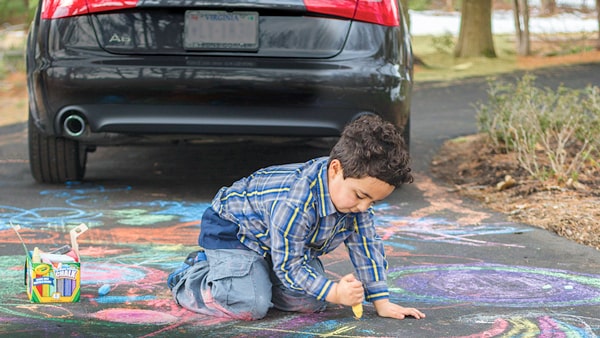
Which statement best describes backing a vehicle?

Backing up your vehicle is:
  1. A It requires no special care when a helper is present
  2. B It requires extra caution because visibility behind the vehicle is limited
  3. C It is hazardous only when driving a large vehicle
  4. D It is prohibited in every location

Correct answer: B – It requires extra caution because visibility behind the vehicle is limited

A driver may back only when the movement can be completed safely without interfering with traffic. Look behind the vehicle and over both shoulders, and use the rear window rather than depending only on mirrors or a camera. Back slowly and continue checking for pedestrians, vehicles, and other obstacles. Backing is prohibited on controlled-access highway roadways and shoulders.

Source: N.Y. VTL § 1211(a), (b) – Limitations on backing, New York State Driver’s Manual — Ch. 7, “Parallel Parking”

Question 3

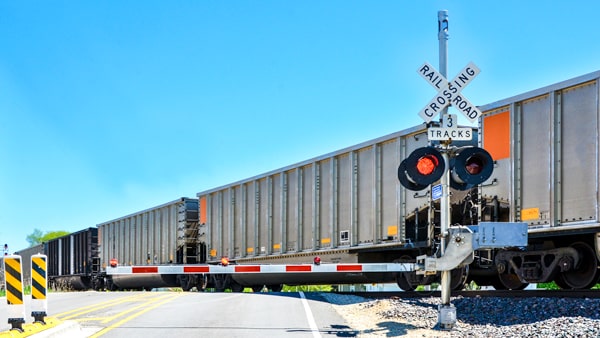
When may you drive around or under a railroad crossing gate that is closed, opening, or closing?

When may you legally drive around or under a railroad crossing gate?
  1. A Never
  2. B When you can see clearly in both directions
  3. C When the gate appears to be malfunctioning
  4. D When you believe you can cross before the train arrives

Correct answer: A – Never

New York prohibits driving through, around, or under a railroad gate while it is closed or moving. A first conviction carries a $250–$400 fine, up to 30 days in jail, or both. A second violation within 30 months carries $350–$750 and up to 90 days; a third or later violation carries $600–$1,000 and up to 180 days.

Source: N.Y. VTL § 1170(b) – Obedience to signal indicating approach of train, New York State Driver’s Manual — Ch. 10, “Railroad Crossings”

Question 4

Which choice most directly supports efficient use of limited roadway capacity?

  1. A Using a bus or other public transportation instead of driving alone
  2. B Removing the space cushion between vehicles
  3. C Driving faster than the posted speed limit
  4. D Preventing bicycles from using public roads

Correct answer: A – Using a bus or other public transportation instead of driving alone

The driver’s manual explains that lanes reserved for buses and high-occupancy vehicles promote efficient use of limited street and highway capacity. Public transportation carries multiple passengers in one vehicle and is consistent with that purpose. Eliminating safe following space or exceeding speed limits creates hazards rather than a safe improvement in traffic flow.

Source: New York State Driver’s Manual — Ch. 4, “Pavement Markings—Diamond Symbol”

Question 5

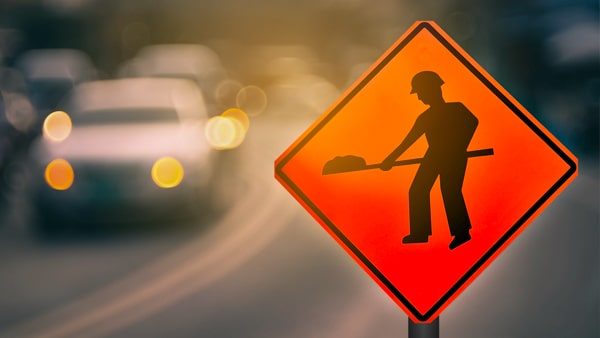
An orange diamond sign showing a person using a shovel means:

This sign means that:
  1. A A volunteer litter-cleanup group is ahead
  2. B Workers may be on or close to the roadway ahead
  3. C A playground is ahead
  4. D A pedestrian crosswalk is ahead

Correct answer: B – Workers may be on or close to the roadway ahead

The Workers Ahead sign warns that personnel may be working on or close to the roadway. Be alert for changed lane patterns, equipment, signs, and directions from flaggers or police officers. Drivers must use an appropriate reduced speed for work-zone hazards and obey any posted work-area speed limit.

Source: N.Y. VTL § 1180(e), (f) – Basic rule and maximum limits, N.Y. VTL § 1680(a) – Department of transportation to maintain a manual of uniform traffic-control devices, New York State Driver’s Manual — Ch. 8, “How to Drive Safely in Work Zones”

Question 6

Which is not a safe driving practice?

  1. A Using at least a two-second following interval in good conditions
  2. B Keeping your eyes fixed on one point directly ahead
  3. C Using low-beam headlights in rain, fog, or snow
  4. D Maintaining space around your vehicle

Correct answer: B – Keeping your eyes fixed on one point directly ahead

Traffic conditions constantly change, so drivers should scan the road ahead, keep their eyes moving, observe the sides of the road, and check mirrors frequently. Fixating on one spot can cause you to miss developing hazards. The manual recommends a two-second space cushion in good conditions, increased to at least three or four seconds in bad weather or behind large trucks.

Source: New York State Driver’s Manual — Ch. 8, “Be Prepared and Look Ahead” and “Allow Yourself Space”, New York State Driver’s Manual — Ch. 10, “Driving in Rain, Fog, or Snow”