New York DMV Permit Practice Test 5

4.7 out of 5 (580 votes)
80% Passing score
20 Questions
4 Mistakes allowed
The NY DMV practice test is a smart place to start if you are preparing for your New York learner permit, especially if you are 18 or older and trying to keep the licensing steps straight without turning the whole thing into a paperwork fog. Adult first-time drivers in New York still have to apply for a learner permit, pass the written knowledge test, pass the vision test, pay the required permit or license fee, and practice with a properly licensed supervising driver. None of that is optional, and it is better to know that now than discover it while half-reading a DMV page at the wrong moment. This New York DMV permit practice test focuses on alcohol, blood alcohol content, impaired driving, and the consequences that come with poor decisions behind the wheel. That sounds severe because it is. The official NY DMV permit test expects you to understand more than a few memorized numbers; it checks whether you can connect the rule to the risk, especially when alcohol affects reaction time, judgment, and control. The 20 questions here are meant to slow you down a little — in a useful way, not in a “why is this taking forever” way — so the material actually settles in. For adult applicants, one detail is worth knowing early: New York does not require drivers age 18 or older to hold a learner permit for six months before scheduling the road test. That six-month requirement applies to applicants under 18. Adults still need to complete the 5-hour Pre-Licensing Course, or a qualifying driver education course, before taking the road test, so there is still a sequence to follow. It is just not quite the same sequence younger drivers deal with, which is one small mercy in a process that does not hand out many. This DMV practice permit test has no timer, so use that. Read the question, miss one if you miss one, look at the explanation, and keep going. The point is not to perform confidence; it is to build it. After passing the road test, adult drivers receive an interim license online and later get the photo license by mail, usually in about two weeks. New drivers also enter New York’s 6-month probationary period, when violations such as speeding, reckless driving, following too closely, phone use, electronic device use, speed contests, or two other moving violations can lead to a 60-day suspension. That part arrives after the test, but it is absolutely part of learning to drive in New York.
FREE DMV Practice Test App
Study for your New York permit test or driver’s license with the NextDoorDriving app. 700+ DMV questions and answers, 100% free!
Download on the App Store

Sample New York Permit Test Questions

Question 1

At a marked midblock crosswalk without an operating traffic signal, what must a driver do for a pedestrian who is crossing?
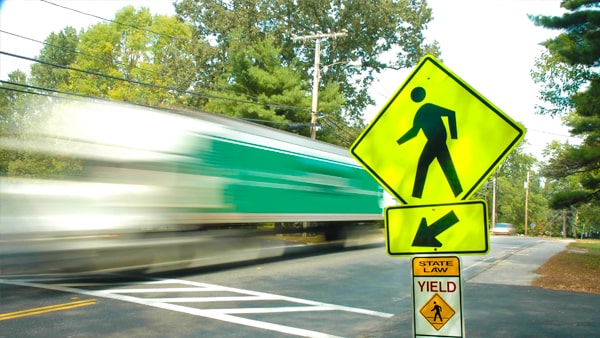
If a pedestrian is in a crosswalk in the middle of a block:
  1. A Yield, slowing or stopping if necessary
  2. B Proceed because pedestrians must always yield between intersections
  3. C Proceed unless the pedestrian is in the driver’s lane
  4. D Sound the horn and maintain speed

Correct answer: A – Yield, slowing or stopping if necessary

When traffic signals are absent or not operating, a driver must yield to a pedestrian crossing within a crosswalk, slowing or stopping if necessary. This rule applies to a marked midblock crosswalk. A pedestrian may not suddenly enter the path of a vehicle that is too close for the driver to yield.

Source: N.Y. VTL § 1151(a)–(b) – Pedestrians’ Right of Way in Crosswalks
Question 2

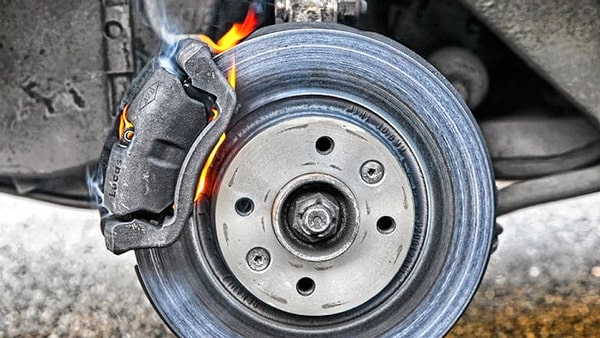
If your brake pedal suddenly goes to the floor, which actions should you try?

If you experience brake failure while driving, you should:
  1. A Pump the brake pedal to build pressure
  2. B Shift to a lower gear to reduce speed
  3. C If pumping fails, apply the emergency brake gradually and gently
  4. D All of the above

Correct answer: D – All of the above

The New York manual first instructs a driver with brake failure to pump the brake pedal in an attempt to increase pressure. If that fails, apply the emergency or parking brake gradually and gently. Shifting to a lower gear can also help the vehicle decrease speed.

Source: New York State Driver’s Manual — Ch. 10, “Driving Emergencies”

Question 3

Unless signs or markings direct otherwise, where should a right turn end?

  1. A In the left lane of the roadway entered
  2. B In the right lane nearest the curb or roadway edge
  3. C In whichever lane has the least traffic
  4. D In the center lane

Correct answer: B – In the right lane nearest the curb or roadway edge

New York law requires both the approach and the right turn to be made as close as practicable to the right-hand curb or roadway edge. The driver’s manual instructs drivers to prepare from the far-right position and enter the right lane of the roadway being entered unless signs provide different directions.

Source: N.Y. VTL § 1160(a) – Required Position and Method of Turning at Intersections, New York State Driver’s Manual — Ch. 5, “Turns”

Question 4

Before changing lanes on an expressway, what is the driver responsible for doing?

When changing lanes on a freeway, you should:
  1. A Signal and verify that the lane change can be made safely
  2. B Cross several lanes in one continuous movement
  3. C Use the horn instead of a turn signal
  4. D Begin moving and signal after entering the next lane

Correct answer: A – Signal and verify that the lane change can be made safely

A driver may not move right or left on a roadway until the movement can be made with reasonable safety and an appropriate signal has been given. A vehicle on a laned roadway must remain within one lane until the driver has ascertained that moving from it is safe. Signaling does not replace the required safety check.

Source: N.Y. VTL § 1163(a), (d) – Turning Movements and Required Signals, N.Y. VTL § 1128(a) – Driving on Roadways Laned for Traffic

Question 5

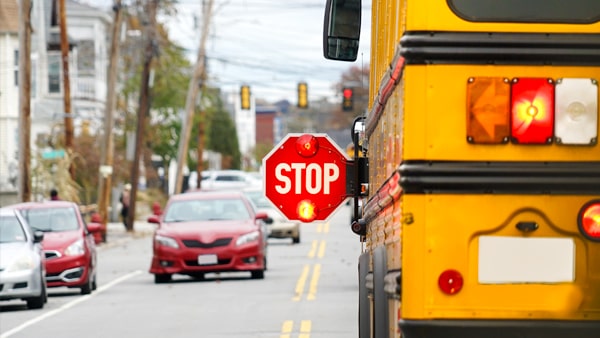
What must you do when you approach a stopped school bus displaying flashing red lights?

What does it mean when a school bus is stopped and its red lights are flashing?
  1. A Pass if no children are visible
  2. B Stop before reaching the bus and wait until it moves or you are authorized to proceed
  3. C Stop only when approaching from behind
  4. D Reduce speed and pass without stopping

Correct answer: B – Stop before reaching the bus and wait until it moves or you are authorized to proceed

Traffic meeting or overtaking a qualifying stopped school bus from either direction must stop before reaching it when its red signal lights are operating. The driver may not proceed until the bus resumes motion or the bus driver or a police officer gives permission. The manual also states that this stop rule applies when the bus is across a divided highway.

Source: N.Y. VTL § 1174(a) – Overtaking and Passing School Bus, New York State Driver’s Manual — Ch. 6, “School Buses”

Question 6

Which statement about blood alcohol content is correct?

  1. A A chemical breath test can be used to measure BAC
  2. B A chemical test is always required for an alcohol-related conviction
  3. C Physical fitness lowers a person’s BAC
  4. D Coffee or a cold shower lowers BAC

Correct answer: A – A chemical breath test can be used to measure BAC

New York law recognizes chemical tests of breath, blood, urine, or saliva for determining alcohol or drug content. A breath test analyzer can therefore be used to measure BAC. The driver’s manual also explains that chemical-test evidence is not always required for a conviction and that physical fitness, coffee, exercise, and cold showers do not lower BAC.

Source: N.Y. VTL § 1194(2)(a) – Arrest and Testing, New York State Driver’s Manual — Ch. 9, “Alcohol, Other Drugs and the Law” and “Chemical Tests”