


New York DMV Practice Permit Test 6

4.8 out of 5 (427 votes)
80% Passing score
20 Questions
4 Mistakes allowed
This sixth NY DMV practice test is built for the real work of getting ready for the New York learner permit knowledge test, not just clicking through a few easy questions and calling it studying. It gives you 20 questions, with extra attention on turn signals, lane changes, and the kind of driver-to-driver communication that matters a lot more once you are sitting in actual traffic with actual people making actual questionable decisions around you. For most passenger-vehicle applicants, the official permit test is the Class D knowledge test. Younger drivers usually take the Class DJ version, but the basic structure is the same. The real NY DMV written test is based on the New York State Driver’s Manual and covers rules of the road, safe driving, road signs, alcohol and drug laws, and the other material tucked into the permit-test chapters. There are 20 multiple-choice questions. You need at least 14 correct answers to pass, and there is one extra catch that is easy to forget: you must also get at least 2 of the 4 road-sign questions right. So the overall score matters, yes, but signs are not just decoration in the background. This NY DMV practice permit test follows that 20-question format so the pacing feels familiar before test day. The questions are not just there to see whether you can guess well. Each one gives immediate feedback with an explanation, which is where the useful part usually happens. You see why the correct answer is correct, why the tempting answer is wrong, and how the rule actually shows up on New York roads — from crowded city streets where a late signal can irritate everyone within three car lengths, to quieter rural roads where “no one is around” is still not a driving strategy. You can take this DMV practice test permit again and again, which is honestly how most people should use it. Run through it once, miss what you miss, then go back with a little more patience and a little less overconfidence. First-time applicants, adults getting a Class D permit, under-18 drivers working toward a junior permit, and anyone brushing up after years away from the manual can all use this New York DMV practice permit test to tighten up the details before the real exam.
FREE DMV Practice Test App
Study for your New York permit test or driver’s license with the NextDoorDriving app. 700+ DMV questions and answers, 100% free!
Download on the App Store

Sample New York Permit Test Questions

Question 1

Which stage of a rainstorm can make pavement especially slippery?
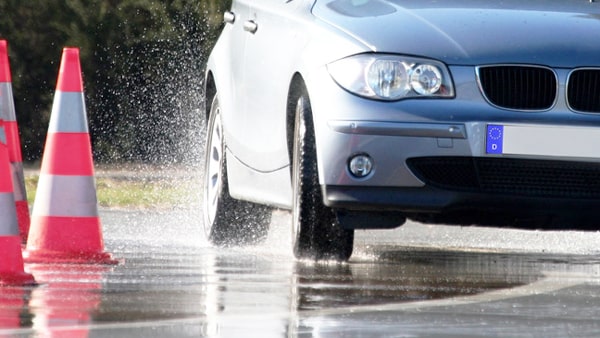
The road surface is most slippery:
  1. A After several hours of steady rain
  2. B Only after the rain has stopped
  3. C Just after the rain begins
  4. D Only when deep puddles form

Correct answer: C – Just after the rain begins

Pavement can become especially slippery just after rain begins because water mixes with oil left on the road. Continued rain may eventually wash much of that oil away. Reduce your speed on wet pavement because traction is lower and stopping can require more distance.

Source: New York State Commercial Driver’s Manual — § 2.6.2, “Matching Speed to the Road Surface”, New York State Driver’s Manual — Ch. 10, “Driving in Rain, Fog, or Snow”
Question 2

Which traffic sign is normally a white rectangle with black lettering?

  1. A School crossing sign
  2. B Railroad crossing warning sign
  3. C Stop sign
  4. D Speed limit sign

Correct answer: D – Speed limit sign

The New York driver’s manual explains that regulatory signs are normally white rectangles with black letters or symbols. Speed limit signs are regulatory signs and use this general design. A stop sign is octagonal, while school and railroad crossing warnings use other shapes.

Source: New York State Driver’s Manual — Ch. 4, “Signs”

Question 3

After passing a vehicle on the left, which check indicates that you may safely return to the right lane?

After passing a car, it is safe to return to your driving lane when:
  1. A You have signaled for four seconds
  2. B The other driver flashes the headlights
  3. C You see the vehicle’s front bumper in your interior mirror and pavement between the vehicles after a shoulder check
  4. D You can see part of the vehicle in your side mirror

Correct answer: C – You see the vehicle’s front bumper in your interior mirror and pavement between the vehicles after a shoulder check

The New York manual directs you to signal and look in the interior rearview mirror for the front bumper of the vehicle you passed. You must also check over your right shoulder and see several feet of pavement between the vehicles. These checks help verify that you are safely clear before returning to the right lane.

Source: New York State Driver’s Manual — Ch. 6, “How to Pass on the Left”

Question 4

On a New York expressway, what should you do if a short entrance lane requires you to stop before merging?

  1. A Enter slowly as soon as the first vehicle passes
  2. B Wait for a large opening, then enter and accelerate quickly
  3. C Follow the nearest vehicle closely onto the expressway
  4. D Expect expressway traffic to stop for you

Correct answer: B – Wait for a large opening, then enter and accelerate quickly

If an entrance lane is too short for acceleration to expressway speed, the manual advises stopping and waiting for a large space in traffic. Enter when that space is available and accelerate quickly to blend with traffic. Drivers already on the expressway are not required to stop for an entering vehicle.

Source: New York State Driver’s Manual — Ch. 10, “Expressway Driving”

Question 5

Which situation calls for increasing your normal following interval?

  1. A Following a station wagon in good conditions
  2. B Following a large tractor-trailer
  3. C Following a passenger car in good conditions
  4. D All vehicles require exactly the same interval

Correct answer: B – Following a large tractor-trailer

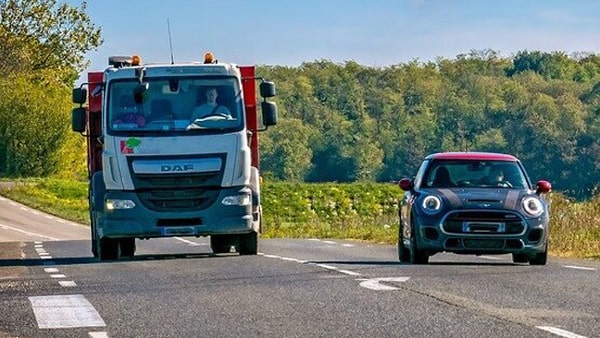
The driver’s manual recommends increasing the normal following interval to at least three or four seconds when following a large truck. The additional space improves your view and gives you more time to respond. Large vehicles also take longer to stop and can block your view of traffic ahead.

Source: New York State Driver’s Manual — Ch. 8, “Allow Yourself Space”, New York State Driver’s Manual — Ch. 11, “Large Vehicles”

Question 6

Why should you check your blind spots for bicyclists before turning or pulling away from a curb?

  1. A Bicyclists always have the right-of-way
  2. B A bicyclist beside you might not be visible in your mirrors
  3. C Bicyclists must ride against traffic
  4. D Bicyclists do not have to obey traffic rules

Correct answer: B – A bicyclist beside you might not be visible in your mirrors

Bicyclists can be difficult to see and may travel in an area not shown by your mirrors. The New York manual instructs drivers to check blind spots before turning, parallel parking, opening a door or leaving a curb. Turn your head to look for a bicyclist who may be beside or approaching your vehicle.

Source: New York State Driver’s Manual — Ch. 11, “Bicyclists”