


New York Driving Test Practice 9

4.7 out of 5 (283 votes)
80% Passing score
20 Questions
4 Mistakes allowed
This New York DMV practice test is built around one of the permit-test topics drivers really cannot afford to treat lightly: school bus safety. New York uses a 20-question knowledge test for learner permit applicants, and while the real exam covers road signs, right-of-way rules, traffic laws, and general safe-driving habits, school bus questions deserve extra attention. They are specific, they are easy to overthink, and they come from rules that matter outside the testing room — especially in places where buses, pedestrians, narrow streets, and impatient traffic all meet in the same messy little space. This NY permit test practice gives you 20 focused questions on stopping for school buses that are loading or unloading children. That means you are not just clicking through random DMV trivia. You are working through the situations that make new drivers pause: when to stop, where to stop, what traffic in the opposite direction must do, and how school bus signals change what is expected of every driver nearby. It is the kind of practice that feels simple at first, then catches the details you might have skimmed in the New York State Driver’s Manual. On the real New York permit test, you need at least 14 correct answers out of 20 to pass, or 70%. You can miss no more than 6 questions overall. There is also a road-sign requirement inside the exam: 4 road-sign questions, with at least 2 answered correctly. So this practice test should be part of a wider study routine, yes, but it is especially useful if you want a sharper grip on school bus laws before moving on to signs, pavement markings, lane rules, and the rest of the written test material. The licensing rules around all of this are worth keeping in view, too. New York’s minimum learner permit age is 16, although students at participating schools may take the OKTA test at 15 years and 11 months. Junior permit holders must hold the permit for 6 months before taking the road test, complete 50 hours of supervised driving, including 15 after sunset, and practice with a supervising driver who is at least 21 and properly licensed. Add in the 9 p.m. to 5 a.m. nighttime limits in several regions, junior passenger restrictions, and the New York City rule barring Class DJ and MJ license holders from driving in the city, and, well, the permit process has more corners than people expect. After finishing this updated 2026 New York practice permit test, use the review feature properly. Missed answers come with explanations and hints, which is where the useful studying usually happens — a little slower, a little less flattering, but much better than discovering the gap on test day.
FREE DMV Practice Test App
Study for your New York permit test or driver’s license with the NextDoorDriving app. 700+ DMV questions and answers, 100% free!
Download on the App Store

Sample New York Permit Test Questions

Question 1

What may you do when facing a steady green traffic signal?

  1. A. Slow down and prepare to stop in every case
  2. B. Stop before entering the intersection
  3. C. Proceed if clear while yielding to traffic and pedestrians already lawfully in the intersection
  4. D. Proceed straight, but never turn

Correct answer: C. – Proceed if clear while yielding to traffic and pedestrians already lawfully in the intersection

A steady circular green signal permits traffic to proceed straight or turn unless a sign prohibits the movement. Drivers must still yield to traffic lawfully within the intersection and to users in an adjacent crosswalk. Do not enter unless your path through the intersection is available.

Source: N.Y. VTL § 1111(a)(1) – Traffic-control signal indications, New York State Driver’s Manual — Ch. 4, “Traffic Lights”
Question 2

A green arrow appears while the circular signal remains red. What may you do?

  1. A. Stop and wait for the circular signal to turn green
  2. B. Proceed in any direction after stopping
  3. C. Cautiously proceed in the arrow’s direction and yield to traffic already in the intersection or crosswalk
  4. D. Follow the arrow because the roadway ahead is closed

Correct answer: C. – Cautiously proceed in the arrow’s direction and yield to traffic already in the intersection or crosswalk

New York law permits traffic facing a steady green arrow to cautiously enter for the movement shown by the arrow. Drivers must yield to traffic lawfully within the intersection and to users in an adjacent crosswalk. The simultaneous red signal continues to prohibit movements not authorized by another displayed indication.

Source: N.Y. VTL § 1111(a)(2), (d)(1) – Traffic-control signal indications

Question 3

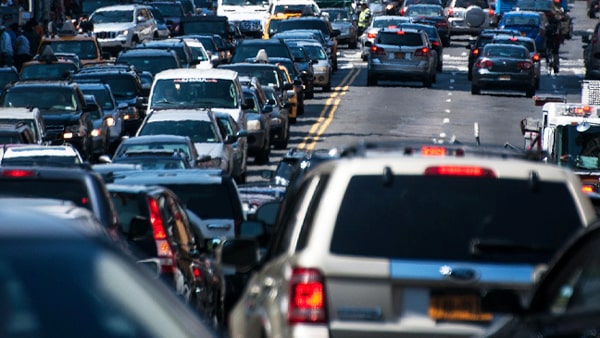
Which travel choice allows you to complete a trip without adding your personal car to the traffic stream?

Choose the situation that would have the best impact on reducing traffic congestion:
  1. A. Use public transportation
  2. B. Drive alone instead of sharing a ride
  3. C. Make several separate car trips
  4. D. Follow closely to fit more vehicles on the road

Correct answer: A. – Use public transportation

The driver’s manual identifies public transportation as an alternative to driving. Of these choices, it is the only one that allows the traveler to make the trip without operating a personal car. Reducing following space does not remove a vehicle from traffic and conflicts with safe following-distance guidance.

Source: New York State Driver’s Manual — Ch. 9, “How to Avoid Trouble”, New York State Driver’s Manual — Ch. 8, “Allow Yourself Space”

Question 4

For ordinary travel in a passenger car equipped with airbags, when should you wear your seat belt?

  1. A. Only on expressways
  2. B. On every trip
  3. C. Only when traveling outside a city
  4. D. Only at speeds above 35 mph

Correct answer: B. – On every trip

In New York, drivers and passengers age 16 or older in an ordinary passenger vehicle must use an approved safety belt, subject to limited statutory exceptions. Younger passengers require the applicable belt or child restraint. Airbags are designed to work with seat belts, and the manual states that they are not a replacement for them.

Source: N.Y. VTL § 1229-c(1)–(3-a) – Operation of vehicles with safety seats and safety belts, New York State Driver’s Manual — Ch. 8, “Seat Belts, Child Safety Seats, and Air Bags”

Question 5

If no other maximum speed limit applies on a New York highway and conditions are normal, what is the fastest lawful speed?

  1. A. 50 mph
  2. B. 55 mph
  3. C. 60 mph
  4. D. 65 mph

Correct answer: B. – 55 mph

N.Y. VTL § 1180(b) establishes a maximum of 55 mph unless another authorized maximum applies. The basic rule in subdivision (a) also prohibits driving faster than is reasonable and prudent for existing hazards. Weather, traffic or roadway conditions can require a speed below 55 mph.

Source: N.Y. VTL § 1180(a), (b) – Basic rule and maximum limits

Question 6

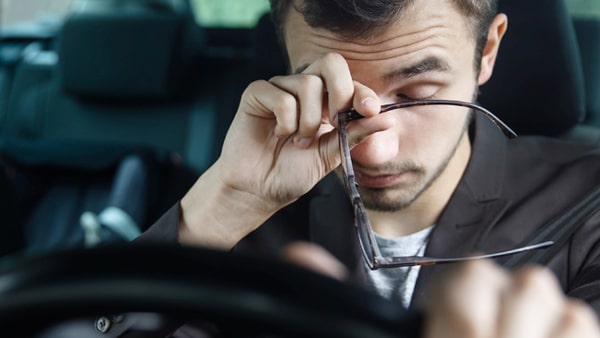
What should you do if you become too drowsy to remain alert while driving?

If you are driving and you feel that you cannot stay alert and awake, you:
  1. A. Open a window and continue driving
  2. B. Turn up the radio and talk to passengers
  3. C. Stop in a safe area away from traffic and take a brief nap
  4. D. Continue after drinking an energy drink

Correct answer: C. – Stop in a safe area away from traffic and take a brief nap

The manual directs a drowsy driver to find a safe place to stop away from traffic and take a brief nap. Do not depend on an open window, loud radio or similar tricks to remain awake. Caffeine can provide only short-term alertness and takes time to enter the bloodstream.

Source: New York State Driver’s Manual — Ch. 8, “Drowsy and Fatigued Driving”