North Carolina DMV Practice Test 4

4.9 out of 5 (969 votes)
80% Passing score
20 Questions
4 Mistakes allowed
Welcome to the fourth installment of our NC permit practice test series, which sounds very official, and honestly, it kind of is — but not in that stiff “please review section 14-B” sort of way. This round has 20 multiple-choice questions covering the usual driving knowledge, plus a few North Carolina rules that like to hide in plain sight until test day, when your brain suddenly decides it has other plans. There is a noticeable focus on child safety seats here, because North Carolina does not treat “close enough” as a parenting or driving strategy. You will get practice with questions about proper use, safe passenger habits, and the kind of details that are easy to nod along with until someone asks you to actually pick the right answer. Awkward, but useful. This DMV practice test also works in the Move Over Law, which is one of those rules people think they understand, and then the wording gets weird. In North Carolina, when an emergency, law enforcement, or utility vehicle is stopped on the roadside with lights flashing, drivers need to move over one lane if they safely can. If they cannot, they are expected to slow down and proceed with extra caution. Not “tap the brakes and feel virtuous.” Actually slow down. You will also run into North Carolina’s alcohol rule for drivers under 21, which is brutally straightforward: any measurable amount of alcohol can mean an immediate 30-day license revocation. No clever loophole, no “but I felt fine,” no courtroom-drama energy. Just don’t. And then there is seat belt enforcement, which deserves a tiny warning because it is often underestimated. North Carolina is a primary enforcement state, meaning police can stop a driver just for a seat belt violation. They do not need to catch you speeding first, or rolling through a stop sign, or doing something dramatically suspicious. Front-seat occupants need to be buckled up. That is the rule. To pass this NC practice permit test, aim for at least 16 out of 20. Afterward, you can review explanations and hints for anything you missed, which is where the learning usually happens, annoyingly enough. Since this North Carolina DMV practice permit test can be taken again and again, it is a useful way to get comfortable before the real NC DMV learners permit test starts making everything feel more serious than it needs to.
FREE DMV Practice Test App
Study for your North Carolina permit test or driver’s license with the NextDoorDriving app. 700+ DMV questions and answers, 100% free!
Download on the App Store

Sample North Carolina Permit Test Questions

Question 1

Which driving ability is directly reduced by alcohol?
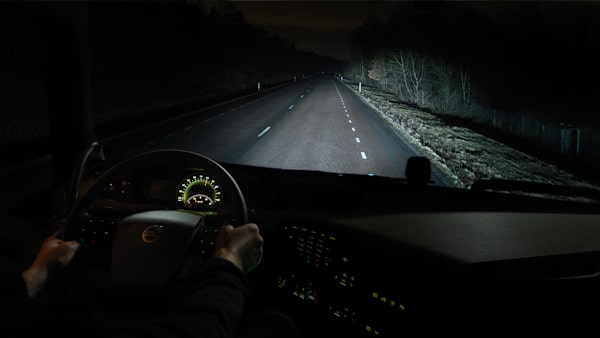
If you drive after drinking, you should be aware that the first thing alcohol affects is:
  1. A The ability to hear the engine
  2. B The ability to adjust the seat
  3. C The ability to read the fuel gauge
  4. D The ability to make sound judgments and decisions

Correct answer: D – The ability to make sound judgments and decisions

Alcohol slows brain function, interferes with decision-making and reduces the ability to judge speed and distance. It may also create false confidence, causing a driver to take risks while believing that driving performance is better than it is. These effects make sound judgment and safe reactions more difficult.

Source: North Carolina Driver Handbook — Ch. 4, “Alcohol”

Question 2

How far in advance must you signal before turning in North Carolina?

When you are planning to make a turn, you should activate your turn signals:
  1. A Only when another vehicle is nearby
  2. B Beginning as you enter the intersection
  3. C For the last 100 feet, or 200 feet where the speed limit is at least 45 mph
  4. D For the final two vehicle lengths

Correct answer: C – For the last 100 feet, or 200 feet where the speed limit is at least 45 mph

A turn signal must be maintained continuously during the last 100 feet before a turn. Where the speed limit is 45 mph or higher, a driver turning from a direct line must signal for the last 200 feet. Signaling does not by itself make the turn safe; the driver must first verify that the movement can be completed safely.

Source: N.C. Gen. Stat. § 20-154(a), (b) – Signals on starting, stopping or turning

Question 3

Which roadway user can be especially difficult for a driver to see at night?

At night, it is hardest to see:
  1. A A vehicle displaying working headlights
  2. B A pedestrian wearing dark clothing
  3. C A motorist stopped beneath a streetlight
  4. D A reflective highway sign

Correct answer: B – A pedestrian wearing dark clothing

Night driving reduces how far and how clearly a driver can see. Pedestrians, especially those wearing dark clothing, may blend into the surroundings and can be difficult to detect. The driver handbook advises reducing speed, looking as far ahead as possible and maintaining a continuous lookout at night.

Source: North Carolina Driver Handbook — Ch. 4, “Night Driving”, North Carolina Driver Handbook — Ch. 6, “Pedestrians”

Question 4

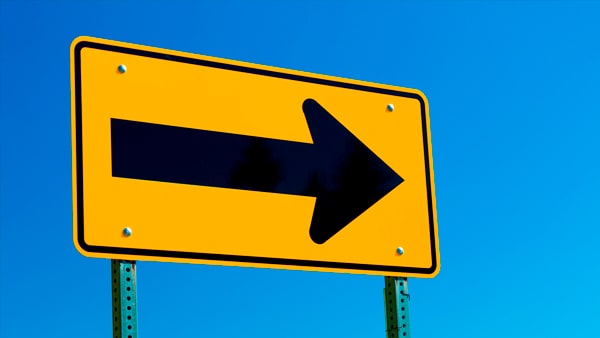
A yellow diamond sign shows a black arrow making a sharp right-angle turn. What does it warn you about?

When you see this black and yellow sign, it means:
  1. A A one-way roadway begins on the right
  2. B Construction traffic must detour right
  3. C The roadway turns sharply, requiring a lower approach speed
  4. D A side road enters from the right

Correct answer: C – The roadway turns sharply, requiring a lower approach speed

Black-on-yellow diamond signs warn of conditions ahead that require extra care. A sharply bending arrow identifies a turn rather than a gentle curve or side road. Reduce speed before reaching the turn and enter it slowly enough to maintain traction and control without hard braking in the turn.

Source: North Carolina Driver Handbook — Ch. 5, “Warning Signs”, North Carolina Driver Handbook — Ch. 4, “Rounding a Curve”

Question 5

A white right-edge line gradually tapers left toward the center of the roadway. What does this indicate?

  1. A An intersection is immediately ahead
  2. B The roadway becomes one-way
  3. C All traffic must turn left
  4. D The available roadway becomes narrower

Correct answer: D – The available roadway becomes narrower

A white edge line identifies the outside boundary of the traveled roadway. When that boundary tapers inward, the usable roadway width is being reduced ahead. Adjust your speed and position while remaining inside the marked travel area and watching for any accompanying warning signs.

Source: North Carolina Driver Handbook — Ch. 5, “Pavement Markings”, NCDOT Roadway Standard Drawing 1205.13 — Pavement Markings: Lane Reductions

Question 6

After a person has consumed alcohol, drinking coffee will:

  1. A Quickly remove the alcohol from the body
  2. B Cancel alcohol-related impairment
  3. C Not make the person sober
  4. D Cause the alcohol to leave the body faster

Correct answer: C – Not make the person sober

Coffee does not reverse alcohol's effects or make an impaired person sober. A meal or cold shower will not accomplish this either. The North Carolina handbook explains that only the passage of time allows the body to sober up, so a person who has been drinking should not drive.

Source: North Carolina Driver Handbook — Ch. 4, “Alcohol”