North Carolina DMV Permit Test Simulator

4.5 out of 5 (3587 votes)
80% Passing score
25 Questions
5 Mistakes allowed
Getting ready for the NC DMV learners permit test is one of those things that sounds simple until you realize North Carolina has not one, but two separate tests waiting for you at the NCDMV office. Lovely. There’s the written knowledge test, which gives you 25 multiple-choice questions on traffic laws and safe driving, and you need at least 20 correct to pass. Then there’s the road signs test, where you identify signs by color and shape and explain what they mean. Miss more than 2 there, and, well, you get to come back another day. That’s where this North Carolina practice permit test simulator earns its keep. Each round gives you 25 randomly selected questions, so it does not feel like you are just clicking through the same stale quiz over and over while pretending that counts as studying. The questions cover the stuff that actually shows up in the official NC Driver Handbook: traffic signs and signals, rules of the road, driver safety, licensing basics, and those small-but-annoying details that tend to appear right when you wish they would not. The passing score is the same target as the real written test: 20 out of 25, or 80%. Aim higher anyway. Not because anyone is handing out trophies for permit-test excellence, but because a little extra cushion is nice when you are sitting at the DMV, possibly hungry, definitely overthinking a stop-sign question. After each test, you get feedback on what you missed, along with the correct answers, which is honestly where the learning happens. Getting something wrong in practice is mildly irritating; getting it wrong at the DMV means waiting 7 calendar days before trying again. There’s your motivation. A few insider-ish reminders before you go: the official NC permit test must be taken in person at an NCDMV office. Bring proof of identity and date of birth, proof of your Social Security number, and proof of North Carolina residency. If you are under 18, you also need a Driving Eligibility Certificate, a Driver’s Education Certificate, and a parent or guardian with you. The permit fee is $25.50. Whether you call it the NC permit test, the North Carolina DMV written test, the DMV learners permit test, or just “that thing I need to pass,” this practice test gives you a realistic way to study without making the whole process feel more official and gloomy than it already is.
FREE DMV Practice Test App
Study for your North Carolina permit test or driver’s license with the NextDoorDriving app. 700+ DMV questions and answers, 100% free!
Download on the App Store

Sample North Carolina Permit Test Questions

Question 1

Which warning-sign symbol indicates that traffic ahead moves in both directions?

  1. A A single arrow curving to the right
  2. B One lane line joining another lane line
  3. C One upward arrow beside one downward arrow
  4. D A horizontal arrow pointing left and right

Correct answer: C – One upward arrow beside one downward arrow

The two-way-traffic warning sign is a yellow diamond displaying one upward arrow and one downward arrow. The opposing arrows represent vehicles traveling in opposite directions on the roadway ahead. This sign may appear where a separated or one-way roadway changes to two-way operation or where drivers need a reminder that opposing traffic is present.

Source: North Carolina Driver Handbook — Ch. 5, “Warning Signs”
Question 2

At a North Carolina railroad crossing, an approaching train is plainly visible and close enough to be hazardous. What must you do?

  1. A Cross quickly if the gate has not started lowering
  2. B Stop with the front wheels on the nearest rail
  3. C Stop 15 to 50 feet from the nearest rail and wait until proceeding is safe
  4. D Follow another vehicle around the lowered gate

Correct answer: C – Stop 15 to 50 feet from the nearest rail and wait until proceeding is safe

When a train is plainly visible and in hazardous proximity, the driver must stop within 50 feet but not less than 15 feet from the nearest rail. The driver may not proceed until it is safe. The same stopping requirement applies when warning signals activate, a gate is lowered, or a flagger signals the approach or passage of a train or on-track equipment.

Source: G.S. 20-142.1(a), (b) — Obedience to railroad signal, North Carolina Driver Handbook — Ch. 4, “Railroad Crossing Safety”

Question 3

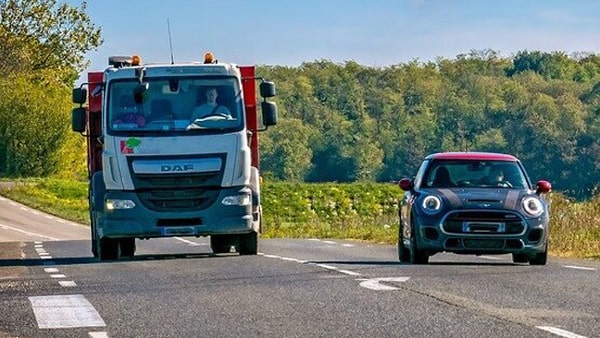
Before moving left from your lane to pass, which signal should you give when other traffic may be affected?

Before passing another vehicle you should:
  1. A Flash the headlights
  2. B Activate the four-way emergency flashers
  3. C Use the proper left-turn signal
  4. D Tap the brakes repeatedly

Correct answer: C – Use the proper left-turn signal

North Carolina law requires a driver to verify that movement from a direct line can be made safely and to signal when another vehicle may be affected. Before moving into the passing lane, look ahead and behind and give the proper turn signal. The signal communicates the intended lane change, but it does not replace the duty to confirm that the passing lane is clear.

Source: G.S. 20-154(a) — Signals on starting, stopping or turning, North Carolina Driver Handbook — Ch. 4, “Passing”

Question 4

Which habit is part of effective defensive-driving scanning?

  1. A Checking the mirrors about every 10 seconds
  2. B Staring continuously at the pavement directly ahead
  3. C Using high beams when driving in fog
  4. D Following the vehicle ahead as closely as possible

Correct answer: A – Checking the mirrors about every 10 seconds

The driver handbook recommends checking the mirrors about every 10 seconds to identify vehicles following too closely or other developing hazards. Continue scanning 10 to 15 seconds ahead rather than staring at one point. Because mirrors leave blind spots near the rear corners of the vehicle, an over-the-shoulder check is still necessary before turns and lane changes.

Source: North Carolina Driver Handbook — Ch. 4, “Scanning”

Question 5

Which statement about highway work zones is false?

  1. A Black-on-orange warning signs identify construction or maintenance conditions
  2. B When required penalty signs are posted, speeding carries an additional $250 penalty
  3. C White regulatory signs are the standard warning signs for roadwork ahead
  4. D Cones, drums, barricades, and flaggers may guide traffic through the area

Correct answer: C – White regulatory signs are the standard warning signs for roadwork ahead

In North Carolina, construction and maintenance warnings are displayed as black messages on orange signs, not as standard white regulatory signs. Cones, drums, barricades, and flaggers may also guide traffic through the work area. G.S. 20-141(j2) imposes an additional $250 penalty for exceeding a posted work-zone speed limit when the required penalty signs are displayed at the applicable segment.

Source: G.S. 20-141(j2) — Speed restrictions, North Carolina Driver Handbook — Ch. 4, “Work Zones”

Question 6

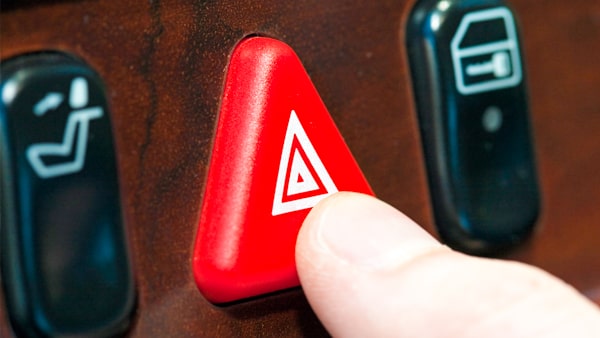
Which is a proper use of a vehicle’s four-way emergency flashers?

You should always use your emergency flashers when:
  1. A To make double-parking for convenience legal
  2. B To replace headlights while driving in fog
  3. C To warn others that the vehicle is stopped or disabled
  4. D To signal an ordinary lane change

Correct answer: C – To warn others that the vehicle is stopped or disabled

Four-way emergency flashers may be used to warn other drivers of possible danger or that a vehicle is stopped or disabled. If a breakdown occurs, move the vehicle completely off the traveled roadway when possible. The flashers serve as a warning device; they do not legalize improper parking or replace the low-beam headlights required for safer travel in fog.

Source: North Carolina Driver Handbook — Ch. 4, “Emergency Warning Flashers”; Ch. 4, “Breakdowns”; Ch. 4, “Fog”