


North Dakota Permit Practice Test 2

4.7 out of 5 (291 votes)
80% Passing score
20 Questions
4 Mistakes allowed
North Dakota lets new drivers start earlier than a lot of people expect, so the permit test is not just some formality tacked onto the process. At age 14, an applicant can go after a Class D instruction permit, provided the paperwork is in order and a parent or legal guardian is willing to approve and sponsor it. That early start is useful, but it also means the knowledge test matters. The state wants to see that you understand the rules before you are practicing on actual roads, not after you have already picked up a few questionable habits. This ND permit practice test is built around that first big checkpoint: the North Dakota Class D knowledge test. It gives you 20 questions covering the rules of the road, signs, safe driving judgment, right-of-way, passenger safety, and the state-specific details that are easy to skim past in the manual. Seat belts, for instance, are not just a “common sense” topic. North Dakota requires drivers and front-seat passengers to wear them, and children under 8 must ride in the proper safety restraint. Basic, yes. Also very testable. The licensing path changes a little depending on your age, which is where people sometimes get tangled up. Applicants ages 14–15 must provide the required identity, Social Security, and North Dakota residency documents, pass the knowledge test, pass the vision screening, get parent or guardian approval, and pay the required fees. After that, they must hold the permit for 12 months or until age 16, whichever comes first — but never for less than 6 months — before completing or waiving the road test. Drivers ages 16–17 still need the knowledge test and vision screening, but their permit-holding period is generally 6 months or until age 18. Adults are not magically waved through either; first-time applicants 18 and older still need the knowledge test, vision screening, permit, and road test. You can take this North Dakota DMV permit test practice as many times as you need, and the changing question mix keeps it from turning into pure memorization. Use it alongside the official driver manual, run through it more than once, and pay attention to the misses. That is usually where the real studying begins.
FREE DMV Practice Test App
Study for your North Dakota permit test or driver’s license with the NextDoorDriving app. 700+ DMV questions and answers, 100% free!
Download on the App Store

Sample North Dakota Permit Test Questions

Question 1

After one train clears a crossing with multiple tracks, what must you verify before crossing?
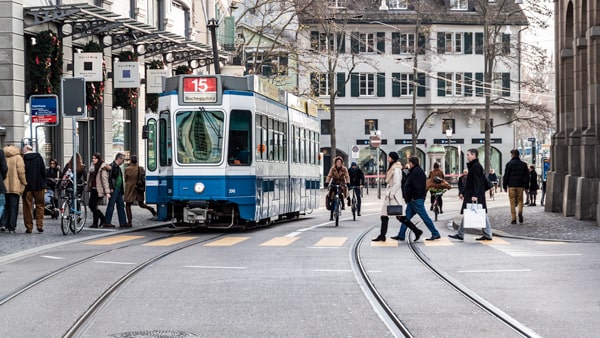
Which of these statements is true about light rail vehicles?
  1. A All tracks are clear and no other train is approaching
  2. B The crossing gates have started to rise
  3. C Another vehicle has crossed ahead of you
  4. D The first train has stopped sounding its horn

Correct answer: A – All tracks are clear and no other train is approaching

The North Dakota manual directs drivers to make sure every track is clear before crossing. At a multiple-track crossing, another train may approach from the opposite direction after the first train passes. Do not proceed until no train is approaching and the crossing can be completed safely.

Source: North Dakota Noncommercial Driver License Manual — “Railroad Crossings”, N.D.C.C. § 39-10-41 – Obedience to Signal Indicating Approach of Train or Other On-Track Equipment
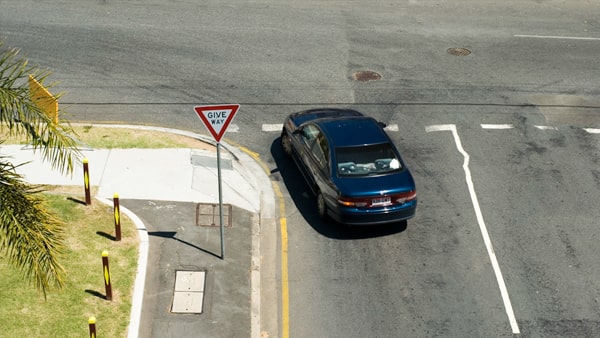
Question 2

A yellow warning sign shows your lane ending and traffic merging left. What does it mean?

  1. A A crossroad is immediately ahead
  2. B A construction detour begins
  3. C All traffic must turn left
  4. D The number of lanes is reduced ahead

Correct answer: D – The number of lanes is reduced ahead

Lane-reduction warning signs tell you that a traffic lane ends ahead. Check surrounding traffic, signal, and move safely into the proper continuing lane. The sign warns of a roadway change; it does not require every driver to turn left.

Source: North Dakota Noncommercial Driver License Manual — “Warning Signs”, North Dakota Noncommercial Driver License Manual — “Lane Changes”

Question 3

After drinking alcohol at a social event, which choice keeps you from driving while impaired?

  1. A Drink coffee before leaving
  2. B Ride with a friend who consumed no alcohol
  3. C Take a cold shower before driving
  4. D Wait 30 minutes after the last drink

Correct answer: B – Ride with a friend who consumed no alcohol

Alcohol directly affects reaction time, vision, concentration, and judgment. Coffee, cold showers, and exercise do not speed the removal of alcohol from the bloodstream; only time does. Riding with a driver who has consumed no alcohol prevents the person who drank from operating the vehicle.

Source: North Dakota Noncommercial Driver License Manual — “Alcohol”, North Dakota Noncommercial Driver License Manual — “Effects of Alcohol”

Question 4

Before making a left turn across oncoming traffic at a circular green signal, you should:

You are waiting in the intersection to complete a left turn. You should:
  1. A Turn immediately because green gives you priority
  2. B Signal and yield until the turn can be made safely
  3. C Flash your headlights to make oncoming traffic stop
  4. D Drive around any vehicle waiting ahead of you

Correct answer: B – Signal and yield until the turn can be made safely

Signal continuously before making the turn and check for vehicles and pedestrians. A driver turning left at a circular green signal must yield to oncoming traffic and pedestrians. Complete the turn only when an adequate opening makes the movement safe.

Source: North Dakota Noncommercial Driver License Manual — “Turning”, North Dakota Noncommercial Driver License Manual — “Left Turn Indications”

Question 5

If you become sleepy during a long drive, the safest response is to:

  1. A Turn up the radio
  2. B Reduce speed and continue driving
  3. C Stop in a safe place and get some sleep
  4. D Keep your eyes moving from side to side

Correct answer: C – Stop in a safe place and get some sleep

Fatigue increases the chance of a crash and may cause difficulty focusing, missed signs, lane drifting, or nodding off. The manual states that sleep is the only safe cure when you are sleepy. Leave the roadway at a safe location and rest rather than trying to remain awake with the radio or other temporary measures.

Source: North Dakota Noncommercial Driver License Manual — “Fatigue”

Question 6

Which statement about properly worn safety belts is correct?

  1. A They are useful only at highway speeds
  2. B Being thrown from a vehicle is usually safer
  3. C They generally reduce survival in water-related crashes
  4. D They reduce the chance of death or injury in a crash

Correct answer: D – They reduce the chance of death or injury in a crash

The North Dakota manual identifies safety belts as one of the most effective vehicle safety devices. They help keep occupants in place and reduce the chance of death or injury, including the danger of ejection. Protection is important on local roads and at lower speeds as well as on highways.

Source: North Dakota Noncommercial Driver License Manual — “Seat Belts”