


Ohio Temps Practice Test 2

4.7 out of 5 (2430 votes)
80% Passing score
20 Questions
4 Mistakes allowed
This Ohio temps practice test is for the part of the licensing process where the details start to matter more than people expect. The real Ohio knowledge test is used to qualify for a Temporary Instruction Permit Identification Card, or TIPIC, and it is based on the Ohio Driver Manual: traffic laws, road signs, signals, highway control devices, safe driving practices, and the responsibilities that come with being the person behind the wheel. Not just “know what a stop sign means” material, in other words. Some of it is obvious. Some of it is obvious only after you’ve missed it once. The official Ohio permit test has 40 multiple-choice questions, and you need 30 correct answers to pass. That 75% passing score gives you some room, but not enough room to coast through on common sense and a vague memory of what your driver’s ed instructor said three weeks ago. This Ohio BMV practice test, the second in our series, gives you 20 questions that stay close to the kinds of topics Ohio actually tests: seat belt rules, traffic signals, safe driving decisions, signs, and the small legal details that are easy to read too quickly. It is also a useful check before you commit to the real thing. Ohio lets applicants begin the TIPIC process at 15 years and 6 months, but passing the knowledge test is only one step. You also need the vision screening, and after passing, you have 60 days to purchase the TIPIC at a Deputy Registrar License Agency. Miss that window and, well, you get to restart the testing and screening process, which is nobody’s idea of efficient. Retakes have their own rules. If you fail the knowledge test, you must wait one day before trying again. In-person testing allows unlimited attempts, one per day; online testing is more limited, with two attempts in a six-month period. Road sign questions are folded into the same Class D TIPIC knowledge test, not handled as a separate exam, so signs deserve real attention. For drivers under 21, the written test connects to a longer licensing path: 24 hours of classroom or online instruction, 8 hours of driving time, and 50 supervised hours, including 10 at night. This practice temps test helps you prepare for the permit exam, yes, but more importantly, it helps you study the rules Ohio expects you to carry into actual driving.
FREE DMV Practice Test App
Study for your Ohio permit test or driver’s license with the NextDoorDriving app. 700+ DMV questions and answers, 100% free!
Download on the App Store

Sample Ohio Permit Test Questions

Question 1

What should you do before moving into another lane on a multilane highway?
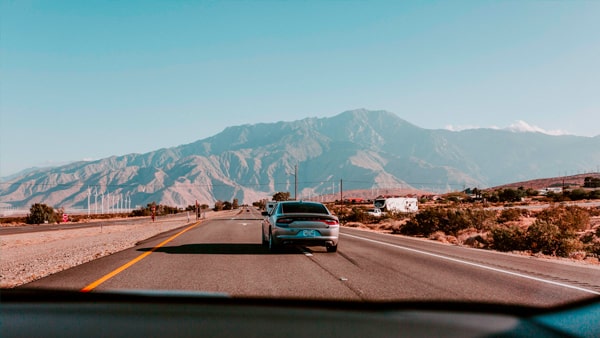
Before changing lanes on a multi-lane highway you should:
  1. A Sound the horn before steering
  2. B Flash the headlights
  3. C Slow sharply in your current lane
  4. D Signal and check your mirrors and blind spot

Correct answer: D – Signal and check your mirrors and blind spot

Before moving right or left, exercise due care to determine that the movement can be made with reasonable safety and signal appropriately. Check the rearview and side mirrors, then look over your shoulder toward the lane you plan to enter. Identify a safe opening and look again before steering into the lane.

Source: ORC § 4511.39(A) – Turn and stop signals, Ohio Driver Manual — Section 5, “Changing Lanes”

Question 2

Under Ohio law, what should you do when high beams would project glare into the eyes of an approaching driver?

  1. A Switch to the lower headlight beam
  2. B Turn on the hazard lights
  3. C Use only the parking lights
  4. D Leave the high beams on

Correct answer: A – Switch to the lower headlight beam

When approaching an oncoming vehicle, a driver must use a headlight beam aimed so glaring rays are not projected into the other driver’s eyes. The driver manual instructs motorists to dim high beams for approaching traffic. Parking lights alone are not an acceptable substitute when headlights are required.

Source: ORC § 4513.15(A)(1) – Headlight illumination requirements - protection of oncoming drivers - high beam indicator, Ohio Driver Manual — Section 7, “Night Driving”

Question 3

What is the safety purpose of correctly positioning a vehicle’s head restraint?

  1. A To make the seat more comfortable on long trips
  2. B To help protect against whiplash injury
  3. C To provide a place to rest while driving
  4. D To improve the driver’s view through the rear window

Correct answer: B – To help protect against whiplash injury

A properly adjusted head restraint helps protect against whiplash. The restraint should contact the back of the occupant’s head and should not be positioned below ear level. Adjust the seat and head restraint before driving so they provide the intended support without interfering with control of the vehicle.

Source: Ohio Driver Manual — Section 2, “Driver Position: Seat and Mirror Adjustments”

Question 4

You are in the left lane of a freeway and need to take an upcoming exit on the right. What is the safest approach?

  1. A Sweep across several lanes in one continuous movement
  2. B Accelerate until you are ahead of every nearby vehicle
  3. C Stop in your lane until all lanes are clear
  4. D Begin early and complete each lane change only after checking that the next lane is clear

Correct answer: D – Begin early and complete each lane change only after checking that the next lane is clear

Move toward the exit lane early enough to avoid a quick lane change. For each lane change, check mirrors and blind spots, identify a safe opening, signal, and look again before moving. Maintain your speed on the main roadway, then slow in the deceleration lane. If you miss the exit, continue to the next one.

Source: Ohio Driver Manual — Section 5, “Changing Lanes”, Ohio Driver Manual — Section 5, “Exiting a Roadway”

Question 5

In Ohio, when may a driver turn left after stopping at a steady circular red light?

  1. A Whenever no vehicle is approaching from the opposite direction
  2. B When turning from a two-way street onto a one-way street
  3. C When turning from a one-way street onto another one-way street, unless prohibited
  4. D Whenever the vehicle ahead makes the same turn

Correct answer: C – When turning from a one-way street onto another one-way street, unless prohibited

After stopping, a driver may turn left from a one-way street into another one-way street. The driver must yield as required after stopping and must use the proper lane. The turn is prohibited when a traffic control device forbids it or when a steady red arrow applies without a device expressly permitting the movement.

Source: ORC § 4511.13(C)(1)–(2) – Highway traffic signal indications, Ohio Driver Manual — Section 5, “Turning on a Red Traffic Signal”

Question 6

On an Ohio two-way road, an obstruction blocks your lane and requires you to cross the centerline. An oncoming vehicle is close enough to be a hazard. Who must yield?

  1. A The driver in the unobstructed lane
  2. B The driver whose lane is blocked
  3. C The driver operating the smaller vehicle
  4. D Whichever driver reaches the obstruction last

Correct answer: B – The driver whose lane is blocked

A driver may move left of center when an obstruction makes it necessary, but must yield to vehicles traveling properly on the unobstructed portion of the highway when they present an immediate hazard. The driver facing the obstruction should wait until the opposing lane can be entered safely. Vehicle size does not determine the right-of-way under this rule.

Source: ORC § 4511.25(A)(2) – Lanes of travel upon roadways of sufficient width