Ohio Driving Signs Test 4

4.8 out of 5 (491 votes)
80% Passing score
20 Questions
4 Mistakes allowed
Most Ohio permit prep gets treated like one big pile of facts: memorize a few signs, skim a few laws, click through a few questions, hope the wording is friendly. That approach is a little too loose for the real Ohio BMV permit test, especially when road signs are involved. Sign questions are part of the actual 40-question knowledge test for a Temporary Instruction Permit Identification Card, or TIPIC, and Ohio expects you to know them as working information, not as decoration from the driver manual. This Ohio road sign practice test gives you 20 multiple-choice questions focused on the signs, colors, shapes, symbols, and traffic control devices that show up in real driving and in the broader Ohio temps practice test. You will see the familiar stuff, sure, but also the signs that people mix up because they look similar at a glance or because the meaning depends on one small visual detail. And, honestly, that is where a lot of missed questions come from—not from total confusion, but from being almost right and then choosing too fast. The official Ohio permit knowledge test covers motor vehicle laws, rules of the road, traffic signs, highway traffic control devices, safe driving practices, and driver responsibilities. It has 40 multiple-choice questions, and you need 30 correct answers to pass. So road signs are not separate from the main test, and they are not extra credit. They are baked into the same score, which makes focused practice more useful than just hoping the sign section behaves itself. Use this BMV practice test slowly enough to make it count. After each answer, read the explanation, especially when a sign feels familiar but your reasoning is a little foggy. Red signs demand immediate action. Yellow signs warn you before the road changes the terms on you. Shape, color, and symbol all work together, and once that system starts to click, the questions feel less like trivia and more like pattern recognition. A score of 16 out of 20 on this Ohio road sign test is a solid practice target. It is not the state’s official passing score, but it gives you a practical checkpoint before the full Ohio BMV practice test. Applicants can start the TIPIC process at 15 years and 6 months, and after passing the knowledge test and vision screening, the TIPIC must be purchased within 60 days. Small detail, but an important one.
FREE DMV Practice Test App
Study for your Ohio permit test or driver’s license with the NextDoorDriving app. 700+ DMV questions and answers, 100% free!
Download on the App Store

Sample Ohio Permit Test Questions

Question 1

A red-and-white rectangular sign reading WRONG WAY means:
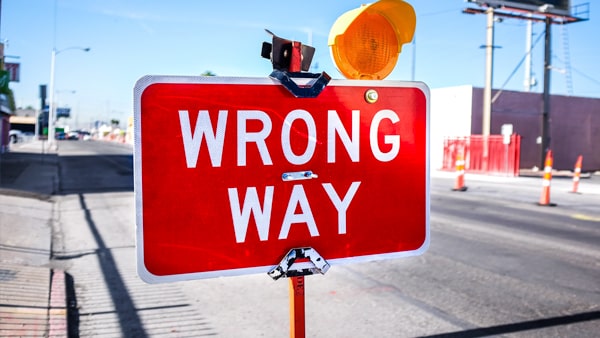
This red and white sign means:
  1. A Enter only after yielding to other traffic
  2. B The roadway is closed in both directions
  3. C U-turns are prohibited at this location
  4. D You are traveling against the permitted direction of traffic

Correct answer: D – You are traveling against the permitted direction of traffic

The WRONG WAY sign faces road users traveling opposite the permitted direction on a one-way roadway or ramp. In Ohio, it may supplement a DO NOT ENTER sign and is normally positioned farther along the roadway. It does not mean the entire road is closed or merely prohibit a particular turn.

Source: Ohio Manual on Uniform Traffic Control Devices — § 2B.47, “WRONG WAY Sign (R5-1a)”
Question 2

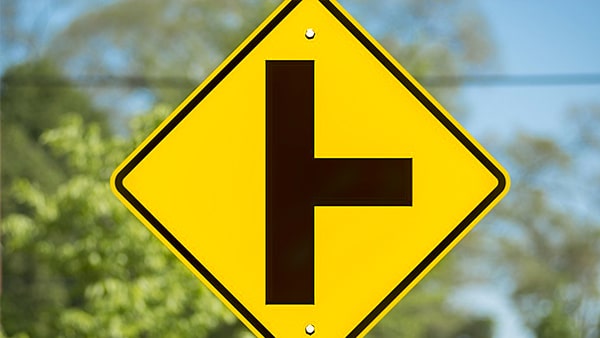
A yellow diamond sign showing a side road joining from the right warns of:

This sign means:
  1. A A required right turn
  2. B An intersecting road on the right
  3. C A requirement to continue straight
  4. D A prohibited right turn

Correct answer: B – An intersecting road on the right

The Side Road warning sign indicates an intersection ahead where another roadway enters from the side shown by the symbol. It warns of the possibility of vehicles turning or entering traffic. Because it is a warning sign, it does not require a particular movement or prohibit a right turn.

Source: Ohio Manual on Uniform Traffic Control Devices — § 2C.41, “Intersection Warning Signs (W2-1 through W2-8)”

Question 3

Under Ohio law, when may you turn right at a steady circular red signal?

  1. A After stopping, if no device prohibits the turn and stop-sign right-of-way rules permit it
  2. B Without stopping whenever the intersection appears clear
  3. C Whenever a steady red arrow points to the right
  4. D Only when approaching from the left lane

Correct answer: A – After stopping, if no device prohibits the turn and stop-sign right-of-way rules permit it

A right turn at a steady circular red signal is permitted after a complete stop unless a traffic-control device prohibits it. The driver must follow the right-of-way rules that apply after stopping at a stop sign. A steady red arrow prohibits the indicated movement unless another traffic-control device specifically permits the turn.

Source: ORC § 4511.13(C)(1), (2), (4) – Highway traffic signal indications; section not applicable to railroad crossings, ORC § 4511.43(A) – Right-of-way rule at through highways, stop signs, yield signs

Question 4

What color lines separate traffic lanes moving in the same direction?

  1. A Yellow
  2. B White
  3. C Red
  4. D Black

Correct answer: B – White

White pavement lines separate traffic traveling in the same direction. They may be broken or solid depending on the type of lane boundary. Yellow centerlines are used to separate traffic moving in opposite directions.

Source: Ohio Driver Manual — § 4, “Lane Pavement Markings”

Question 5

If the faces of raised pavement markers appear red as you approach them, they indicate that you are:

  1. A Nearing a busy intersection
  2. B Approaching a stop sign
  3. C Traveling in the wrong direction
  4. D Entering a no-passing zone

Correct answer: C – Traveling in the wrong direction

Raised pavement markers may display red on the side visible to traffic proceeding in the wrong direction. Red-and-white markers can also be used in wrong-way traffic-control treatments, with red facing the wrong-way road user. A series of red marker faces is therefore a warning that your direction conflicts with the intended traffic flow.

Source: Ohio Manual on Uniform Traffic Control Devices — § 3B.14, “Raised Pavement Markers—General”, Ohio Manual on Uniform Traffic Control Devices — § 2B.48, “Wrong-Way Traffic Control at Interchange Ramps”

Question 6

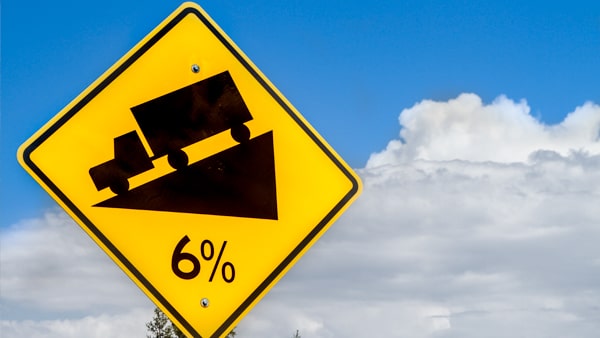
A yellow diamond sign showing a truck descending a slope warns of:

This sign means:
  1. A A truck weight limit ahead
  2. B A downhill grade ahead
  3. C A truck service area ahead
  4. D A roadway where trucks are prohibited

Correct answer: B – A downhill grade ahead

This warning sign identifies a downhill grade ahead. It alerts drivers to a roadway condition rather than imposing a truck restriction or identifying a service area. Yellow diamond-shaped signs generally warn of possible hazards or changing road conditions ahead.

Source: Ohio Driver Manual — § 4, “Traffic Signs—Warning Signs”