Ohio Road Signs Test Simulator

4.8 out of 5 (649 votes)
80% Passing score
25 Questions
5 Mistakes allowed
Road signs are a major part of the Ohio BMV knowledge test, so they deserve more than a quick skim through the manual. For a standard Class D TIPIC, Ohio does not give a separate road-sign-only exam. Sign questions are included in the main 40-question multiple-choice test, along with motor vehicle laws, rules of the road, highway traffic control devices, safe driving practices, and the other material covered in the Ohio Driver Manual. You need 30 correct answers to pass, which works out to 75%. You can miss up to 10 questions, yes, but that margin gets smaller fast when you start guessing on signs you almost know. This Ohio road signs practice test is built for that exact slice of the exam. Each round gives you 20 questions focused on road signs, pulled from a larger bank so the practice does not become stale or too easy to memorize. It is not timed, which is a small thing, but a useful one. You can slow down, study the sign, notice the shape or color, think through the wording, and answer with a little more intention than people usually bring to practice tests when they are just clicking through. The official Ohio permit test is the knowledge test applicants take to qualify for a Temporary Instruction Permit Identification Card, or TIPIC. Applicants can take it at age 15 years and 6 months. After passing the knowledge test and vision screening, the TIPIC must be purchased within 60 days at a Deputy Registrar License Agency. Applicants under 18 also need a parent or guardian to co-sign the application. And if you fail, Ohio requires a one-day wait before retesting. In-person testing allows unlimited attempts, but only one attempt per day; online testing allows two attempts in a six-month period. This Ohio permit practice test cannot use the actual BMV questions, because those are not published. What it can do, and what it is designed to do, is give you steady, focused practice with the signs and sign-related thinking that show up on the real Ohio temps test. It is useful for first-time applicants, people preparing for renewal, and drivers who know the common signs but get shaky once the options become more specific. Use the Ohio Driver Manual as the official source, then use this simulator to make the road sign material familiar. Reading tells you what the signs mean. Repeated practice helps you recognize them quickly, calmly, and with fewer of those “wait, I know this one” moments that waste time on test day.
FREE DMV Practice Test App
Study for your Ohio permit test or driver’s license with the NextDoorDriving app. 700+ DMV questions and answers, 100% free!
Download on the App Store

Sample Ohio Permit Test Questions

Question 1

A police officer directs you through an intersection while the signal is red. What should you do?
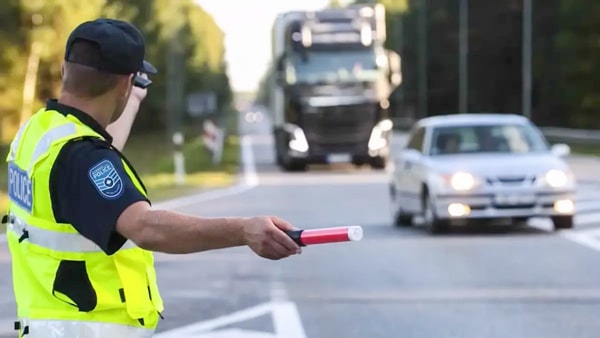
A traffic light is red, but a police officer is telling you to go ahead anyway. What should you do?
  1. A Remain stopped until the signal turns green
  2. B Change lanes before entering the intersection
  3. C Proceed as directed by the officer
  4. D Wait for the officer to approach your vehicle

Correct answer: C – Proceed as directed by the officer

Ohio requires drivers to obey traffic-control devices unless a police officer directs otherwise at that time. The officer's instruction controls when it conflicts with the red signal. Proceed in the manner and direction indicated by the officer rather than waiting for the light to change.

Source: ORC § 4511.12(A) – Obedience to traffic control devices
Question 2

In Ohio, which maneuver is prohibited by a solid double yellow centerline?

  1. A Turning left into a driveway when the movement is permitted and safe
  2. B Passing a vehicle traveling below half the speed limit when every statutory exception is satisfied
  3. C Passing another vehicle when the statutory slow-vehicle exception does not apply
  4. D Crossing through a designated opening in the median

Correct answer: C – Passing another vehicle when the statutory slow-vehicle exception does not apply

Solid double yellow centerlines generally prohibit passing from either direction. Crossing may be permitted for a left turn into a driveway or under the state's limited slow-vehicle passing exception. That exception requires the slower vehicle to be traveling below half the speed limit, the passing driver to remain within the speed limit, and sufficient clear sight distance.

Source: ORC § 4511.31(A), (B) – Establishing hazardous zones, Ohio Driver Manual — § 5, “Solid Double Yellow Lines on Two-lane, Two-Way Roadway”

Question 3

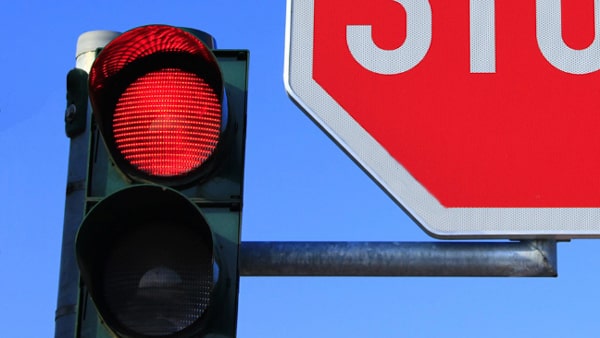
Under Ohio law, where must you stop at a stop sign when there is a crosswalk but no stop line?

  1. A Before entering the crosswalk
  2. B Fifty feet before the intersection
  3. C Where a stop line would normally be painted
  4. D With the front of the vehicle inside the crosswalk

Correct answer: A – Before entering the crosswalk

When no marked stop line exists, a driver approaching a stop sign must stop before entering the crosswalk on the near side of the intersection. The vehicle should not occupy the crosswalk during the required stop. If neither a stop line nor a crosswalk exists, the stop is made at the nearest point that provides a view of approaching traffic.

Source: ORC § 4511.43(A) – Right-of-way rule at through highways, stop signs, yield signs

Question 4

How must you respond to a flashing circular red traffic signal?

If you are approaching an intersection with a red flashing light, what should you do?
  1. A Continue through without reducing speed
  2. B Slow down and yield without stopping
  3. C Wait until the signal displays steady green
  4. D Stop, then proceed when the applicable right-of-way rules allow

Correct answer: D – Stop, then proceed when the applicable right-of-way rules allow

A flashing circular red signal requires a complete stop at the stop line, before the crosswalk, or at the appropriate viewing point if neither is present. After stopping, the driver may proceed subject to the rules that apply at a stop sign. Traffic already in or approaching the intersection closely enough to be an immediate hazard has priority.

Source: ORC § 4511.13(F)(1) – Highway traffic signal indications; section not applicable to railroad crossings, ORC § 4511.43(A) – Right-of-way rule at through highways, stop signs, yield signs

Question 5

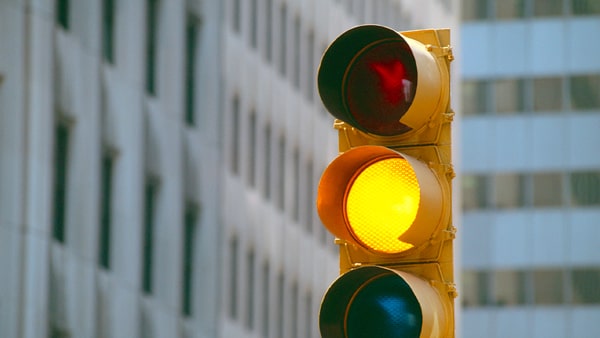
A steady green signal changes to yellow as you approach an intersection. What is the best response?

As you near an intersection, the traffic light changes from green to yellow. Your best action would be to:
  1. A Accelerate to enter before the signal turns red
  2. B Brake sharply regardless of your distance from the intersection
  3. C Plan to stop in the middle of the intersection
  4. D Prepare to stop before entering the intersection

Correct answer: D – Prepare to stop before entering the intersection

A steady yellow signal warns that the related green movement is ending and a red indication will be displayed immediately afterward. The driver manual instructs motorists to use caution and prepare to stop. The rules governing the movement that was ending continue to apply while the yellow signal remains displayed.

Source: ORC § 4511.13(B)(1) – Highway traffic signal indications; section not applicable to railroad crossings, Ohio Driver Manual — § 4, “Traffic Signals”

Question 6

Orange signs, cones, and drums on a freeway indicate that you should:

  1. A Change lanes while maintaining your current speed
  2. B Watch for workers, equipment, and changing traffic conditions
  3. C Assume that your lane ends immediately
  4. D Increase speed to leave the area quickly

Correct answer: B – Watch for workers, equipment, and changing traffic conditions

Ohio's driver manual identifies orange signs as work-zone warnings. Drivers approaching these areas should be alert, reduce speed, follow posted directions, and watch for workers and equipment on or near the roadway. Cones, drums, and barriers may also guide traffic away from closed or hazardous areas.

Source: Ohio Driver Manual — § 4, “Work Zone Signs”