


Oklahoma Permit Practice Test 3

4.8 out of 5 (990 votes)
80% Passing score
20 Questions
4 Mistakes allowed
Before Oklahoma hands over a learner’s permit, it wants to know that you can do more than recognize a stop sign and hope for the best. There is a written knowledge test, a vision screening, a document check, and a little bit of scheduling and fee-related housekeeping wrapped around the whole thing. None of that is impossible. It just helps to know what you are walking into, because licensing offices are not famous for rewarding people who “mostly” understood the process. This Oklahoma permit practice test focuses on the written exam portion, where the real studying happens. You will answer 20 questions covering Oklahoma traffic laws, road signs, safe driving rules, right-of-way, distracted driving, speed control, and the everyday judgment new drivers are expected to have before they start driving on their own. You need at least 16 correct answers to pass, which gives you some room to miss a few, but not enough room to treat the test like a casual warm-up. The actual Class D written test can be taken online through Oklahoma’s KnowTo Drive platform or in person at a Service Oklahoma Licensing Office or participating Licensed Operator. The online test gives you 60 minutes and requires a computer with a stable internet connection, webcam, and microphone. Phones are out. Touchscreens are out too, which is one of those details people tend to discover later than they should. If you are under 18, an adult has to be present for identity verification. You get two online attempts; after that, any additional written-test attempts have to happen in person. Passing the written test still does not mean the permit magically appears. You will need to visit Service Oklahoma or a Licensed Operator, bring the required identity, lawful presence, Oklahoma residency, and Social Security information, and complete the vision screening. Oklahoma’s Class D vision standards generally require 20/60 or better in both eyes, or 20/50 or better in one eye, with or without corrective lenses. Some applicants may need a vision report from an eye doctor, and some may receive driving restrictions based on their results. Use this Oklahoma practice permit test as a realistic review before test day. It gives you a cleaner way to spot weak areas, get comfortable with the question style, and study the rules that actually matter — not in a dramatic way, just in the very practical sense that being prepared makes the whole permit process less clumsy.
FREE DMV Practice Test App
Study for your Oklahoma permit test or driver’s license with the NextDoorDriving app. 700+ DMV questions and answers, 100% free!
Download on the App Store

Sample Oklahoma Permit Test Questions

Question 1

Before passing in the oncoming lane of a two-lane road, what must you evaluate?
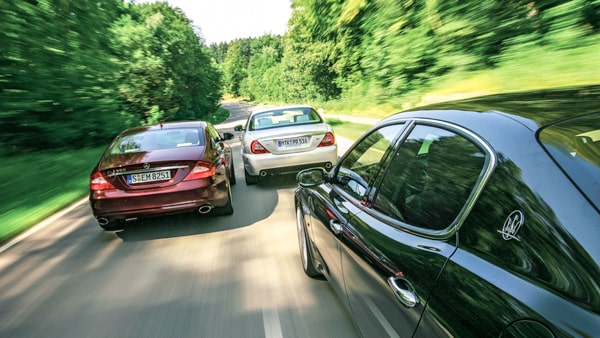
When passing in the oncoming traffic lane of a two-lane road, you should consider:
  1. A. Your speed, the other vehicle’s speed, and your ability to accelerate
  2. B. The clear roadway needed to pass and the distance available
  3. C. Oncoming traffic and hazards such as hills, curves, or intersections
  4. D. All of these factors

Correct answer: D. – All of these factors

Oklahoma law permits a left-side pass only when that side is clearly visible and free of oncoming traffic for enough distance to complete the maneuver safely. The passing driver must also return to the right before coming within 100 feet of an approaching vehicle. Relative speeds, available distance, visibility, and roadway hazards all affect whether those requirements can be met.

Source: 47 O.S. § 11-305 – Limitations on Overtaking on the Left, 47 O.S. § 11-306(a) – Further Limitations on Driving to Left of Center of Roadway, Oklahoma Driver Manual — Ch. 6, “Passing”
Question 2

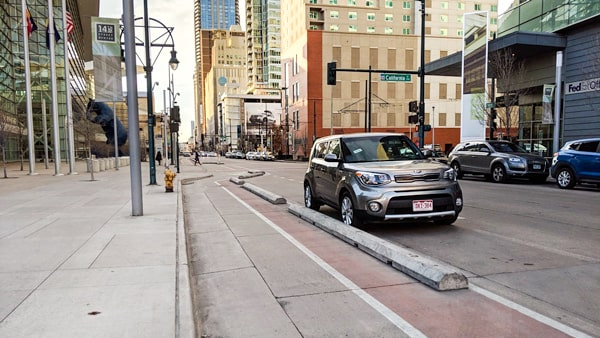
Before pulling away from a parallel parking space, how should you check the nearby traffic lane?

  1. A. Sound the horn before moving
  2. B. Activate the emergency flashers
  3. C. Turn your head and check over your shoulder
  4. D. Use only the inside rearview mirror

Correct answer: C. – Turn your head and check over your shoulder

Do not depend solely on the inside mirror when leaving a parallel parking space. Check your mirrors, then turn your head and look over your shoulder for vehicles, motorcycles, bicycles, and other road users in the blind area. Begin moving only when you have confirmed that it can be done safely.

Source: 47 O.S. § 11-603 – Starting Parked Vehicle, Oklahoma Driver Manual — Ch. 9, “Parallel Parking”

Question 3

Which driving ability is typically affected first after a person drinks alcohol?

If you drive after drinking, you should be aware that the first thing alcohol affects is:
  1. A. Hearing
  2. B. Alertness
  3. C. Vision
  4. D. Judgment

Correct answer: D. – Judgment

Alcohol begins impairing judgment before a driver may recognize obvious physical effects. Poor judgment can lead to unsafe choices about speed, following distance, risk, and whether the person is capable of driving. A driver should not use the absence of noticeable vision or coordination problems as proof of being unimpaired.

Source: Oklahoma Driver Manual — Ch. 12, “Alcohol—Why Drinking and Driving Is So Dangerous”

Question 4

When entering a public road from a private driveway, what should a driver do?

  1. A. Sound the horn and enter slowly
  2. B. Place part of the vehicle in the roadway before stopping
  3. C. Accelerate into the nearest traffic gap
  4. D. Stop as required and yield to pedestrians and highway traffic

Correct answer: D. – Stop as required and yield to pedestrians and highway traffic

A driver entering a highway from a private road or driveway must yield to vehicles approaching on the highway. When emerging from an alley, driveway, or building in a business or residence district, the driver must stop before crossing the sidewalk area and yield as required to pedestrians. Enter only when the movement can be completed safely.

Source: 47 O.S. § 11-404 – Vehicle Entering Highway from Private Road or Driveway, 47 O.S. § 11-704 – Emerging from Alley, Driveway or Building, Oklahoma Driver Manual — Ch. 5, “You Must Always Yield”

Question 5

When parking along a curb on a two-way, level roadway in Oklahoma, your vehicle should be:

When you park on a level road next to a curb:
  1. A. Parallel to the curb, with the right wheels within 18 inches of it
  2. B. Angled toward the curb, with the front wheels touching it
  3. C. Parallel to the curb, with the left wheels against it
  4. D. Angled away from the curb and toward traffic

Correct answer: A. – Parallel to the curb, with the right wheels within 18 inches of it

A vehicle parked on a roadway with an adjacent curb must ordinarily have its right wheels parallel to and within 18 inches of the right-hand curb. Local authorities may allow left-side parking on a one-way roadway. The 12-inch distance used in some states does not apply here.

Source: 47 O.S. § 11-1004(A)–(B) – Additional parking regulations

Question 6

A large truck ahead moves left before starting a right turn. What should you do?

  1. A. Stay back and keep out of the space between the truck and the curb
  2. B. Pull beside the truck on the right before it turns
  3. C. Use the shoulder to pass the truck quickly
  4. D. Follow closely so other vehicles cannot enter the gap

Correct answer: A. – Stay back and keep out of the space between the truck and the curb

Trucks often move left to obtain enough room for a wide right turn. Entering the open space beside the truck can place your vehicle in a blind spot between the trailer and the curb. Remain behind the truck until it completes the maneuver.

Source: Oklahoma Driver Manual — Ch. 10, “Risky Situations with Trucks”