


Oregon Practice Permit Test 7

4.9 out of 5 (200 votes)
80% Passing score
20 Questions
4 Mistakes allowed
This seventh Oregon DMV practice test keeps the focus where it belongs at first: the actual knowledge you need to recognize, remember, and use when the real DMV test starts asking questions in its very official little voice. You get 20 questions covering Oregon driving rules, permit test topics, and practical legal details that are easy to skim past in the Oregon Driver Manual. Proof of insurance, for instance, is not exactly gripping reading. Still, Oregon’s financial responsibility laws matter, and the test can absolutely expect you to know what drivers are required to carry. The format gives you room to practice without making the whole thing feel like a classroom appointment you forgot to schedule. This Oregon DMV permit practice test is available online, so you can work through it early, late, or during that strange gap in the day when you are somehow too busy to relax but not busy enough to avoid studying. Some questions include images or visual clues, which helps when a scenario is easier to understand by seeing it instead of untangling a block of DMV-style wording. Hints are there when you need a small push, and missed answers include explanations, so you are not just told you were wrong and left to glare at the screen. Score at least 16 out of 20, and you have a useful sign that your Oregon practice permit test prep is moving in the right direction. Now, the licensing part — because the practice test is only one piece of the adult driver license process, and pretending otherwise would be a little too tidy. If you are 18 or older in Oregon, you may apply for an instruction permit first, or you may be able to apply directly for a driver license. Adult first-time applicants generally need to study the Oregon Driver Manual, decide whether they want a standard card or REAL ID, visit a DMV office or make an appointment, show proof of identity and physical address, provide a Social Security number or certify that one has not been assigned, pass the vision test, pay the required fees, and have a photo taken. Adults are not subject to Oregon’s under-18 provisional rules, including the teen permit holding period, supervised driving-hour requirement, passenger limits, nighttime restrictions, or under-18 mobile-device rule. That does simplify things. Not completely, unfortunately, because the knowledge test and drive test may still be required depending on your situation. But it does mean this Oregon DMV practice permit test is doing a specific job: helping you prepare for the rule-based part of licensing before the DMV gets involved in real time.
FREE DMV Practice Test App
Study for your Oregon permit test or driver’s license with the NextDoorDriving app. 700+ DMV questions and answers, 100% free!
Download on the App Store

Sample Oregon Permit Test Questions

Question 1

A pedestrian carrying a white cane is most likely a person who:

You need to use extra caution when driving near a pedestrian using a white cane because:
  1. A. Is deaf but has no vision limitation
  2. B. Has an intellectual disability
  3. C. Is blind or has limited vision
  4. D. Is recovering from a leg injury

Correct answer: C. – Is blind or has limited vision

Oregon law defines a white cane as one used by a person who is blind, deaf-blind, or has limited vision. A driver approaching such a pedestrian who is crossing or about to cross must stop and remain stopped until the pedestrian has crossed the roadway. Failure to do so is a Class B traffic violation.

Source: ORS 814.110 – Rights for persons who are blind, who are deaf-blind or who have limited vision, ORS 811.035 – Failure to stop and remain stopped for pedestrian who has limited vision or is blind; penalty
Question 2

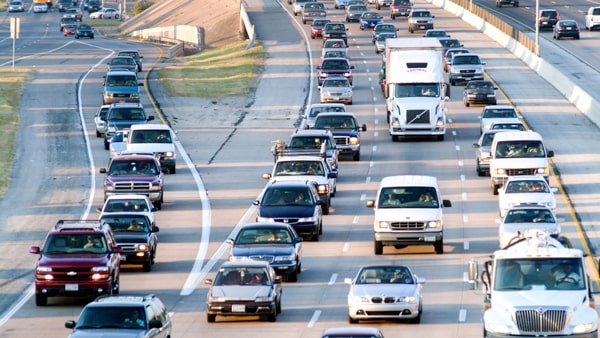
Before merging onto a freeway, how should you check for traffic beside and behind you?

When you enter a freeway, you should check traffic by using:
  1. A. Use only the inside and outside mirrors
  2. B. Use only the inside rearview mirror
  3. C. Check your mirrors and glance over your shoulder
  4. D. Use only the left outside mirror

Correct answer: C. – Check your mirrors and glance over your shoulder

Use your mirrors and check the appropriate blind spot before merging onto a freeway. A brief glance over your shoulder lets you check an area that may not be visible in the mirrors. You must also yield to freeway traffic and adjust your speed to merge with the vehicles already traveling there.

Source: Oregon Driver Manual — Lane Travel, “Changing Lanes”, Oregon Driver Manual — Lane Travel, “Entering a Freeway”

Question 3

In Oregon, which centerline prohibits passing in both directions?

  1. A. One solid and one broken yellow line
  2. B. A single broken yellow line
  3. C. Two solid yellow lines
  4. D. A single broken white line

Correct answer: C. – Two solid yellow lines

A double solid yellow centerline means passing is prohibited for traffic traveling in either direction. A driver may cross these lines to make a lawful left turn into or out of a roadway after waiting for oncoming traffic to clear. The markings do not create an absolute barrier against every left turn.

Source: ORS 811.420(1), (3)(a) – Passing in no passing zone; exceptions; penalty, Oregon Driver Manual — Lane Travel, “Double solid yellow line”

Question 4

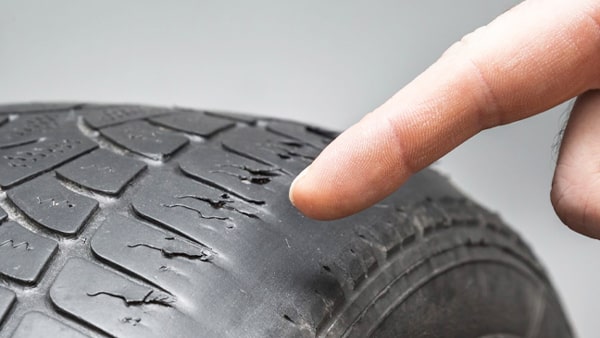
Worn or damaged tires can:

Worn or bald tires:
  1. A. Increase stopping distance and reduce traction
  2. B. Increase the risk of hydroplaning
  3. C. Fail and cause a sudden loss of control
  4. D. Cause all of these problems

Correct answer: D. – Cause all of these problems

Low tread depth increases hydroplaning, reduces traction, and increases the distance needed to stop. Tire damage such as cuts or bulges can lead to tire failure, a blowout, and a sudden loss of control. Inspect tread and tire condition regularly and replace unsafe tires before driving.

Source: Oregon Commercial Driver Manual — § 11.5.2, “Tires”

Question 5

Following another vehicle too closely:

  1. A. Is always legal when traffic is moving slowly
  2. B. Is unsafe and may result in a traffic violation
  3. C. Prevents other vehicles from entering your lane
  4. D. Is an effective way to reduce congestion

Correct answer: B. – Is unsafe and may result in a traffic violation

Oregon law prohibits following another vehicle more closely than is reasonable and prudent for the vehicles’ speed, traffic, and highway conditions. Tailgating reduces the space available to react and stop. Following too closely is a Class B traffic violation.

Source: ORS 811.485(1)(a), (4) – Following too closely; penalty, Oregon Driver Manual — Lane Travel, “Maintaining a Space Cushion”

Question 6

When parking downhill beside a curb, how should you position the front wheels?

  1. A. Turn them toward the curb
  2. B. Turn them away from the curb
  3. C. Keep them parallel to the curb
  4. D. Wheel position does not matter

Correct answer: A. – Turn them toward the curb

When parking downhill beside a curb, turn the front wheels toward the curb. If the vehicle begins rolling, the curb can help keep it from moving into the travel lane. Always set the parking brake and leave an automatic transmission in park or a manual transmission in gear.

Source: Oregon Driver Manual — Parking and Stopping, “Parking on Hills”