Oregon DMV Permit Test Simulator

4.5 out of 5 (1514 votes)
80% Passing score
35 Questions
7 Mistakes allowed
The Oregon DMV permit test is only 35 questions, which sounds manageable enough, but the passing line is firm: 28 correct answers, or 80%. That leaves room for 7 misses, and not much more. This Oregon DMV permit practice test is built around that same structure, so each run gives you a realistic feel for the Class C knowledge test instead of a loose review quiz wearing a DMV label. The questions pull from the Oregon Driver Manual and cover the material Oregon expects new drivers to know before they get an instruction permit or license. Road signs are included in the main knowledge test, not separated into their own little road-sign exam, so the practice test keeps them mixed in with traffic laws, highway signs and signals, right-of-way rules, safe driving habits, speed limits, and Oregon-specific laws. That matters. A person can feel pretty comfortable with stop signs and lane markings, then lose points on something less flashy, like the Move Over Law, DUI consequences, or when mobile-device rules apply. And yes, the wording can be a little plain in that official-manual way, which somehow makes it easier to read too fast. Use the Oregon DMV test simulator more than once. Not because repeating questions is thrilling — it is not — but because the second or third attempt tends to show where your knowledge is actually solid and where you were guessing with confidence, which is a special kind of wrong. Review the missed answers, go back to the Oregon Driver Manual when needed, and pay attention to patterns. If signs keep tripping you up, study signs. If right-of-way questions feel slippery, slow down there. The point is to walk into the real Oregon DMV knowledge test already used to the format, the pacing, and the mix of topics. A few licensing details are worth keeping in the same mental folder. The Oregon Class C knowledge test costs $7 each time you take it, whether you test online or at a DMV office. Online testing requires a desktop or laptop with a webcam, keyboard, and mouse; phones and tablets are out. Teens under 18 need a proctor over age 21 for the online test, while adults do not. If you fail online, Oregon allows two attempts in 24 hours and four total online attempts for that test type before you have to go to a DMV office. For teens, the permit path starts at age 15 with a Provisional Instruction Permit, plus the knowledge test, vision screening, identity and address documents, a parent or guardian signature, fees, and a photo. Adults can apply for an instruction permit too, especially if they need legal practice before the drive test. Either way, this Oregon DMV permit practice test is best treated as a rehearsal for the real thing — not a shortcut, but a very useful warning system.

FREE DMV Practice Test App
Study for your Oregon permit test or driver’s license with the NextDoorDriving app. 700+ DMV questions and answers, 100% free!
Download on the App Store

Sample Oregon Permit Test Questions

Question 1

Which statement correctly describes how the body removes alcohol?

  1. A. Only time allows the body to process alcohol
  2. B. Coffee immediately removes alcohol from the blood
  3. C. A cold shower doubles the processing rate
  4. D. Physical exercise eliminates alcohol before driving

Correct answer: A. – Only time allows the body to process alcohol

The liver processes alcohol at a limited, fixed rate. Drinking coffee, taking a cold shower, or using another supposed remedy does not make that process happen faster. If alcohol is affecting you, only allowing sufficient time for your body to process it can reduce its presence; do not drive after drinking.

Source: Oregon Commercial Driver Manual — § 2.22.1, “Alcohol and Driving”

Question 2

In Oregon, yellow pavement lines are primarily used to:

  1. A. Separate traffic moving in opposite directions
  2. B. Separate lanes moving in the same direction
  3. C. Designate accessible parking spaces
  4. D. Mark school-bus loading areas

Correct answer: A. – Separate traffic moving in opposite directions

Yellow pavement markings are used mainly to separate traffic traveling in opposite directions. They can also mark the left edge of one-way roads and ramps, painted medians, and two-way left-turn lanes. White lines generally separate traffic moving in the same direction.

Source: 2026–2027 Oregon Driver Manual — Lane Travel, “Yellow Markings”

Question 3

When may you continue using high-beam headlights at night?

  1. A. Whenever you are traveling on a highway
  2. B. While following another vehicle at any distance
  3. C. When no nearby driver will be affected and conditions are suitable
  4. D. Whenever fog or smoke limits visibility

Correct answer: C. – When no nearby driver will be affected and conditions are suitable

High beams can improve your view on a dark road, but they must not interfere with other drivers. Use low beams when an oncoming vehicle is within 500 feet or when following another vehicle within 350 feet, except while overtaking or passing. Low beams should also be used in fog, dust, or smoke because high beams reflect glare back toward you.

Source: ORS § 811.515(6) – When lights must be displayed; kind of light; number; direction; use on certain vehicles, 2026–2027 Oregon Driver Manual — Safe and Responsible Driving, “Using Lights”

Question 4

Why should drivers expect to see bicyclists using regular roadway lanes?

  1. A. Bicyclists must ride facing approaching traffic
  2. B. Bicyclists generally have the same roadway rights and duties as other drivers
  3. C. Bicyclists always have the right of way

Correct answer: B. – Bicyclists generally have the same roadway rights and duties as other drivers

A person riding a bicycle on a public way is generally subject to the rules that apply to other vehicles and has corresponding rights and duties. Bicyclists may lawfully occupy a travel lane in various circumstances. A sharrow specifically indicates that the lane is shared and that bicyclists may be present.

Source: ORS § 814.400 – Application of vehicle laws to bicycles, 2026–2027 Oregon Driver Manual — Sharing the Road, “Sharrow”

Question 5

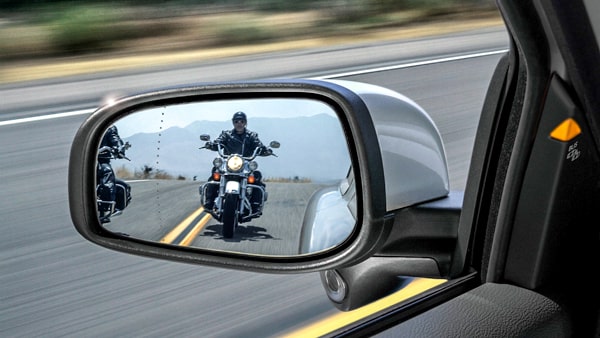
Why should you check carefully for motorcycles before changing lanes?

Look carefully for motorcycles before you change lanes because:
  1. A. Motorcycles may never use a full traffic lane
  2. B. They are smaller and can be hidden in a blind spot
  3. C. They always have priority at intersections
  4. D. They always have priority on highways

Correct answer: B. – They are smaller and can be hidden in a blind spot

Motorcycles and mopeds are more difficult to see than larger vehicles and can disappear within a vehicle’s blind spot. Their size can also make it difficult to judge their speed and distance. Check your mirrors, signal, and look over your shoulder before moving into another lane.

Source: 2026–2027 Oregon Driver Manual — Sharing the Road, “Motorcycles and Mopeds”, 2026–2027 Oregon Driver Manual — Lane Travel, “Changing Lanes”

Question 6

In Oregon, what does a steady green arrow allow you to do?

  1. A. Proceed in any direction if the intersection appears clear
  2. B. Wait five seconds before entering the intersection
  3. C. Enter cautiously and make only the movement shown by the arrow
  4. D. Remain stopped until a circular green signal appears

Correct answer: C. – Enter cautiously and make only the movement shown by the arrow

A steady green arrow permits the movement indicated by the arrow and gives that movement the right of way. The statute still directs the driver to enter the intersection cautiously. The arrow does not authorize a turn or other movement in a direction that is not indicated by the signals being displayed.

Source: ORS § 811.260(2) – Appropriate driver responses to traffic control devices, 2026–2027 Oregon Driver Manual — Signs and Traffic Signals, “Green Arrow”