Oregon DMV Sign Test 4

4.9 out of 5 (125 votes)
80% Passing score
20 Questions
4 Mistakes allowed
Oregon road signs deserve more attention than most people give them during permit prep. They are part of the larger Oregon Class C Knowledge Test, which has 35 questions and requires 28 correct answers to pass, so missed points can disappear faster than expected. And yes, the official test covers more than signs, but signs are the material you are most likely to use immediately, constantly, and sometimes with about two seconds to spare. This Oregon DMV road signs practice test gives you 20 multiple-choice questions focused on the signs Oregon drivers need to recognize by color, shape, symbol, and meaning. That sounds tidy on paper. In actual driving, it means knowing what a warning sign is telling you on a foggy Willamette Valley road, catching a pedestrian-crossing sign before traffic stacks up in Portland, or reading a mountain-road warning in the Cascades without treating it like background scenery. The point is not to admire the sign. The point is to react correctly, and preferably before the situation gets dramatic. As you move through the Oregon DMV permit practice test, each answer comes with immediate feedback and an explanation, which is where the studying actually starts to do something useful. A wrong answer is not a dead end; it is just the part where you find out which sign shape, color, or symbol you were half-remembering. You can retake the practice test as many times as needed, and you will need at least 16 correct answers out of 20 to pass this version. For younger drivers, this practice fits into a longer, stricter licensing path. Oregon allows a Provisional Instruction Permit at age 15, but drivers under 18 must hold that permit for 6 months before applying for a provisional license. They also need supervised driving practice: 50 hours with an ODOT-approved driver education course, or 100 hours without one. The supervising driver has to be at least 21 and licensed for at least 3 years. After licensing, passenger limits and the midnight-to-5 a.m. night restriction still apply for a while. So, no, the road signs test is not the whole process, but you may not get far without it.
FREE DMV Practice Test App
Study for your Oregon permit test or driver’s license with the NextDoorDriving app. 700+ DMV questions and answers, 100% free!
Download on the App Store

Sample Oregon Permit Test Questions

Question 1

On an Oregon two-way road, when may you use the left side to pass another vehicle?
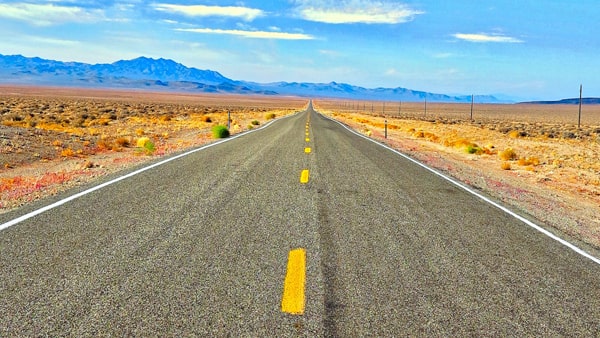
On a two-way highway, you are allowed to drive on the left half of the roadway when:
  1. A. Whenever the centerline consists of two solid yellow lines
  2. B. When a solid yellow line is on your side
  3. C. When passing is permitted and the way ahead is clear enough
  4. D. Whenever you are nearing a curve or intersection

Correct answer: C. – When passing is permitted and the way ahead is clear enough

A driver may use the left side to overtake when the maneuver is permitted and can be completed safely. The left side must be clearly visible and free of oncoming traffic for enough distance to complete the pass without interference. Signs, solid-yellow markings, curves, intersections, and other restrictions may prohibit passing.

Source: ORS 811.295(2)(a) – Failure to drive on right; exceptions; penalty, ORS 811.410(1)(c) – Unsafe passing on left; penalty, ORS 811.420 – Passing in no passing zone; exceptions; penalty
Question 2

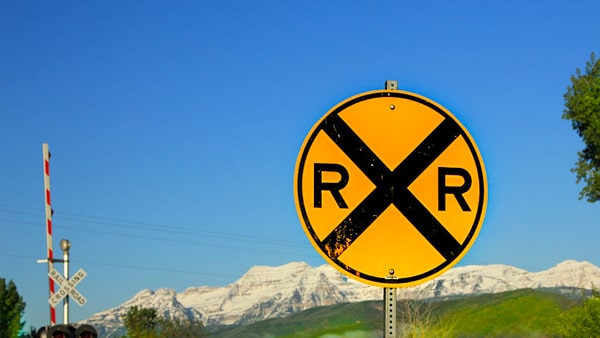
A round yellow sign marked with a black “X” and “RR” warns of:

This sign is a warning that you are approaching:
  1. A. A four-way intersection
  2. B. A pedestrian crossing
  3. C. A railroad crossing ahead
  4. D. A blasting area

Correct answer: C. – A railroad crossing ahead

The Railroad Advance sign warns that a railroad crossing is ahead. Drivers should recognize that they may have to stop before reaching the tracks. It is different from the crossbuck sign installed at the crossing itself.

Source: Oregon Driver Manual — Signs and Traffic Signals, “Railroad Advance”, Oregon Driver Manual — Railroad Crossings, Light Rail and Street Cars, “Railroad Crossings”

Question 3

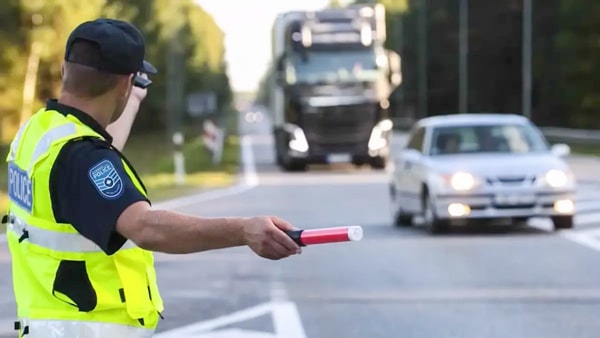
In Oregon, a police officer directs you through a red signal. What should you do?

A traffic light is red, but a police officer is telling you to go ahead anyway. What should you do?
  1. A. Remain stopped until the signal turns green
  2. B. Change lanes before moving forward
  3. C. Follow the officer’s lawful direction
  4. D. Wait for the officer to approach your window

Correct answer: C. – Follow the officer’s lawful direction

A driver must comply with a lawful traffic order, signal, or direction from an authorized police officer displaying a badge or star. This applies even when the officer’s direction differs from a traffic signal. Failing to obey such an officer is a Class B traffic violation.

Source: ORS 811.535 – Failing to obey police officer; penalty, Oregon Driver Manual — Signs and Traffic Signals, “Signs”

Question 4

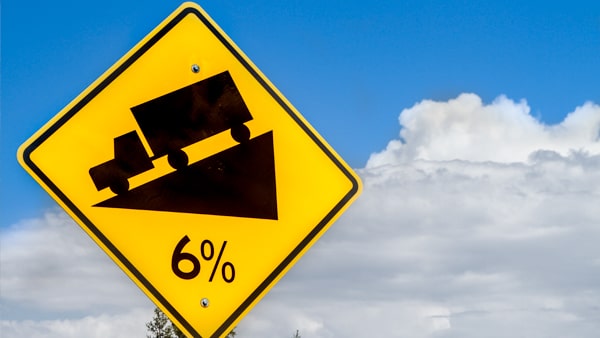
What does the HILL warning sign indicate?

This sign means:
  1. A. A truck weight restriction ahead
  2. B. A steep grade ahead
  3. C. A truck service area ahead
  4. D. A roadway closed to trucks

Correct answer: B. – A steep grade ahead

The HILL warning sign indicates that a steep grade is ahead. It gives drivers advance notice to account for the change in roadway conditions. It does not announce a truck stop, impose a truck restriction, or state a vehicle weight limit.

Source: Oregon Driver Manual — Signs and Traffic Signals, “Hill”

Question 5

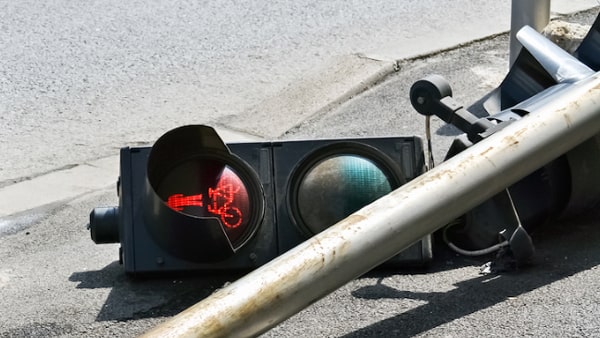
At an Oregon intersection, what should you do if the traffic signal is completely dark?

When a traffic signal light is not working, you should:
  1. A. Stop only when another vehicle is present
  2. B. Slow down but continue without stopping
  3. C. Stop, then proceed under stop-sign rules when safe
  4. D. Drive through as though the signal were green

Correct answer: C. – Stop, then proceed under stop-sign rules when safe

A dark traffic signal must be treated like stop signs controlling every direction. Come to a complete stop, yield as required, and proceed only when it is safe and your turn has arrived. A signal that is flashing red or yellow is not dark and must be obeyed according to the color displayed.

Source: Oregon Driver Manual — Signs and Traffic Signals, “Flashing Red or Dark Signal”

Question 6

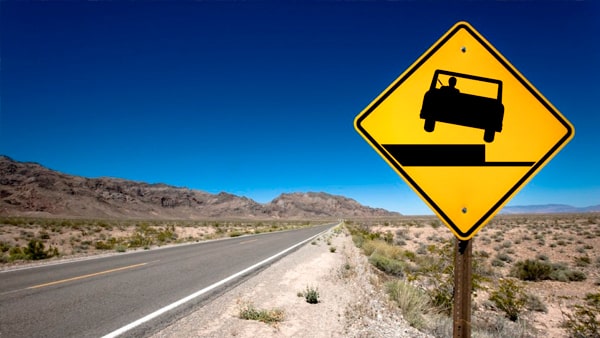
A SHOULDER DROP-OFF warning sign alerts you to the danger of:

What should you be most concerned about when you see this sign?
  1. A. Misaligned headlights on uneven pavement
  2. B. Entering an area where tire chains are required
  3. C. Water covering the entire roadway
  4. D. Losing control if your wheels leave the raised pavement edge

Correct answer: D. – Losing control if your wheels leave the raised pavement edge

This warning identifies an abrupt difference between the roadway and shoulder levels. If your wheels leave the pavement, braking hard or steering sharply can contribute to a loss of control. Slow down while holding a steady course, then turn back onto the roadway gradually when it is safe.

Source: OAR 734-020-0005 – Traffic Control Devices, Manual on Uniform Traffic Control Devices for Streets and Highways, 11th ed. — Part 2, “Shoulder Signs”, Oregon Driver Manual — Safe and Responsible Driving, “Driving Off the Road”