Pennsylvania Drivers License Practice Test 6

5 out of 5 (100 votes)
80% Passing score
20 Questions
4 Mistakes allowed
Getting ready for the Pennsylvania permit test is not just a matter of memorizing a few signs and calling it done. The written test is part of the process, sure, but Pennsylvania also expects you to have the licensing paperwork handled correctly before the permit ever becomes real. That starts with Form DL-180. A health care provider has to complete the medical section on the back, and the timing is fairly specific: the physical can be completed no earlier than 6 months before your 16th birthday, and the form stays valid for 1 year from the date of that exam. Tiny detail, big consequence if you get it wrong. This PA permit practice test focuses on the part most applicants are studying for right now: the Pennsylvania written knowledge test. It is the sixth driver license practice test in the series, with 20 questions built around the rules, habits, and judgment calls PennDOT expects new drivers to understand. You need 16 correct answers to pass, which is a useful benchmark because it tells you pretty quickly whether you are actually ready or just feeling ready, which is not always the same thing. A lot of this practice test centers on turn signals, and that is not filler. Signaling is one of those ordinary driving skills that carries more weight than people give it. Lane changes, turns, merging, pulling out from the curb, moving through traffic without making everybody guess what you are doing—it all depends on clear communication. Some questions include images, which helps because driving rules often make more sense when you can see the situation instead of trying to build the whole scene in your head from one stiff sentence. The broader licensing process is worth keeping in the background while you study. If the driver license examiner cannot tell whether the medical information on your DL-180 meets PennDOT standards, your learner’s permit may be delayed while PennDOT asks for more review. In more serious cases, when a medical condition could affect safe driving, PennDOT may require a dual-control learner’s permit and driving with a certified instructor. And later, if your learner’s permit expires or you fail the road test 3 times, Pennsylvania allows a one-year extension through the proper learner’s permit extension process. So yes, use this PA practice permit test to sharpen your written-test skills. But keep the forms, deadlines, and permit rules in view too. Passing the knowledge test matters; avoiding preventable licensing snags matters right along with it.
FREE DMV Practice Test App
Study for your Pennsylvania permit test or driver’s license with the NextDoorDriving app. 700+ DMV questions and answers, 100% free!
Download on the App Store

Sample Pennsylvania Permit Test Questions

Question 1

Before turning left from a two-way street, you must yield to:

  1. A Pedestrians waiting on the sidewalk who have not entered the roadway
  2. B Vehicles stopped at a red signal
  3. C Oncoming vehicles close enough to create a hazard

Correct answer: C – Oncoming vehicles close enough to create a hazard

Pennsylvania law requires a driver turning left at an intersection, alley, private road, or driveway to yield to an approaching vehicle that is close enough to constitute a hazard. Wait until the oncoming vehicle passes or a safe gap becomes available before completing the turn.

Source: 75 Pa.C.S. § 3322 – Vehicle turning left
Question 2

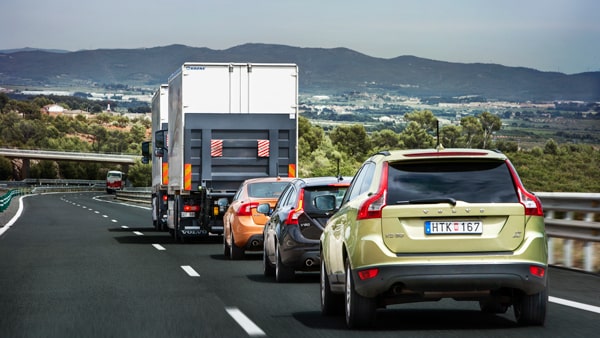
Before moving into a passing lane, when should you activate your turn signal?

  1. A Only as the vehicle begins crossing the lane line
  2. B At any point during the maneuver
  3. C After entering the passing lane
  4. D Early enough to communicate the planned lane change

Correct answer: D – Early enough to communicate the planned lane change

Pennsylvania law requires an appropriate signal before moving from one traffic lane to another. The driver’s manual advises signaling early enough for others to understand your plan before you begin passing. After completing the pass, signal again before returning to the original lane.

Source: 75 Pa.C.S. § 3334(a), (d) – Turning movements and required signals, Pennsylvania Driver’s Manual — Ch. 3, “Turning, Merging, and Passing: Passing”

Question 3

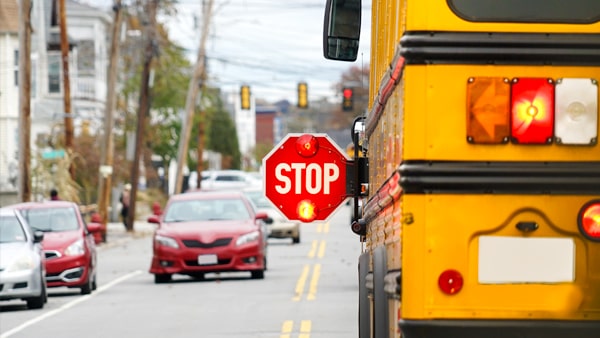
You approach a stopped school bus on the same roadway with red lights flashing and its stop arm extended. What is required?

What does it mean when a school bus is stopped and its red lights are flashing?
  1. A Pass if no children are visible
  2. B Stop at least 10 feet away and remain stopped as required
  3. C Stop only when approaching the front of the bus
  4. D Pass if the bus driver waves you through

Correct answer: B – Stop at least 10 feet away and remain stopped as required

Pennsylvania law requires drivers meeting or overtaking the bus to stop at least 10 feet away. Do not proceed until the red lights are no longer operating, and do not resume movement until children who left the bus have reached safety. The stopping rule does not apply to opposing traffic when the bus is on a separate roadway of a divided highway.

Source: 75 Pa.C.S. § 3345(a), (g) – Meeting or overtaking school bus, Pennsylvania Driver’s Manual — Ch. 3, “School Buses”

Question 4

After parallel parking, when may you open a door on the side exposed to moving traffic?

  1. A Whenever it is daylight
  2. B When the nearest traffic signal turns red
  3. C Only when it is reasonably safe and will not interfere with traffic
  4. D After activating the vehicle’s hazard flashers

Correct answer: C – Only when it is reasonably safe and will not interfere with traffic

Pennsylvania law prohibits opening a vehicle door unless it is reasonably safe and will not interfere with moving traffic. A door on the traffic side also may not be left open longer than necessary to load or unload passengers. Check behind you before opening it, particularly for bicyclists traveling beside parked vehicles.

Source: 75 Pa.C.S. § 3705 – Opening and closing vehicle doors

Question 5

Which visual-search habit helps you identify driving hazards early?

  1. A Staring at the vehicle directly ahead
  2. B Watching only the inside mirror
  3. C Scanning the roadway and its sides well ahead
  4. D Keeping high-beam headlights on at all times

Correct answer: C – Scanning the roadway and its sides well ahead

Drivers should search continuously instead of fixing their eyes on one vehicle or one point. The Pennsylvania manual recommends identifying potential problems about 12 to 15 seconds ahead while also scanning the sides of the road. Early detection gives you more time to adjust speed, position, or direction safely.

Source: Pennsylvania Driver’s Manual — Ch. 3, “Managing Space: Looking Ahead”

Question 6

Following another vehicle too closely:

Following closely behind another vehicle:
  1. A Keeps your vehicle out of the other driver’s blind spots
  2. B May leave too little room to avoid a rear-end crash
  3. C Improves fuel economy under ordinary conditions
  4. D Is required during the driving test

Correct answer: B – May leave too little room to avoid a rear-end crash

Pennsylvania law prohibits following more closely than is reasonable and prudent for the speed, traffic, and roadway conditions. On dry pavement, the driver’s manual recommends at least a four-second following distance. If you reach the same fixed point in less than four seconds, increase the space ahead; wet, slippery, or otherwise hazardous conditions require more distance.

Source: 75 Pa.C.S. § 3310(a) – Following too closely, Pennsylvania Driver’s Manual — Ch. 3, “Keep a Space Cushion Ahead (4-Second Rule)”