


Pennsylvania DMV Practice Test 9

4.9 out of 5 (80 votes)
80% Passing score
20 Questions
4 Mistakes allowed
Preparing for the PA PennDOT permit test is not just a matter of skimming a few signs and hoping the rest works out. Pennsylvania’s knowledge test is short — 18 multiple-choice questions, with 15 correct answers needed to pass — which means every missed question carries a little more weight than people expect. This PA PennDOT practice test, the ninth in our series, narrows in on school bus rules, one of those areas where the wording can get fussy because the real-life stakes are not theoretical. Children are getting on and off buses. Traffic is moving. Drivers have to know exactly when to stop. This Pennsylvania practice permit test gives you 20 questions focused on school bus safety, including loading and unloading situations, traffic approaching from different directions, and the kinds of details that tend to separate a half-remembered rule from an answer you can actually trust. Aim for at least 16 correct. That is a strong benchmark before you walk into the official PA DMV learners permit test, where the margin for error is only three questions. The test is built for repeat practice, which matters more than it sounds like it should. Take it once, miss a few, read the explanations, mutter at the ones you thought were obvious, and then take it again. Immediate feedback after each question helps you see not only what the right answer is, but why Pennsylvania law treats that situation the way it does. That is the part that sticks. For first-time drivers, the bigger licensing picture is worth keeping in mind. In Pennsylvania, you can apply for a learner’s permit at 16. If you are under 18, the permit is valid for one year, and you generally need to hold it for 6 months while completing 65 hours of supervised driving, including 10 hours at night and 5 hours in bad weather. After the road test, junior driver restrictions may still apply, including the 11 p.m. to 5 a.m. nighttime limit and rules about young non-family passengers. This PA PennDOT permit practice test is updated for 2026 and fits into a broader study plan covering Pennsylvania traffic laws, road signs, and safe-driving practices. School bus questions are only one part of the exam, sure — but they are exactly the kind of part you want settled before test day, and before you are the driver making that call on a real road.
FREE DMV Practice Test App
Study for your Pennsylvania permit test or driver’s license with the NextDoorDriving app. 700+ DMV questions and answers, 100% free!
Download on the App Store

Sample Pennsylvania Permit Test Questions

Question 1

Where does Pennsylvania law prohibit a passenger-vehicle driver from standing or parking?

  1. A. Within 15 feet of a fire hydrant
  2. B. In a lawful space with the wheels within 12 inches of the curb
  3. C. In a marked parking space where no restriction is posted
  4. D. Along the left curb of a one-way street when properly positioned with traffic

Correct answer: A. – Within 15 feet of a fire hydrant

A vehicle may not stand or park within 15 feet of a fire hydrant. Lawfully parked vehicles generally must be parallel to the curb and within 12 inches of it, with special positioning allowed on one-way roads. A violation of Section 3353 is a summary offense carrying a fine of up to $50.

Source: 75 Pa.C.S. § 3353(a)(2)(ii), (e) – Prohibitions in specified places, 75 Pa.C.S. § 3354(a), (b) – Additional parking regulations
Question 2

Why should you check mirrors and blind spots carefully for bicyclists before turning, moving from a curb, or opening a vehicle door?

  1. A. Bicyclists always have the right-of-way
  2. B. A bicyclist may be outside the area visible in your mirrors
  3. C. Bicyclists are required to ride against traffic
  4. D. Bicyclists do not have to obey traffic laws

Correct answer: B. – A bicyclist may be outside the area visible in your mirrors

Bicyclists may lawfully use the roadway and can be located in an area not visible through your mirrors. Check mirrors and blind spots before turning, changing position, pulling from a curb, or opening a door. A brief shoulder check helps identify a cyclist approaching alongside the vehicle.

Source: 75 Pa.C.S. § 3501(a) – Applicability of traffic laws to pedalcycles, Pennsylvania Driver’s Manual — Ch. 3, “Looking Behind”, Pennsylvania Driver’s Manual — Ch. 5, “The Dangers of Open Doors to Bicyclists”

Question 3

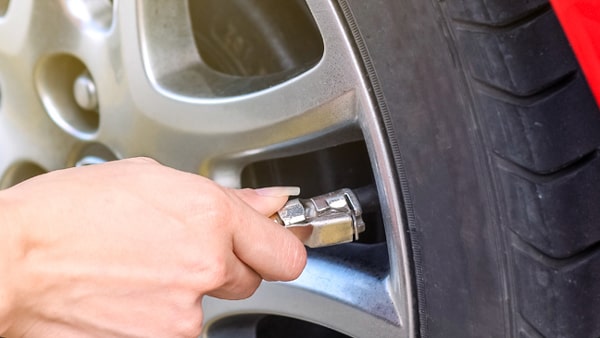
How should you verify that your tires have the correct air pressure before driving?

If your tires are not inflated to the pressure recommended by the manufacturer, it may cause:
  1. A. Use a gauge on cold tires and compare the reading with the recommended PSI in the owner’s manual or driver-side door jamb
  2. B. Inflate every tire to the maximum pressure molded on its sidewall
  3. C. Release air until all four tires appear equally soft
  4. D. Judge pressure only by how the vehicle feels while moving

Correct answer: A. – Use a gauge on cold tires and compare the reading with the recommended PSI in the owner’s manual or driver-side door jamb

Check tire pressure with a gauge while the tires are cold—before driving or at least three hours afterward. Compare the reading with the recommended PSI listed in the owner’s manual or on the driver-side door jamb. Maintaining proper pressure is part of preparing the vehicle for safe operation and helps protect against tire failure.

Source: Pennsylvania Driver’s Manual — Ch. 3, “Vehicle Checks: Preparing to Drive—Tire Safety”

Question 4

In Pennsylvania, a driver extending the left arm and hand downward is signaling an intention to:

  1. A. Turn left
  2. B. Turn right
  3. C. Slow down or stop
  4. D. Enter the traffic stream

Correct answer: C. – Slow down or stop

The hand signal for stopping or decreasing speed is the left arm and hand extended downward from the left side of the vehicle. A horizontal left arm signals a left turn, while an upward left arm signals a right turn. These signals may be used when a vehicle’s turn signals are not working.

Source: 75 Pa.C.S. § 3336(1)–(3) – Method of giving hand and arm signals, Pennsylvania Driver’s Manual — Ch. 3, “Hand Signals”

Question 5

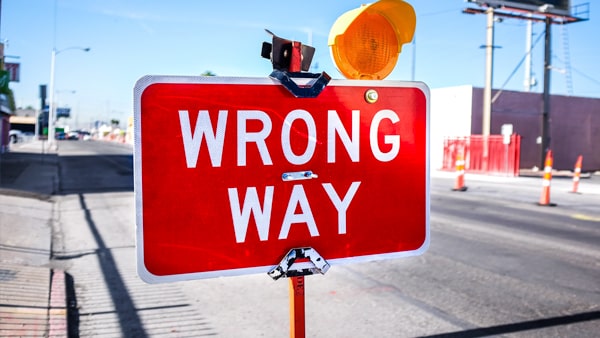
A red rectangular sign displaying the words WRONG WAY tells you that:

This red and white sign means:
  1. A. You may enter if no traffic is approaching
  2. B. The roadway is closed to traffic from every direction
  3. C. Only U-turns are prohibited
  4. D. You are traveling against the authorized direction of traffic

Correct answer: D. – You are traveling against the authorized direction of traffic

A WRONG WAY sign is placed along a one-way street or ramp to alert drivers who have entered against traffic. It commonly works with a DO NOT ENTER sign positioned at the entrance. Do not continue traveling in the prohibited direction.

Source: Pennsylvania Driver’s Manual — Ch. 2, “Regulatory Signs”

Question 6

According to the Pennsylvania Driver’s Manual, traffic fatality rates at night are approximately:

  1. A. The same as during daylight
  2. B. Twice as high as during daylight
  3. C. Three to four times as high as during daylight
  4. D. Five to six times as high as during daylight

Correct answer: C. – Three to four times as high as during daylight

The manual states that traffic fatality rates are approximately three to four times higher at night than during daylight. Darkness limits vision, distance judgment, color recognition, and peripheral vision. Glare, fatigue, and impaired drivers can add to the danger, making reduced speed and proper headlight use important.

Source: Pennsylvania Driver’s Manual — Ch. 3, “Driving at Night”