


Pennsylvania Road Signs Test Simulator

5 out of 5 (71 votes)
80% Passing score
25 Questions
5 Mistakes allowed
A lot of Pennsylvania permit test prep gets treated like one big blur: read the manual, click through a few questions, hope the signs look familiar enough when PennDOT puts them in front of you. That approach can work for some people, sure, but road signs are too visual and too easy to half-know. You recognize the sign, sort of. You know the color means something, probably. Then the answer choices start sounding more alike than they should, and that comfortable “I’ve seen this before” feeling gets a little less useful. This PA road signs practice test is built for that exact gap. Road signs are not part of a separate road-sign-only exam in Pennsylvania; they are included in the regular learner’s permit knowledge test, along with Pennsylvania driving laws and safe-driving practices. The official PennDOT test has 18 multiple-choice questions, and you need 15 correct answers to pass, so there is only room for 3 misses. That is enough room to make a small mistake, not enough room to be vague on an entire category. Each practice session gives you 20 questions drawn from a larger road-sign database, which means the test stays useful after the first try. You will work through sign shapes, sign colors, warning signs, regulatory signs, guide signs, traffic signals, pavement markings, and lane markings — the material that tends to look simple until you are asked to separate one meaning from a nearby, almost-right meaning. The simulator is free, updated for 2026, and made for repeat practice. That matters because repeating the same fixed quiz can make you feel sharper than you actually are. A fresh mix of questions gives you a better read on whether you understand the signs or just remember the order from last time. It is a useful tool for first-time drivers, adults applying for a first Pennsylvania license, drivers brushing up after time away, and out-of-state applicants whose license has been expired for more than 6 months and who may need to apply for a PA learner’s permit instead of transferring directly. The full process still includes the DL-180, vision screening, required documents, fees, and, for applicants under 18, parent or guardian consent. But the knowledge test comes first. This Pennsylvania permit practice test helps you walk into that part with road signs already handled, or at least handled a whole lot better than before.
FREE DMV Practice Test App
Study for your Pennsylvania permit test or driver’s license with the NextDoorDriving app. 700+ DMV questions and answers, 100% free!
Download on the App Store

Sample Pennsylvania Permit Test Questions

Question 1

At a Pennsylvania intersection controlled by a STOP sign, what must you do?
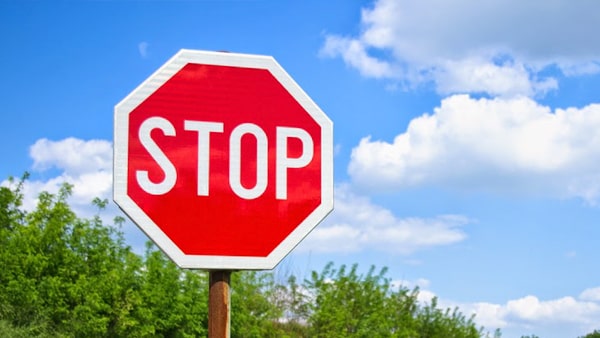
When you see this sign, you must:
  1. A Stop completely, yield to pedestrians and hazardous cross traffic, then proceed when safe
  2. B Slow down and continue without stopping if the road looks clear
  3. C Stop and remain there until a green light appears
  4. D Slow down and yield only to vehicles approaching from the left

Correct answer: A – Stop completely, yield to pedestrians and hazardous cross traffic, then proceed when safe

A driver must stop at the marked stop line, before the near crosswalk, or at the nearest point with a clear view when neither marking exists. After stopping, yield to pedestrians and to vehicles in or approaching the intersection closely enough to present a hazard. Enter only when it is safe to proceed.

Source: 75 Pa.C.S. § 3323(b) – Stop signs and yield signs, Pennsylvania Driver’s Manual — Ch. 2, “Regulatory Signs — Stop”
Question 2

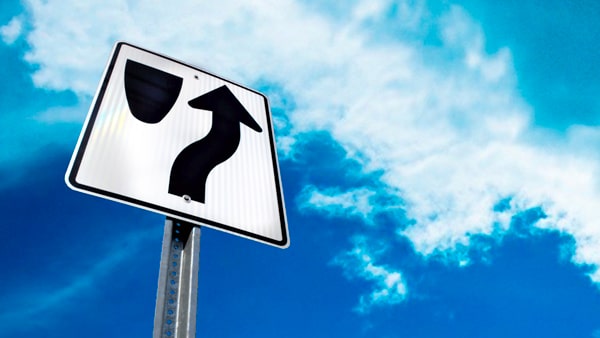
A white KEEP RIGHT sign with a black arrow curving around an obstacle directs you to:

This white sign means:
  1. A Pass to the right of the island or divider
  2. B Yield before making a right turn
  3. C Move right only when traveling below the speed limit
  4. D Turn right at the next intersection

Correct answer: A – Pass to the right of the island or divider

A KEEP RIGHT sign directs drivers to travel to the right of a traffic island, divider, or other obstruction. It controls how you pass the object rather than requiring a right turn at the next intersection. Follow the arrow and remain on the indicated side of the obstruction.

Source: Pennsylvania Driver’s Manual — Ch. 2, “Keep Right”

Question 3

At a railroad grade crossing, flashing red warning lights require you to:

  1. A Slow down and cross if no train is visible
  2. B Stop exactly 10 feet before the signal
  3. C Stop 15 to 50 feet from the nearest rail and wait until you may cross safely
  4. D Continue as soon as the crossing gate begins to rise

Correct answer: C – Stop 15 to 50 feet from the nearest rail and wait until you may cross safely

Pennsylvania law requires a driver responding to an active railroad warning signal to stop within 50 feet but not less than 15 feet from the nearest rail. Remain stopped while the signal warns of an approaching train. Cross only after the warning has ended and the movement can be completed safely.

Source: 75 Pa.C.S. § 3341(a)(1) – Obedience to signal indicating approach of train, Pennsylvania Driver’s Manual — Ch. 2, “Obey Railroad Crossing Signs and Signals”

Question 4

A roadway has two solid yellow centerlines. Which maneuver is prohibited?

  1. A Turning left at an intersection when permitted
  2. B Turning into a private driveway when safe
  3. C Crossing the lines to pass another motor vehicle
  4. D All of these maneuvers

Correct answer: C – Crossing the lines to pass another motor vehicle

Two solid yellow centerlines separate opposing traffic and may not be crossed to pass another motor vehicle. Pennsylvania’s manual recognizes an exception for making an otherwise lawful turn. State law also provides a limited exception for overtaking a pedalcycle when all applicable safety requirements are satisfied.

Source: 75 Pa.C.S. § 3307(b), (b.1) – No-passing zones, Pennsylvania Driver’s Manual — Ch. 2, “Pavement Markings”

Question 5

What color combination is normally used for highway and expressway guide signs?

  1. A Orange background with black lettering
  2. B Green background with white lettering
  3. C Yellow background with black lettering
  4. D Red background with white lettering

Correct answer: B – Green background with white lettering

Highway and expressway guide signs generally have green backgrounds with white letters, numbers, and symbols. They direct drivers toward destinations and exits. Advance signs are often placed before an interchange to provide enough time for drivers to select the proper lane.

Source: Pennsylvania Driver’s Manual — Ch. 2, “Highway/Expressway Guide Signs”

Question 6

How should you respond to a flashing yellow traffic signal?

  1. A Maintain your speed while watching for traffic
  2. B Come to a complete stop before proceeding
  3. C Slow down, look, and proceed carefully
  4. D Wait until the signal displays steady green

Correct answer: C – Slow down, look, and proceed carefully

A flashing yellow signal allows you to proceed only with caution. Slow down and check the intersection or roadway before continuing. Unlike a flashing red signal, it does not automatically require a complete stop.

Source: 75 Pa.C.S. § 3114(a)(2) – Flashing signals, Pennsylvania Driver’s Manual — Ch. 2, “Flashing Signals”