


South Carolina Permit Practice Test

4.8 out of 5 (212 votes)
80% Passing score
20 Questions
4 Mistakes allowed
Preparing for the South Carolina DMV permit test is not about cramming random road facts and hoping a few of them stick. The test is built from the South Carolina Driver’s License Manual, so your study time should stay close to that source: traffic laws, road signs, signals, pavement markings, right-of-way rules, alcohol and drug rules, sharing the road, and the basic responsibilities that come with holding a license. This South Carolina DMV practice permit test keeps you in that lane, which matters more than people sometimes realize. The real SC beginner’s permit knowledge test has 30 multiple-choice questions. You need 24 correct answers to pass, meaning the passing score is 80% and you can miss up to 6 questions. That sounds manageable, and it is, but only if you have actually worked through the material instead of relying on common sense, which has a funny way of disappearing when a question is asking about a specific sign, marking, or rule. The SCDMV charges $2.00 for the knowledge test, and after you pass, the beginner’s permit costs $2.50. Also, and this is one of those details that feels small until it controls your whole errand, the knowledge test must be taken at an SCDMV branch before 4 p.m. This SC DMV practice test is meant to make the official test feel familiar before you get there. The wording, the multiple-choice format, the mix of law, sign recognition, and safe-driving judgment — all of that matters. You may already know what a stop sign means, obviously, but the test can lean into less casual knowledge: when to yield, how lane markings work, what driver responsibility actually means, and why carrying a valid driver’s license is not just a nice idea but part of driving legally. South Carolina’s permit rules also depend on the type of applicant. Teen drivers can apply for a Class D beginner’s permit at age 15, but they need to pass the vision and knowledge tests, bring the required documents, and have an authorized adult sign if they are under 18. A teen with no previous driving experience must hold the permit for at least 180 days before moving toward the road test or a teen restricted license. Adults who are first-time drivers also begin with a permit, though they may be eligible for the road test after holding it for at least 30 days. New residents transferring an out-of-state license should know that South Carolina requires surrendering the old license or ID, and if that license has been expired for nine months or more, the knowledge and road tests may be required again. Use this South Carolina practice permit test as a serious check on your readiness, not just a quick warm-up. Passing the SC DMV permit test is the immediate goal, sure, but the better outcome is knowing the rules well enough to drive with fewer surprises — in Columbia traffic, on Upstate roads, along wet coastal highways, and everywhere in between.
FREE DMV Practice Test App
Study for your South Carolina permit test or driver’s license with the NextDoorDriving app. 700+ DMV questions and answers, 100% free!
Download on the App Store

Sample South Carolina Permit Test Questions

Question 1

How should you use a safety belt in a vehicle equipped with air bags?

  1. A Wear it only on interstate highways
  2. B Keep it fastened whenever the vehicle is being driven
  3. C Remove it when traveling within city limits
  4. D Wear it only at speeds above 35 mph

Correct answer: B – Keep it fastened whenever the vehicle is being driven

Safety belts should always be worn in an air-bag-equipped vehicle because air bags are supplemental restraints designed to work with belts. South Carolina law requires the driver and every occupant to wear a fastened safety belt on public streets and highways, subject to statutory exceptions. A violation carries a civil fine of up to $25, with no more than $50 imposed for one incident.

Source: S.C. Code § 56-5-6520 – Mandatory use of seat belt, S.C. Code § 56-5-6540(A) – Penalty; nature of offense; issuance of citations at checkpoints; admissibility as evidence of negligence in civil action; searches; probable cause that violation has occurred; trial; appeals, South Carolina Driver’s Manual — Section 4, “Air Bags”
Question 2

What determines a safe and lawful driving speed?

  1. A The posted limit under every condition
  2. B Any speed below the posted limit
  3. C The posted limit together with weather, traffic, and roadway conditions
  4. D The driver’s mechanical knowledge

Correct answer: C – The posted limit together with weather, traffic, and roadway conditions

South Carolina requires a speed that is reasonable and prudent for actual and potential hazards. Drivers must reduce speed when weather, highway conditions, curves, intersections, or other special hazards make a lower speed appropriate. The posted limit is the maximum permitted under favorable conditions and may still be too fast for current conditions.

Source: S.C. Code § 56-5-1520(A), (F) – General rules as to maximum speed limits; lower speeds may be required, South Carolina Driver’s Manual — Section 8, “Speed Management”

Question 3

When parked beside the right-hand curb, when should your front wheels point toward the curb?

Turn your front wheels toward the curb when you are parked:
  1. A When facing uphill
  2. B When parked on level ground
  3. C When facing downhill
  4. D When parked near a fire hydrant

Correct answer: C – When facing downhill

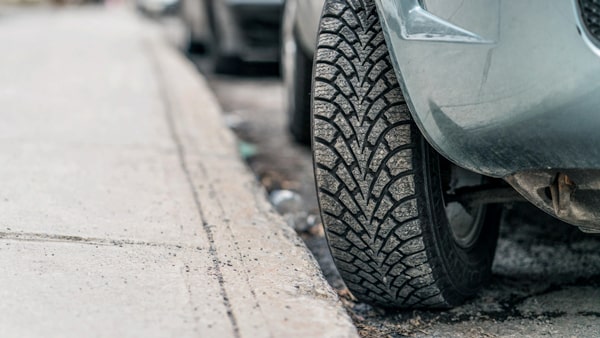
For downhill parking beside a curb, turn the front wheels to the right, toward the curb. When facing uphill with a curb, turn them toward the center of the street so the back of the front tire rests against the curb if the vehicle rolls. The South Carolina manual also directs drivers to set the parking brake and place the transmission in Park or the proper gear.

Source: South Carolina Driver’s Manual — § 7, “Parking on Hills”

Question 4

How should you drive through a South Carolina highway work zone?

  1. A Reduce speed, watch surrounding traffic, and prepare to stop
  2. B Brake sharply immediately before reaching the workers
  3. C Watch the roadwork instead of the traffic ahead
  4. D Sound your horn continuously as you pass workers

Correct answer: A – Reduce speed, watch surrounding traffic, and prepare to stop

Work zones may have lane closures, rough pavement, construction vehicles, and changing traffic patterns. Reduce speed, increase following distance, monitor surrounding traffic, and be prepared to stop. Obey orange work-zone signs, barriers, temporary signals, and instructions given by flaggers.

Source: South Carolina Driver’s Manual — § 11, “Work Zones”, South Carolina Driver’s Manual — § 6, “Work Zone Signs”

Question 5

Heavy rain or fog leaves you unable to see enough roadway to continue safely. What should you do?

  1. A Use high beams and continue at the same speed
  2. B Move completely out of the travel lanes, stop safely, and wait
  3. C Slow slightly but continue driving
  4. D Turn on emergency flashers and continue in the travel lane

Correct answer: B – Move completely out of the travel lanes, stop safely, and wait

A driver must use a speed that is reasonable for existing weather and visibility. If you cannot continue safely, leave the travel lanes and stop in a safe place; use emergency flashers to make the stopped vehicle visible. Low beams should be used in rain or fog because high beams may reflect glare back toward the driver.

Source: S.C. Code § 56-5-1520 – General rules as to maximum speed limits; lower speeds may be required, South Carolina Driver’s Manual — § 11, “Night Driving”, South Carolina Driver’s Manual — § 9, “Vehicle Breakdown”

Question 6

Before moving into another lane, which area must you check directly?

Before changing lanes in traffic, you need to:
  1. A Only the inside rearview mirror
  2. B Only the roadway directly ahead
  3. C The blind spot over your shoulder on the side you will enter
  4. D Only the turn-signal indicator on the dashboard

Correct answer: C – The blind spot over your shoulder on the side you will enter

Check your mirrors and then turn your head to inspect the blind spot in the direction of the lane change. A vehicle, motorcycle, or bicycle may be hidden from the mirrors. South Carolina law also requires the lane movement to be reasonably safe and requires an appropriate signal; signaling communicates intent but does not make an unsafe gap acceptable.

Source: S.C. Code § 56-5-2150(A) – Turning movements and required signals, South Carolina Driver’s Manual — § 7, “Changing Lanes”