


South Carolina Dmv Permit Practice Test 3

4.9 out of 5 (129 votes)
80% Passing score
20 Questions
4 Mistakes allowed
In South Carolina, the path to a Class D beginner’s permit can start at 15, but the state expects new drivers to move through the process in steps, not all at once. First comes the knowledge exam. That is where this South Carolina permit practice test fits in: 20 questions covering road signs, traffic laws, safe driving habits, and the kind of everyday judgment the SCDMV wants to see before you are allowed to start supervised driving. You need 16 correct answers to pass, which is a reasonable bar, sure, but still a bar. It is better to meet it here a few times before trying to meet it at the DMV counter. This free SC DMV practice permit test is built for repeated use, not a single rushed attempt. The questions come from a larger pool, so each round can feel a little different, and that helps keep you from memorizing a neat little string of answers that will not help much on the real exam. You get a better feel for the rules themselves — when to yield, how signs are worded, what safe following distance actually means, and how South Carolina handles common driving situations. Once you pass the real permit test and receive a beginner’s permit, the restrictions matter. A permit holder must have a qualified licensed driver seated beside them while driving. From 6 a.m. to midnight, that usually means a licensed driver who is at least 21 and has at least one year of driving experience. From midnight to 6 a.m., the supervising-driver rules become narrower, usually involving a parent, guardian, or another qualified adult listed under South Carolina law. For teen drivers, the permit is only the beginning of the graduated licensing process. Before moving to a Conditional Driver’s License or Special Restricted Driver’s License, a teen generally must hold the beginner’s permit for at least 180 days, complete driver education, satisfy school attendance requirements, and log at least 40 hours of supervised driving practice, including 10 hours after dark. Full driving privileges come later, usually at 17 or after holding the restricted license for a year without traffic offenses or at-fault collisions. So this DMV practice test online is not just a quick quiz before test day. It is the first practical step in learning the rules you will be expected to follow through the whole South Carolina licensing process.
FREE DMV Practice Test App
Study for your South Carolina permit test or driver’s license with the NextDoorDriving app. 700+ DMV questions and answers, 100% free!
Download on the App Store

Sample South Carolina Permit Test Questions

Question 1

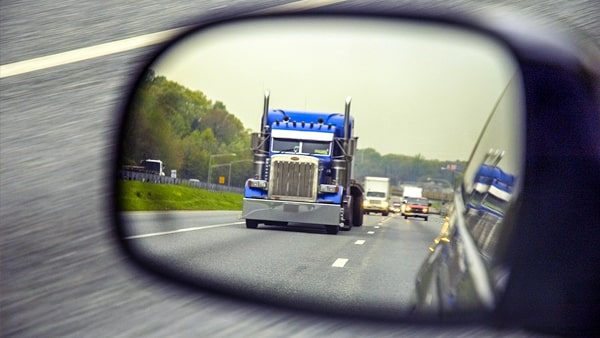
Which vehicle should you follow with additional space because of its large size?

  1. A A station wagon
  2. B A large tour bus
  3. C A passenger sedan
  4. D A compact car

Correct answer: B – A large tour bus

The driver’s manual recommends increasing following distance behind large vehicles, including buses, trucks, recreational vehicles, and vehicles pulling trailers. Additional space improves your view of the road ahead and gives you more time to respond to changing traffic. Maintain at least the normal minimum following distance and add more space when conditions require it.

Source: South Carolina Driver’s Manual — § 8, “Providing an Adequate Following Distance”
Question 2

A large truck begins passing your vehicle. How should you manage your speed?

When a truck driver behind you wants to pass your vehicle, your speed should:
  1. A Keep a steady speed and do not accelerate
  2. B Repeatedly increase and decrease speed
  3. C Accelerate to remain beside the truck
  4. D Stop in your travel lane

Correct answer: A – Keep a steady speed and do not accelerate

An overtaken driver may not increase speed until the passing vehicle has completely passed. The driver’s manual recommends staying in your lane and maintaining a constant speed. When a tractor-trailer passes, it also recommends leaving additional side space by positioning away from the truck within your lane.

Source: S.C. Code § 56-5-1840(2) – Overtaking and passing vehicles proceeding in same direction, South Carolina Driver’s Manual — § 7, “Passing”, South Carolina Driver’s Manual — § 8, “Space to the Side”

Question 3

Before moving across a lane line into another marked lane, what must you determine?

  1. A That your vehicle is traveling faster than surrounding traffic
  2. B That the lane change can be made safely
  3. C That the lane ends at the next intersection
  4. D That the driver behind has sounded the horn

Correct answer: B – That the lane change can be made safely

A vehicle must remain as nearly as practicable within a single marked lane. Before moving from that lane, the driver must first determine that the movement can be made safely. Check mirrors, look for vehicles in blind spots, signal appropriately, and obey any traffic-control devices that prohibit lane changes.

Source: S.C. Code § 56-5-1900(a), (d) – Driving on roadways laned for traffic, S.C. Code § 56-5-2150(A) – Turning movements and required signals

Question 4

Which headlights should you use when driving in fog or rain?

  1. A Parking lights only
  2. B High-beam headlights
  3. C Low-beam headlights

Correct answer: C – Low-beam headlights

Use low-beam headlights in fog, rain, or snow. High beams can reflect from moisture in the air, producing glare and reducing your ability to see ahead. South Carolina also requires lighted lamps when windshield wipers are used because of rain, sleet, or snow, subject to the statutory exception for intermittent use in misting conditions.

Source: S.C. Code § 56-5-4450(A) – Times when vehicles must be equipped with lights, South Carolina Driver’s Manual — § 11, “Night Driving”

Question 5

When turning left on a two-way street, which traffic must you yield to?

  1. A Pedestrians waiting on the sidewalk who do not have permission to cross
  2. B Vehicles stopped at a red light on the intersecting street
  3. C Oncoming vehicles in the intersection or close enough to be an immediate hazard

Correct answer: C – Oncoming vehicles in the intersection or close enough to be an immediate hazard

A driver turning left must yield to an oncoming vehicle that is already within the intersection or is close enough to create an immediate hazard. After that traffic has cleared, the turn may be completed when it can be made safely. Drivers must also obey signals and yield to pedestrians lawfully within the intersection or an adjacent crosswalk.

Source: S.C. Code § 56-5-2320 – Vehicle turning left, S.C. Code § 56-5-970(A)(1) – Traffic-control signal legend

Question 6

Which action is considered prohibited double parking?

  1. A Parking parallel and within the permitted distance from the curb
  2. B Stopping temporarily where directed by a police officer
  3. C Leaving a vehicle on the roadway side of another vehicle parked at the curb
  4. D Parking at a lawful angle where officially permitted

Correct answer: C – Leaving a vehicle on the roadway side of another vehicle parked at the curb

South Carolina generally prohibits stopping, standing, or parking on the roadway side of a vehicle stopped or parked at the curb or roadway edge. The statute recognizes limited situations involving compliance with law, police directions, traffic-control devices, or the need to avoid a traffic conflict. Ordinary waiting, deliveries, or possession of a parking placard do not authorize double parking.

Source: S.C. Code § 56-5-2530(A)(1)(a) – Stopping, standing, or parking prohibited in specified places; exceptions