South Carolina Drivers Ed Practice Test 8

4.9 out of 5 (69 votes)
80% Passing score
20 Questions
4 Mistakes allowed
Right-of-way questions are where a lot of South Carolina permit test prep starts to get tricky. These are the questions that ask you to picture several cars, one intersection, maybe no signal, maybe a Stop sign, and then make the call without talking yourself into the wrong answer. This SC drivers ed practice permit test gives you 20 multiple-choice questions focused on those intersection rules, yielding decisions, and traffic-law details that matter on the official South Carolina DMV permit test. The official SC knowledge test includes 30 questions, and you need 24 correct to pass. That is an 80% passing score, with only 6 missed questions allowed, so there is not much room for “I mostly knew that one.” The practice test helps tighten up the rules before test day, especially the ones that sound familiar but still get slippery once they are dropped into a real driving situation. The focus here is practical. Four-way stops, uncontrolled intersections, who goes first when two drivers arrive close together — this is the road-rule material South Carolina tests because drivers actually use it. A missed right-of-way question is not just a wrong bubble on a screen; it usually points to a rule that needs to be clearer in your head before you are handling traffic on your own. And yes, that sounds a little stern, but it is also true. This practice test also sits inside the larger South Carolina licensing process. You can apply for a beginner’s permit at 15. Teen drivers generally need to hold that permit for 180 days before moving toward a Conditional Driver’s License or Special Restricted Driver’s License, and that stage requires 40 supervised driving hours, including 10 hours at night. So the permit test is the first official checkpoint in a process that keeps building from there. A few SCDMV details are worth keeping close. The knowledge test fee is $2.00, the beginner’s permit fee is $2.50, and branch testing must begin before 4 p.m. You will also need the right documents: proof of identity, Social Security number, South Carolina address, and Form 447-CM parental consent if you are under 18. A vision screening is part of the licensing process too. Because this South Carolina DMV practice test is online 24/7, you can work through it when you have enough focus to catch the details. Use it to clean up your right-of-way knowledge, get comfortable with intersection scenarios, and make the real SC permit test feel less like unfamiliar ground.
FREE DMV Practice Test App
Study for your South Carolina permit test or driver’s license with the NextDoorDriving app. 700+ DMV questions and answers, 100% free!
Download on the App Store

Sample South Carolina Permit Test Questions

Question 1

When may you continue without stopping for a school bus displaying flashing red lights?
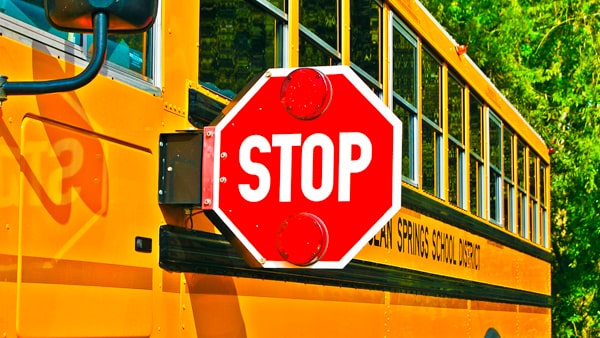
The only time you do not have to stop for a school bus whose red lights are flashing and Stop arm is extended is when you:
  1. A When no children are visible
  2. B When you are traveling behind the bus
  3. C When you meet the bus from the opposite direction on a multi-lane road
  4. D When the left lane is clear for passing

Correct answer: C – When you meet the bus from the opposite direction on a multi-lane road

South Carolina requires drivers meeting or overtaking a stopped school bus with flashing red lights to stop before reaching it. A driver meeting the bus from the opposite direction on a multi-lane highway or private road does not have to stop. A driver traveling behind the bus must always stop and wait until the bus moves or its red lights stop flashing.

Source: S.C. Code § 56-5-2770(A)–(B) – Signals and markings on school buses; meeting, overtaking and passing school bus; loading passengers along multi-lane highways, South Carolina Driver’s Manual — Section 7, “Rules for School Buses”
Question 2

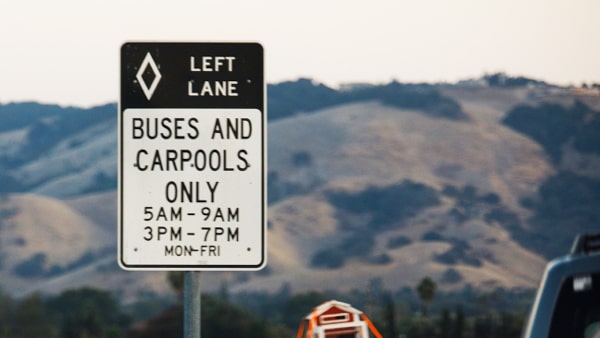
A lane-use sign states “2 OR MORE PERSONS PER VEHICLE.” When may you use that lane?

You can drive in a carpool lane if:
  1. A When your vehicle has at least two occupants, including the driver
  2. B When you are driving an empty passenger van
  3. C When you need to pass slower traffic
  4. D When other lanes are congested

Correct answer: A – When your vehicle has at least two occupants, including the driver

In South Carolina, drivers must follow applicable official traffic-control devices, including regulatory lane-use signs. A sign requiring two or more persons permits a passenger vehicle to use the lane only when it meets that posted occupancy requirement. Congestion or a desire to pass does not override the sign.

Source: S.C. Code § 56-5-950 – Obedience to and required traffic-control devices

Question 3

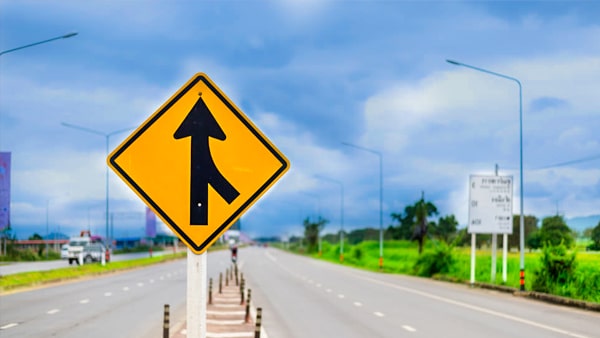
A yellow diamond sign shows a second traffic lane joining yours from the right. What does it warn of?

This sign means:
  1. A Two-way traffic begins ahead
  2. B Your lane narrows ahead
  3. C Traffic merges into your roadway ahead
  4. D A divided highway begins ahead

Correct answer: C – Traffic merges into your roadway ahead

This is a merging-traffic warning sign. Warning signs alert drivers to hazards or special roadway situations ahead, and the merging symbol indicates that another traffic stream joins the roadway. It is different from signs showing a lane ending or a divided highway beginning.

Source: South Carolina Driver’s Manual — Section 6, “Traffic Signs”

Question 4

After setting the parking brake on a hill, what should the driver of an automatic vehicle do?

  1. A Shift the transmission into Park
  2. B Leave the transmission in Drive
  3. C Place the transmission in Neutral
  4. D Keep the engine running

Correct answer: A – Shift the transmission into Park

When parking on a hill, set the parking brake, shift an automatic transmission into Park, and turn off the engine. A manual-transmission vehicle should be left in first gear or reverse. The front wheels must also be turned in the proper direction for an uphill or downhill position and for the presence of a curb.

Source: South Carolina Driver’s Manual — Section 7, “Parking on Hills”

Question 5

While accelerating on a wet road, your vehicle begins to skid. What should you do first?

If the roadway is wet and your car starts to skid, you should:
  1. A Ease off the accelerator and steer smoothly where you want to go
  2. B Shift immediately into a lower gear
  3. C Pump the brakes firmly and rapidly
  4. D Shift into Neutral and turn sharply

Correct answer: A – Ease off the accelerator and steer smoothly where you want to go

A skid can occur when the tires lose their grip on the roadway. Release pressure from the accelerator and look and steer in the direction you want the vehicle to travel. Smooth inputs are important because abrupt braking or steering can make the loss of control worse.

Source: South Carolina Driver’s Manual — Section 9, “Dealing with Skids”

Question 6

How should you adjust your driving on a dimly lit street at night?

When driving in traffic at night on a dimly lit street, you should:
  1. A Reduce speed and keep searching ahead within your limited view
  2. B Use high beams while closely following another vehicle
  3. C Brighten the instrument panel as much as possible
  4. D Turn on emergency flashers while moving normally

Correct answer: A – Reduce speed and keep searching ahead within your limited view

Night driving is more hazardous because headlights limit how far ahead you can see. Reduce speed as necessary and continually search ahead and to both sides for hazards. Use low beams when following another vehicle within 200 feet rather than shining high beams into the driver’s mirrors.

Source: South Carolina Driver’s Manual — Section 11, “Night Driving”