


South Carolina DMV Test Evaluation

4.7 out of 5 (346 votes)
80% Passing score
10 Questions
2 Mistakes allowed
A SC permit practice test is a good place to find out whether your South Carolina permit prep is actually sticking, not just floating around in your head in a vague “yeah, I read that somewhere” kind of way. The real South Carolina DMV permit test is not huge, but it is not a throwaway either: 30 multiple-choice questions, with 24 correct answers required to pass. That is 80%, and it leaves room for only six misses, which sounds generous until you remember how many small rules can blur together when road signs, right-of-way, pavement markings, and alcohol rules all start showing up in the same sitting. This practice version is shorter on purpose. It gives you 10 randomly selected questions, and you need 8 correct answers to pass. Fine, that is quick. Almost suspiciously quick. But the point is not to pretend that 10 questions equal the full SCDMV knowledge test. The point is to give you a clean, immediate check on the same categories South Carolina expects you to know: traffic laws, road signs, signals, safe-driving rules, sharing the road, drug and alcohol laws, and the plain old responsibility part of driving that tends to get skimmed because everyone thinks they already understand it. The review matters as much as the score, maybe more. After you finish the practice permit test, look at what you missed. Not in a dramatic way, just honestly. A missed sign question counts against the same overall score on the real test, because South Carolina does not separate road signs into their own little exam for standard Class D beginner’s permit applicants. It is all part of the knowledge test, all mixed in there, which is useful to know before you walk into an SCDMV branch. And yes, the branch part is real. First-time Class D applicants take the knowledge test in person at the SCDMV, and testing has to happen before 4 p.m. You will also deal with the vision test, required documents, and the small fees: $2 for the knowledge test and $2.50 for the beginner’s permit after you pass. Teen applicants can start at 15, usually with an authorized adult signing the application, then hold the permit for 180 days before moving toward restricted licensing. Adults 18 and older have a shorter permit holding period before the road test: 30 days. So take the SC DMV practice test more than once. Use it with the manual. Let the missed answers tell you where the weak spots are so you can go in to the real test feeling confident.
FREE DMV Practice Test App
Study for your South Carolina permit test or driver’s license with the NextDoorDriving app. 700+ DMV questions and answers, 100% free!
Download on the App Store

Sample South Carolina Permit Test Questions

Question 1

A broken white line separates two lanes traveling in the same direction. What does it permit?
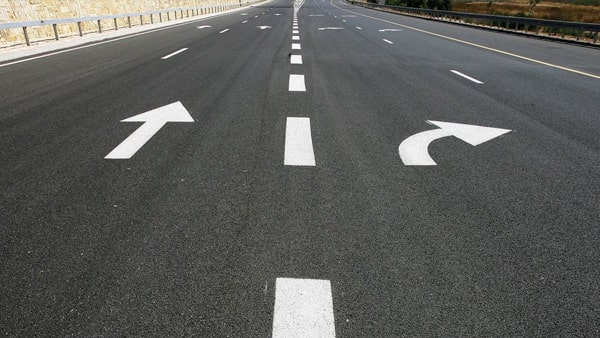
A broken white center line on the roadway means:
  1. A Turning is prohibited from both lanes
  2. B Every vehicle must reduce speed
  3. C Passing and lane changes are prohibited
  4. D You may cross the line when the lane movement can be made safely

Correct answer: D – You may cross the line when the lane movement can be made safely

White lane markings divide traffic moving in the same direction, and a broken white line permits passing or changing lanes. Before crossing it, check traffic and blind spots and signal your movement. A driver may not move right or left on the roadway until the movement can be made with reasonable safety.

Source: S.C. Code § 56-5-2150(A) – Turning movements and required signals, South Carolina Driver’s Manual — § 6, “Pavement Markings—White Lane Markings”
Question 2

On a two-lane South Carolina road, what must you do when an authorized emergency vehicle approaches using its required audible and visual signals?

  1. A Pull as close as possible to the right edge, clear of an intersection, and stop
  2. B Remain in the lane and continue slowly
  3. C Stop immediately in the intersection
  4. D Accelerate until you reach the next intersection

Correct answer: A – Pull as close as possible to the right edge, clear of an intersection, and stop

On a two-lane roadway, yield and immediately move parallel to and as close as possible to the right-hand edge or curb. Stop clear of any intersection and remain there until the emergency vehicle passes, unless a police officer directs otherwise. Do not continue slowly in front of the emergency vehicle or stop where you would block the intersection.

Source: S.C. Code § 56-5-2360(A) – Operation of vehicles on approach of authorized emergency vehicles

Question 3

A school bus is stopped ahead in your direction of travel with its red lights flashing. What must you do?

  1. A Stop and remain stopped until the bus moves or its red lights stop flashing
  2. B Change lanes and pass at a reduced speed
  3. C Stop only until the last visible child leaves the bus
  4. D Continue unless the bus driver waves you to a stop

Correct answer: A – Stop and remain stopped until the bus moves or its red lights stop flashing

South Carolina law requires a driver meeting or overtaking a stopped school bus to stop before reaching it when its red lights are flashing. The driver may not proceed until the bus resumes motion or the red lights are no longer operating. A driver traveling behind the bus must stop even on a multilane highway.

Source: S.C. Code § 56-5-2770(A), (B) – Signals and markings on school buses; meeting, overtaking and passing school bus; loading passengers along multi-lane highways

Question 4

A passenger vehicle stopped ahead is displaying its four-way emergency flashers. What do the lights indicate?

If you see warning hazard lights on a moving passenger vehicle, it means:
  1. A You must turn around immediately
  2. B Every approaching driver must stop on the shoulder
  3. C The vehicle may be disabled or experiencing an emergency
  4. D The stopped vehicle has the right-of-way over all traffic

Correct answer: C – The vehicle may be disabled or experiencing an emergency

The driver’s manual directs a motorist whose vehicle breaks down to get off the roadway when possible and activate the emergency flashers. The lights warn other road users that the vehicle is disabled or experiencing trouble. They do not give the vehicle a special right-of-way or automatically require approaching drivers to turn around.

Source: South Carolina Driver’s Manual — § 9, “Vehicle Breakdown”

Question 5

Which driving behavior leaves too little reaction time and commonly contributes to rear-end collisions?

  1. A Checking the rearview mirror periodically
  2. B Following another vehicle too closely
  3. C Maintaining a steady speed
  4. D Keeping a safe space cushion

Correct answer: B – Following another vehicle too closely

Following too closely restricts your view and reduces the time available to react when the vehicle ahead slows or stops. South Carolina law requires a reasonable and prudent following distance based on speed, traffic, and highway conditions. The driver’s manual recommends keeping at least a four-second following interval under normal conditions and adding more space when conditions are hazardous.

Source: S.C. Code § 56-5-1930(A) – Following too closely, South Carolina Driver’s Manual — § 8, “Providing an Adequate Following Distance”

Question 6

Before crossing a broken white line to change lanes, what must be true?

  1. A The movement can be made safely without interfering with traffic
  2. B You are turning into a private driveway
  3. C The vehicle ahead is disabled
  4. D You are driving on a one-way street

Correct answer: A – The movement can be made safely without interfering with traffic

A broken white line permits a driver to move between lanes traveling in the same direction. The driver must first verify that the movement can be completed with reasonable safety and must give an appropriate signal. The type of pavement marking does not excuse a driver from checking mirrors, blind spots, and surrounding traffic.

Source: S.C. Code § 56-5-2150(A) – Turning movements and required signals, South Carolina Driver’s Manual — § 6, “Pavement Markings—White Lane Markings”