South Carolina Road Signs Test

4.7 out of 5 (156 votes)
80% Passing score
10 Questions
2 Mistakes allowed
Road signs are one of the things South Carolina permit applicants need to know well, not because they are the whole test, but because they shape so many of the decisions drivers make in real traffic. A sign tells you when to yield, where to slow down, what kind of hazard is coming, how lanes are controlled, and sometimes what you are allowed to do before you have much time to think about it. So this South Carolina permit practice test gives road signs the attention they deserve while still keeping them connected to the larger SCDMV knowledge test. The real South Carolina beginner’s permit test has 30 multiple-choice questions, and you need 24 correct answers to pass. That is an 80% score, with only six questions to spare. The exam is based on the South Carolina Driver’s License Manual and covers traffic laws, road signs, signals, pavement markings, safe driving, sharing the road, alcohol and drug rules, and driver responsibility. In other words, it is not enough to memorize a few sign shapes and call it studying. Helpful, yes. Complete, no. This SC DMV practice test is built around the way the actual knowledge exam works. Road sign questions are part of the standard Class D permit test in South Carolina; there is not a separate road-sign-only test for regular beginner’s permit applicants. That matters, because sign knowledge has to work alongside right-of-way rules, speed control, school-zone awareness, lane markings, and the decisions you make around pedestrians, cyclists, emergency vehicles, and other drivers. And, awkwardly enough, those topics do not always stay in their own neat little boxes. For teen drivers, this practice permit test is a first step toward South Carolina’s graduated licensing process, which begins at age 15 and includes the 180-day permit holding period, supervised driving requirements, and later restrictions before full privileges. Adult first-time applicants have a shorter permit-holding period before the road test, but they still have to pass the same knowledge exam first. Different route, same gate. Use this South Carolina road signs test practice to get sharper on signs, wording, and the rules behind the signs. That combination is what helps you walk into the SCDMV branch with fewer surprises and a much better sense of what the test is actually asking.
FREE DMV Practice Test App
Study for your South Carolina permit test or driver’s license with the NextDoorDriving app. 700+ DMV questions and answers, 100% free!
Download on the App Store

Sample South Carolina Permit Test Questions

Question 1

You have stopped at a stop line, but an obstruction limits your view of the cross street. What must you verify before entering the intersection?

  1. A That at least five seconds have passed
  2. B That you have sounded the horn
  3. C That no traffic can be heard
  4. D That traffic and other road users allow you to proceed safely

Correct answer: D – That traffic and other road users allow you to proceed safely

South Carolina law requires the initial stop at the marked stop line and requires yielding to vehicles that present an immediate hazard. Limited visibility calls for an especially careful search for cross traffic, pedestrians, and bicyclists. Do not enter the cross-traffic lane until you have verified that the movement can be made safely.

Source: S.C. Code § 56-5-2330(b) – Stop signs and yield signs., South Carolina Driver’s Manual — § 7, “Intersections”

Question 2

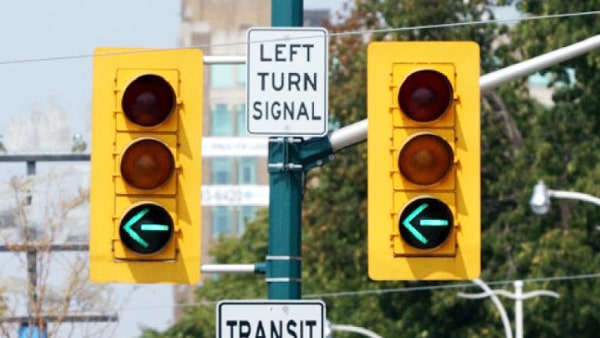
Before moving in the direction of a green arrow, a driver must:

  1. A Check only the rearview mirror
  2. B Wait five seconds
  3. C Yield to lawful traffic and pedestrians still in or beside the intersection
  4. D Yield to vehicles but not pedestrians

Correct answer: C – Yield to lawful traffic and pedestrians still in or beside the intersection

A green arrow permits a driver to cautiously enter the intersection for the movement indicated by the arrow. The driver must yield to pedestrians lawfully within an adjacent crosswalk and to other traffic lawfully using the intersection. Check that the path is clear before beginning the turn.

Source: S.C. Code § 56-5-970(A)(2) – Traffic-control signal legend.

Question 3

A black-and-yellow chevron panel pointing right indicates that:

When you see this sign, it means:
  1. A An object blocks the roadway
  2. B Traffic will enter from the right
  3. C The roadway changes direction to the right
  4. D A merge area begins ahead

Correct answer: C – The roadway changes direction to the right

A Chevron Alignment sign emphasizes a change in the roadway’s horizontal direction. The point of the chevron shows the direction drivers must follow through the alignment. Several chevrons may be placed along the outside of a curve to provide continuous guidance.

Source: SCDOT Engineering Directive ED-19 – Manual on Uniform Traffic Control Devices (MUTCD), 11th Edition, SCDOT-adopted Manual on Uniform Traffic Control Devices, 11th ed. — § 2C.08, “Chevron Alignment Sign (W1-8)”

Question 4

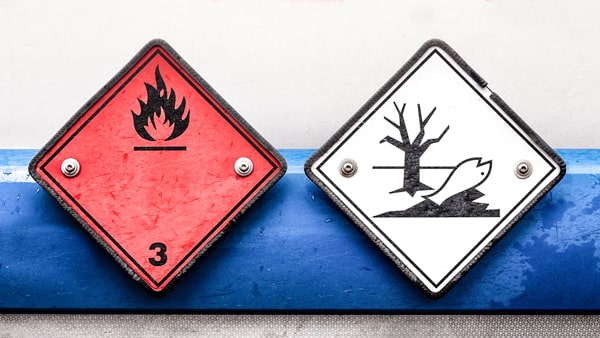
In South Carolina, a hazardous-material vehicle covered by railroad-stop requirements must generally do what before crossing railroad tracks?

Which of the following is true about vehicles displaying a diamond-shaped sign (indicating a hazardous load)?
  1. A Avoid all controlled-access highways
  2. B Reduce speed to 35 mph
  3. C Stop between 15 and 50 feet from the nearest rail
  4. D Proceed before other vehicles

Correct answer: C – Stop between 15 and 50 feet from the nearest rail

Covered vehicles must stop no closer than 15 feet and no farther than 50 feet from the nearest rail. While stopped, the driver must look and listen in both directions and may proceed only when safe. The statute lists exceptions, including crossings where an officer directs traffic or a functioning green highway signal permits the vehicle to proceed.

Source: S.C. Code § 56-5-2720(A), (B) – Vehicles required to stop at railroad grade crossings; exceptions.

Question 5

What does a green left arrow permit a driver to do?

A green arrow pointing to the left on a traffic light means you may:
  1. A Turn left or continue straight regardless of other indications
  2. B Turn left only after first making a full stop
  3. C Cautiously make the indicated left turn after yielding as required
  4. D Turn without checking for people or vehicles in the intersection

Correct answer: C – Cautiously make the indicated left turn after yielding as required

A driver facing a green arrow may cautiously enter the intersection to make the movement shown by that arrow. The driver must yield to pedestrians lawfully within an adjacent crosswalk and to other traffic lawfully using the intersection. The arrow is not permission to proceed without checking the intended path.

Source: S.C. Code § 56-5-970(A)(2) – Traffic-control signal legend.

Question 6

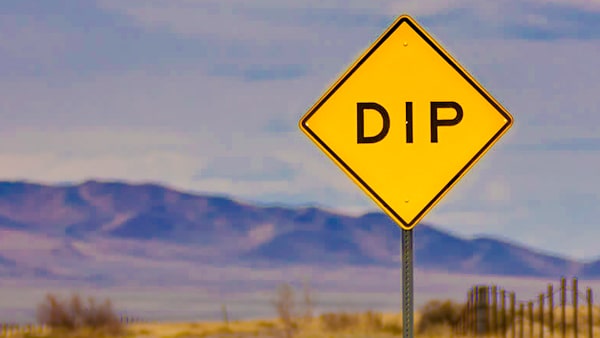
A yellow diamond warning sign displaying the word “DIP” indicates:

This sign means:
  1. A A low place in the roadway ahead
  2. B A soft shoulder
  3. C A pedestrian crossing
  4. D A required stop

Correct answer: A – A low place in the roadway ahead

The DIP warning sign identifies a depression or low place in the roadway ahead. It alerts drivers to a surface-profile change that may require an appropriate reduction in speed. It does not indicate a stop, pedestrian crossing, or soft shoulder.

Source: SCDOT Engineering Directive ED-19 – Manual on Uniform Traffic Control Devices (MUTCD), 11th Edition, SCDOT-adopted Manual on Uniform Traffic Control Devices, 11th ed. — § 2C.26, “BUMP and DIP Signs (W8-1 and W8-2)”