


South Dakota Drivers License Practice Test 9

4.9 out of 5 (114 votes)
80% Passing score
20 Questions
4 Mistakes allowed
A South Dakota DMV practice test is most useful when it sticks close to what the state actually expects you to know, not just the obvious stuff everyone remembers from riding in the passenger seat. The real South Dakota permit knowledge test is based on the South Dakota Driver License Manual, and that matters because the manual is where the test pulls its material from: traffic signs, signals, pavement markings, right-of-way, speed, sharing the road, school buses, impaired driving, and the general safe-driving judgment that sounds simple until you have to choose between two answers that both feel halfway reasonable. This South Dakota driver license practice test focuses on school bus safety, which is one of those topics the state treats seriously for good reason. Drivers in South Dakota deal with a mix of small-town streets, rural highways, gravel approaches, and bus routes that do not always feel neatly arranged. You need to know when to stop for a school bus, when traffic coming the other way must stop, and how to react when children are getting on or off. It is test material, yes, but it is also real-road material — the kind of rule you do not want to be “pretty sure” about. The official South Dakota knowledge test requires a passing score of 80% or higher. In the common 25-question format, that means 20 correct answers and no more than 5 missed. This SD permit practice test gives you a more realistic way to prepare because it keeps the questions manual-based and lets you work through them without being rushed. That slower pace helps, honestly. It gives you room to notice where you know the rule and where you have mostly just heard the rule mentioned before. The licensing details matter too, even if they feel like paperwork at first glance. South Dakota applicants under 18 can apply for an instruction permit at age 14, with parent or guardian consent, required documents, a vision test, and the knowledge test unless a qualifying driver education certificate waives it. Adults 18 and older also need the vision and knowledge tests for an instruction permit, then a drive test before getting an operator license. Failed tests cannot be retaken before the next working day, and each paid fee allows 3 testing opportunities within 6 months. Use this South Dakota DMV practice test as a focused check on what you actually know. It will not drive the car for you, but it can make the official driver permit practice test feel a lot less unfamiliar.
FREE DMV Practice Test App
Study for your South Dakota permit test or driver’s license with the NextDoorDriving app. 700+ DMV questions and answers, 100% free!
Download on the App Store

Sample South Dakota Permit Test Questions

Question 1

Which statement about BAC and alcohol-impaired driving is false?

  1. A BAC expresses alcohol concentration in relation to the amount of blood
  2. B Driving judgment becomes less reliable as BAC rises
  3. C Even one alcoholic drink can affect driving ability
  4. D Being physically fit guarantees that a person can drive safely after drinking

Correct answer: D – Being physically fit guarantees that a person can drive safely after drinking

BAC is the percentage of alcohol in relation to the amount of blood in a person's body. As BAC rises, judgment and the ability to make accurate traffic decisions become increasingly impaired, and even one drink can affect driving ability. Physical fitness does not guarantee safe driving after alcohol consumption; the official manual states that no one can drink alcohol and drive safely.

Source: South Dakota Driver License Manual — “Alcohol, Other Drugs, and Driving”, South Dakota Driver License Manual — “Effects of Alcohol and Other Impairing Drugs”
Question 2

Before turning left at an intersection, you must yield to:

  1. A Pedestrians waiting on the sidewalk who are not entering your path
  2. B Vehicles stopped at a red signal
  3. C Oncoming traffic close enough to create an immediate hazard

Correct answer: C – Oncoming traffic close enough to create an immediate hazard

South Dakota law requires a left-turning driver to yield to an oncoming vehicle that is already in the intersection or close enough to present an immediate hazard. After yielding and giving the required signal, the driver may complete the turn when a safe opening is available. Not every distant oncoming vehicle prevents the turn.

Source: SDCL § 32-26-19 – Left-turning vehicles--Right-of-way of oncoming vehicle--Signals--Violation as misdemeanor, South Dakota Driver License Manual — General Driving, “Left turns”

Question 3

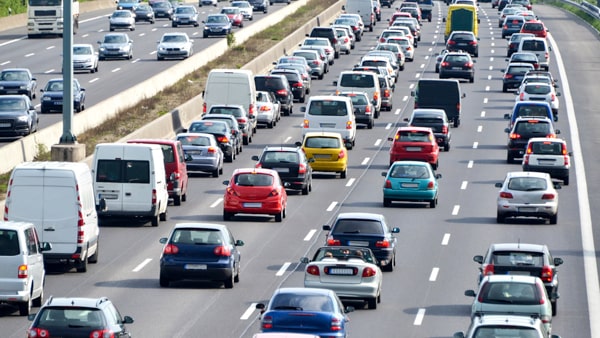
On a multilane roadway, crashes involving multiple vehicles often occur when:

  1. A Traffic is moving steadily at the posted speed
  2. B Drivers remain in one lane whenever practical
  3. C Vehicles maintain adequate following distances
  4. D A driver travels faster or slower than surrounding traffic

Correct answer: D – A driver travels faster or slower than surrounding traffic

Drivers traveling faster than surrounding traffic must pass more often, increasing opportunities for a collision. Driving much slower can cause traffic to bunch up and prompt other motorists to pass. Maintain a steady, lawful speed that is appropriate for traffic and roadway conditions.

Source: South Dakota Driver License Manual — “Adjusting to Traffic and Interstate Driving”

Question 4

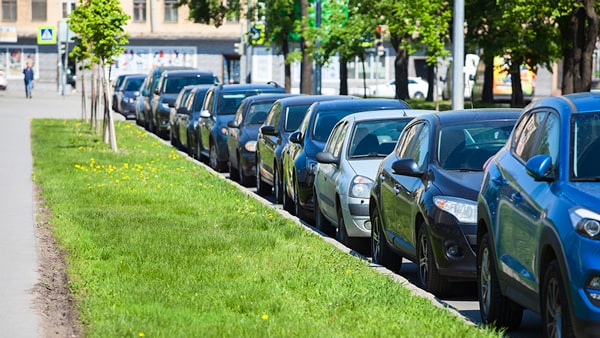
When parallel parking on a two-way road, how should your right-hand wheels be positioned?

When you park on a level road next to a curb:
  1. A Parallel to and within 12 inches of the curb or roadway edge
  2. B Parallel to and within 24 inches of the curb
  3. C Angled until the front tire touches the curb
  4. D Across the edge line if no curb is present

Correct answer: A – Parallel to and within 12 inches of the curb or roadway edge

South Dakota law requires a vehicle stopped or parked on a two-way roadway to have its right-hand wheels parallel to and within 12 inches of the right-hand curb or roadway edge. Limited exceptions apply where other authorized parking arrangements, such as angle parking, are established.

Source: SDCL § 32-30-2.1 – Position of parking on two-way road--Violation as misdemeanor.

Question 5

On a South Dakota freeway, what should you do before changing lanes?

When changing lanes on a freeway, you should:
  1. A Check mirrors and blind spots, signal, and verify that the move is safe
  2. B Move across several lanes in one continuous maneuver
  3. C Begin moving before checking for a gap
  4. D Use the horn instead of the turn signal

Correct answer: A – Check mirrors and blind spots, signal, and verify that the move is safe

A vehicle may not leave its lane until the driver has determined that the movement can be made safely. Signal when the movement may affect another vehicle. The driver manual also directs drivers to check mirrors and blind spots, identify a suitable gap, signal, and look again before steering into the lane.

Source: SDCL § 32-26-6 – Lane driving required--Changing lanes--Violation as misdemeanor., SDCL § 32-26-22 – Starting, stopping, or turning--Lookout--When signals required--Violation as misdemeanor., South Dakota Driver License Manual — “Changing Lanes”

Question 6

Which behavior should you avoid to reduce the risk of striking the vehicle ahead?

  1. A Checking traffic in your mirrors
  2. B Following the vehicle too closely
  3. C Leaving additional space in poor weather
  4. D Reducing speed when traffic slows

Correct answer: B – Following the vehicle too closely

Following too closely leaves less time and distance to respond if the vehicle ahead slows or stops. Drivers may not follow more closely than is reasonable and prudent for the vehicles’ speed, traffic, and highway conditions. The driver manual recommends maintaining a minimum four-second following interval and increasing it when conditions require more space.

Source: SDCL § 32-26-40 – Following too closely--Violation as misdemeanor., South Dakota Driver License Manual — “Providing an Adequate Following Distance”