


South Dakota DMV Test Evaluation

4.6 out of 5 (490 votes)
80% Passing score
10 Questions
2 Mistakes allowed
The official South Dakota DMV knowledge test is based on the South Dakota Driver License Manual, and it covers more than a few familiar road signs and common-sense driving rules. You are expected to know traffic control devices, signals, pavement markings, right-of-way rules, speed management, school bus laws, sharing the road, impaired driving, and the everyday judgment pieces that separate memorizing answers from actually understanding what the state wants you to know. This initial evaluation practice test keeps things focused. It gives you 10 randomly selected questions tied to South Dakota driving laws and safe-driving topics, with an 80% passing score, so it works as a quick diagnostic rather than a long, drawn-out study session. The real South Dakota permit knowledge test has 25 questions, and you need 20 correct answers to pass. Put another way, you can miss 5. That sounds manageable, and it is, but only if your weak spots are not sitting in the exact areas the test decides to ask about that day. Road signs deserve real attention here, too. South Dakota does not publish a separate road-sign-only test for a standard noncommercial license; sign questions are mixed into the main knowledge test. So a missed sign question is not floating off in its own category somewhere. It counts the same as missing a question about yielding, lane use, or safe following distance, which is why this South Dakota DMV permit practice test includes those topics together instead of treating signs like a little add-on at the end. There are also state-specific licensing details worth getting straight early. Teens may apply for an Instruction Permit at 14 with parent or guardian consent, while adults follow a different path but still need the vision and knowledge tests before moving toward the road test. South Dakota’s teen process adds supervised driving requirements later, including 50 hours total, with 10 after dark and 10 in inclement weather. That is the kind of information that tends to blur together if you only read it once. Use this practice drivers test as your first honest read. Pass it, retake it, notice the questions that make you pause, and then keep going with the broader South Dakota DMV permit practice tests until the material feels steady enough for the real thing.
FREE DMV Practice Test App
Study for your South Dakota permit test or driver’s license with the NextDoorDriving app. 700+ DMV questions and answers, 100% free!
Download on the App Store

Sample South Dakota Permit Test Questions

Question 1

In which situation is passing prohibited?

  1. A On a one-way road wide enough for two lines of traffic
  2. B On the right of a vehicle turning left when the movement can be made safely
  3. C In a no-passing zone marked by signs or pavement lines
  4. D On a two-lane road when the left side is visible and clear for a sufficient distance

Correct answer: C – In a no-passing zone marked by signs or pavement lines

South Dakota prohibits overtaking and passing another vehicle while traveling in a no-passing zone marked by signs or roadway lines. Elsewhere, passing is allowed only when the applicable lane, visibility, clearance, and safety requirements are satisfied. A driver must obey the markings throughout the designated zone.

Source: SDCL § 32-26-27 – Overtaking and passing on right--Circumstances under which permitted--Violation as misdemeanor., SDCL § 32-26-34 – Passing by crossing highway center line when vision is obscured--Violation as misdemeanor., SDCL § 32-26-37 – Passing in no-passing zone--Violation as misdemeanor.
Question 2

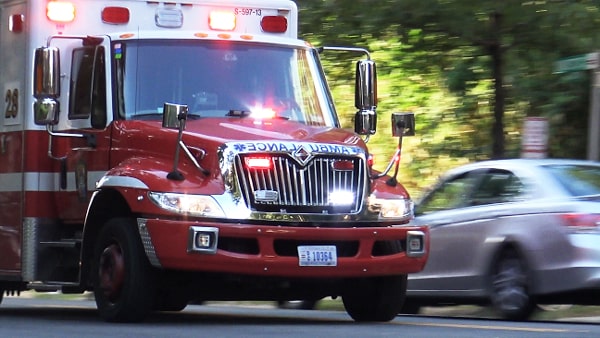
An emergency vehicle using an authorized siren or flashing light is approaching on a two-way road. If you are outside an intersection, what must you do?

When you hear the siren or see the flashing red light of a closely approaching emergency vehicle, and you are not in the intersection, you should:
  1. A Continue slowly in the right lane
  2. B Accelerate until you find a wider shoulder
  3. C Move near and parallel to the right edge or curb, then stop
  4. D Stop immediately in your current traffic lane

Correct answer: C – Move near and parallel to the right edge or curb, then stop

Under South Dakota law, move as near as possible and parallel to the right-hand edge or curb, clear of any intersection, and stop. Remain there unless directed otherwise by a police or traffic officer. Do not proceed until the emergency vehicle has passed.

Source: SDCL § 32-31-6 – Duty of other motorists upon approach of emergency vehicle--Violation as misdemeanor.

Question 3

Under South Dakota’s legal definition of parking, which temporary stop is not considered “parking”?

  1. A Waiting in the vehicle for someone to arrive
  2. B Actually loading or unloading passengers or merchandise
  3. C Leaving the vehicle unattended for less than five minutes
  4. D Stopping to make a telephone call

Correct answer: B – Actually loading or unloading passengers or merchandise

The statutory definition of parking includes a standing vehicle whether it is occupied or not. It excludes a temporary stop made while the driver is actually engaged in loading or unloading passengers or merchandise. Simply remaining inside the vehicle or leaving it briefly does not create the same exception.

Source: SDCL § 32-14-1(20) – Definitions.

Question 4

In South Dakota, when may a motorist drive on a designated bicycle lane?

  1. A Whenever no bicyclist is visible
  2. B When entering or leaving an alley or driveway
  3. C Within 200 feet before every right turn
  4. D During congested traffic

Correct answer: B – When entering or leaving an alley or driveway

The driver manual instructs motorists not to stop, park, or drive on a designated bicycle path or lane. Listed exceptions include entering or leaving an alley or driveway, performing official duties, following police direction, or responding to an emergency. The absence of bicyclists does not by itself permit using the lane.

Source: South Dakota Driver License Manual — “Sharing the Road—Bicyclists”

Question 5

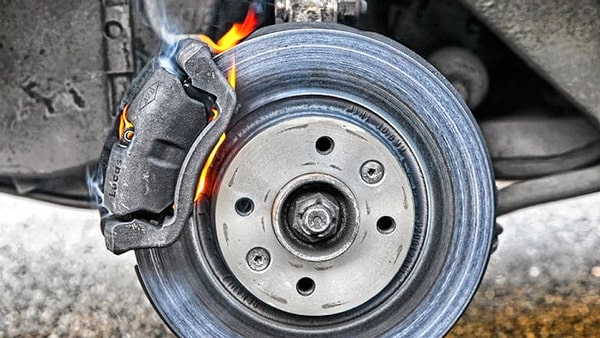
If your service brakes stop working while you are driving, what should you do?

If you experience brake failure while driving, you should:
  1. A Shift into park immediately
  2. B Press the accelerator repeatedly
  3. C Continue driving until you reach a repair shop
  4. D Apply the parking brake gradually and be ready to release it if the vehicle skids

Correct answer: D – Apply the parking brake gradually and be ready to release it if the vehicle skids

Apply the parking brake slowly to avoid locking the rear wheels and causing a skid. Be prepared to release it if the vehicle starts skidding. If the parking brake does not work, turn off the engine, locate a safe place to slow to a stop off the roadway, and do not continue driving without working brakes.

Source: South Dakota Driver License Manual — “Vehicle Malfunctions—Brake Failure”

Question 6

Your traffic light turns green, but crossing traffic is still inside the intersection. What should you do?

  1. A Enter slowly and wait inside the intersection
  2. B Move close enough to make the other vehicles advance
  3. C Wait until the crossing traffic clears before proceeding
  4. D Use the horn and immediately enter

Correct answer: C – Wait until the crossing traffic clears before proceeding

A green signal permits movement, but drivers must yield to vehicles and pedestrians lawfully within the intersection or an adjacent crosswalk. If you were stopped when the light changed, allow crossing traffic to clear before proceeding. Enter only after the lawful traffic occupying your path has moved through.

Source: SDCL § 32-28-2 – Meaning of green or "go" signal--Vehicular traffic--Pedestrians., South Dakota Driver License Manual — “Traffic Control Devices—Green”