Tennessee DMV Practice Test 7

4.9 out of 5 (326 votes)
80% Passing score
20 Questions
4 Mistakes allowed
This Tennessee DMV practice test gives you a cleaner way to study for the Regular Class D knowledge test, especially if you would rather work through real driving topics than keep rereading the driver manual and hoping the important parts stick. It is built around the same kinds of material Tennessee uses for the official test: traffic laws, road signs and signals, safe driving rules, alcohol and drug rules, lane markings, financial responsibility, and the basic judgment calls that new drivers are expected to understand before they get behind the wheel. The official Tennessee Class D knowledge test is not a tiny quiz. It has 30 multiple-choice questions, and for the online version, there is a 60-minute limit. You need 80% to pass, which means 24 correct answers, with only 6 misses allowed. So, even when this DMV permit practice test gives you a shorter practice session, the standard you are aiming for is still the real one. That matters. A practice test is only useful if it trains you to think at the level the actual exam expects, not just recognize a few familiar phrases. And, actually, this TN DMV practice test is not just for teenagers. Teens ages 15 to 17 may be able to take the official Tennessee knowledge test online with a parent or legal guardian using the Tennessee Proctor ID App, but adults applying for a first license need the knowledge test too. New Tennessee residents should not skim past this either, because out-of-state license rules can affect whether testing is required, especially when a prior license has been expired for more than 6 months. The road sign material deserves its own attention, although Tennessee treats signs and signals as part of the full knowledge test for standard Class D applicants, not as some separate little road-sign-only event. That means sign shapes, colors, pavement markings, traffic signals, warning signs, and regulatory signs all sit in the same study pile as right-of-way rules and safe driving decisions. Slightly inconvenient, yes, but also more realistic. Use this Tennessee practice permit test as a controlled run-through before you deal with the official process: documents, vision screening, fees, retake rules, the Driver Services Center, and eventually the road skills test. It gives you space to miss things now, fix them quietly, and walk into the real test with fewer surprises.
FREE DMV Practice Test App
Study for your Tennessee permit test or driver’s license with the NextDoorDriving app. 700+ DMV questions and answers, 100% free!
Download on the App Store

Sample Tennessee Permit Test Questions

Question 1

What must you do before proceeding when a traffic signal changes to green?

  1. A. Wait five seconds before moving
  2. B. Proceed without checking the intersection
  3. C. Yield to vehicles and pedestrians lawfully remaining in the intersection
  4. D. Sound the horn to warn crossing traffic

Correct answer: C. – Yield to vehicles and pedestrians lawfully remaining in the intersection

A green signal permits traffic to proceed straight or make an otherwise lawful turn. Tennessee law still requires drivers to yield to vehicles and pedestrians lawfully within the intersection or an adjacent crosswalk when the green signal appears. Check that their paths are clear before moving.

Source: Tenn. Code Ann. § 55-8-110(a)(1)(A) – Traffic-Control Signals—Inoperative Signals
Question 2

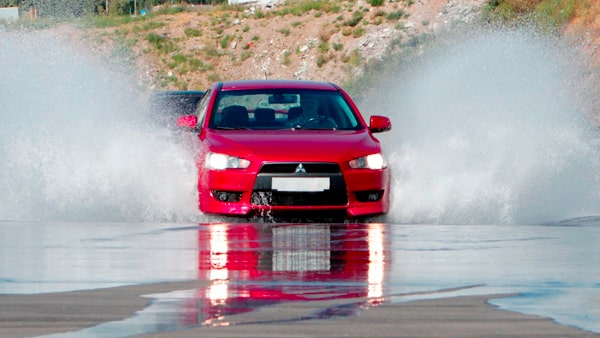
If your vehicle begins hydroplaning on a wet roadway, what should you do first?

If the roadway is wet and your car starts to skid, you should:
  1. A. Gradually release the accelerator
  2. B. Immediately shift into a lower gear
  3. C. Pump the brakes rapidly and firmly
  4. D. Shift into neutral

Correct answer: A. – Gradually release the accelerator

Hydroplaning occurs when the tires lose contact with the roadway because of water. Gradually ease off the accelerator and avoid slamming on the brakes. Sudden braking or steering can worsen the loss of traction, while a gradual reduction in speed allows the tires to regain contact with the pavement.

Source: Tennessee Comprehensive Driver License Manual — “Hydroplaning”

Question 3

Before passing another vehicle on a two-lane road, which condition must be satisfied?

  1. A. You must be willing to exceed the speed limit
  2. B. The opposing lane must be clear far enough to complete the pass safely
  3. C. A solid yellow line must be beside your lane

Correct answer: B. – The opposing lane must be clear far enough to complete the pass safely

In Tennessee, the left side must be clearly visible and free of oncoming traffic for enough distance to complete the pass without interfering with another vehicle. You must also return to the right before coming within 100 feet of opposing traffic. Do not begin the maneuver where pavement markings or signs establish a no-passing zone.

Source: Tenn. Code Ann. § 55-8-119 – Limitations on Overtaking and Passing on the Left, Tenn. Code Ann. § 55-8-121 – No-Passing Zones

Question 4

Before pulling away from a curbside parking space, how should you check for traffic?

  1. A. Sound the horn and move immediately
  2. B. Turn on the emergency flashers
  3. C. Check the mirrors and look over your shoulder
  4. D. Use only the inside rearview mirror

Correct answer: C. – Check the mirrors and look over your shoulder

Check your mirrors for approaching road users, then turn your head and look over your shoulder before entering traffic. The shoulder check covers the blind spot that mirrors may not reveal. Signal your intention to pull away from the curb and move only after confirming that the path is clear.

Source: Tennessee Comprehensive Driver License Manual — Rules of the Road, “Changing Lanes” and “Signaling a Turn”

Question 5

For a typical passenger car, what may you use to signal a turn if the electric turn indicators fail?

If your turn signals fail, you should use _____ to indicate you are turning.
  1. A. The horn
  2. B. The high-beam headlights
  3. C. A hand-and-arm signal
  4. D. The emergency flashers

Correct answer: C. – A hand-and-arm signal

Tennessee permits required turn signals to be given by an approved signal device or by the driver's hand and arm, subject to vehicle-size requirements. A left turn is signaled with the left arm extended horizontally, while a right turn is signaled with the arm extended upward. The signal must be plainly visible to affected traffic.

Source: Tenn. Code Ann. § 55-8-143(a)–(c) – Signals for Turns, Tenn. Code Ann. § 55-8-144 – Signals by Hand and Arm or Signal Device

Question 6

Which driving ability is affected first after drinking alcohol?

  1. A. Steering ability
  2. B. Judgment
  3. C. Muscle strength
  4. D. Reflex movement

Correct answer: B. – Judgment

Alcohol reaches the brain quickly and first interferes with judgment, emotions, confidence, and self-control. A person may make risky decisions before recognizing other signs of impairment. As alcohol levels rise, coordination, vision, reaction time, and vehicle-control skills are increasingly affected.

Source: Tennessee Comprehensive Driver License Manual — “Alcohol and Driving: Did You Know?”