What Is the Texas DPS Vision Test?
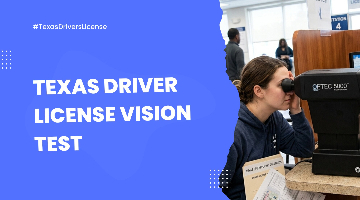
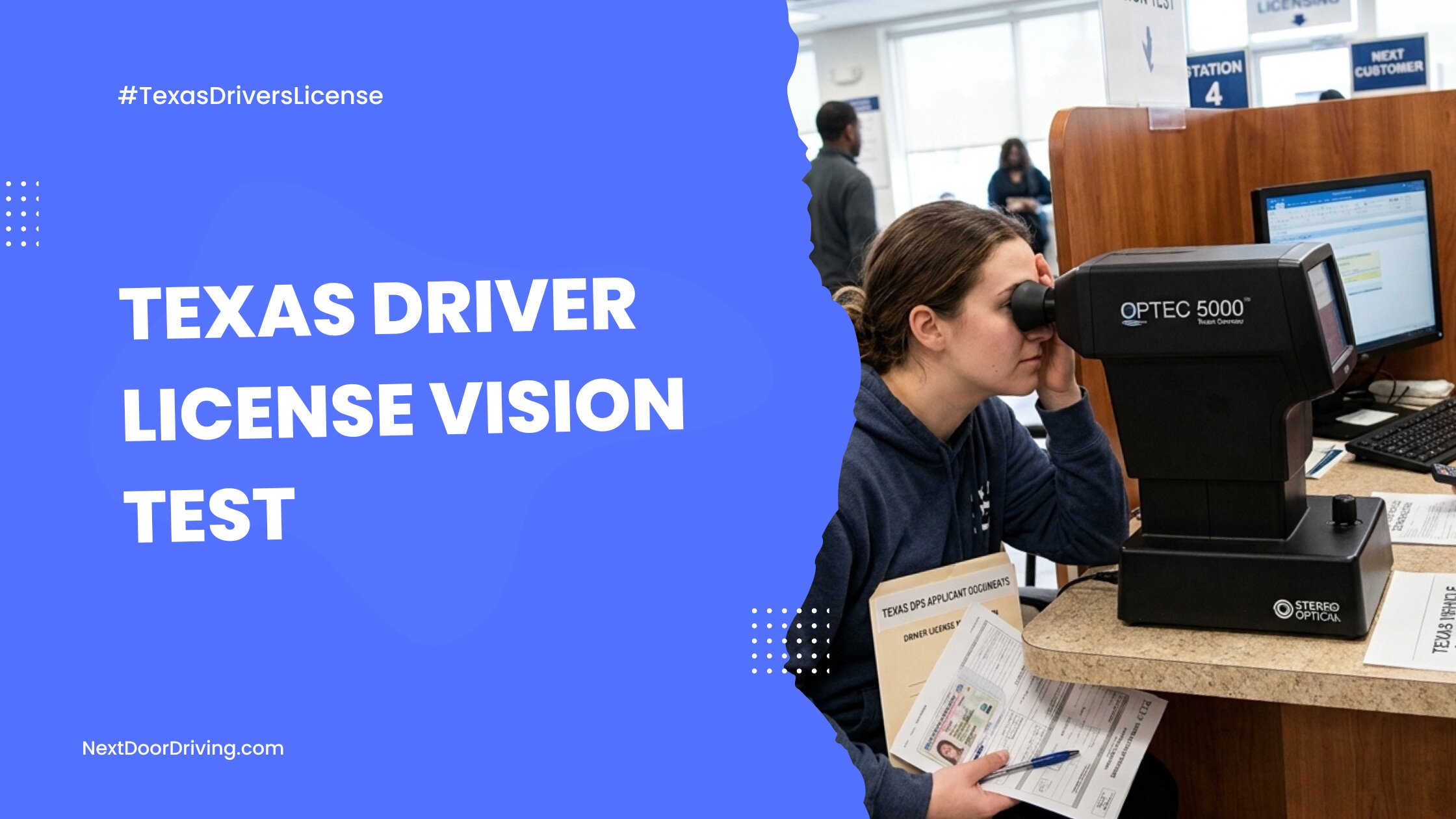
The vision test is a brief screening administered at driver license offices. The eye test is typically done using a counter-mounted viewing device or a traditional Texas DPS vision test chart . The DPS test is not a comprehensive eye exam, and only checks whether your eyesight meets Texas driver licensing standards. If your results raise concerns, the DPS may require more detailed testing of visual acuity, color perception, peripheral vision, or other eye conditions.
Who Is Required to Take the Vision Test for a License in Texas?
Most drivers must pass a vision DPS test when visiting a DPS office in person, to include:
- First-time license applicants
- New Texas residents transferring an out-of-state license
- Drivers renewing their license at a DPS office
- Drivers age 79 and older during every renewal cycle
Texas DMV Vision test exemptions: Online or mail renewals do not require a vision test if your eyesight has not changed.
Where the Vision Test Fits Into Your DPS Appointment
The DPS vision test is only one part of your Texas learner’s permit or driver license appointment. What else you will need to do at the DPS office depends on where you are in the licensing process.
For a typical first-time license applicant, you can expect to:
- Check in and submit your driver license application form (DL-14A or DL-14B)
- Provide the required identity, residency, and other supporting documents.
- Present your driver education certificate, if applicable.
- Have your photo and thumbprints taken.
- Complete the vision screening.
- Take the written test or road driving test—if you have not already taken the written test in a driver education course, or taken the road test at an authorized testing center.
- Pay the applicable DPS license fee.
For new drivers, completing a TDLR-approved Teen Driver Education course or Adult Driver Education course before the DPS visit can simplify the appointment. The good news? As a state-certified driver’s ed provider, NextDoorDriving.com offers awesome teen and adult driver education programs at low prices! The official Texas permit test is included in both of these courses at no extra charge, and your driver education certificate will show the DPS that you have already satisfied the permit test requirement.
What to Expect During the Vision Test
The vision screening takes only a few minutes and usually follows this procedure:
- If you have glasses or contact lenses, wear them during the vision test.
- Step up to the machine and place your forehead against the viewer pad on the device.
- The technician will ask you to read specific lines of text to test visual acuity and identify lit lights to check color and peripheral vision.
Texas Drivers License Vision Requirements
The standard visual acuity score to qualify for a Texas driver license is 20/40 vision. In simple terms, 20/40 vision means you must be 20 feet away to see something that a person with 20/20 vision could see clearly from 40 feet away. Your visual acuity may trigger additional DPS review or license restrictions, even if you can still qualify to drive. In general, the farther your vision falls below 20/40, the more likely DPS is to require extra evaluation or impose limits on when or how you can drive.
- 20/40 or better: Generally meets the standard for an unrestricted Class C license, but if corrective lenses are needed to reach this score, you may be required to wear them while driving.
- 20/50: You may still qualify to drive, but the DPS can require additional evaluation or place restrictions on your license, such as daytime driving only.
- 20/60 corrected in the best eye: You may be limited to daytime driving, within a 25-mile radius and 45 mph maximum, with no interstate driving.
- 20/70 corrected in each eye: The DPS may allow daytime operation within a 25-mile radius, although more testing may be required.
The Texas Department of Public Safety vision screening typically requires you to read down to Line 5, which corresponds to a 20/40 visual acuity standard required to pass without restrictions.
Peripheral Vision (Field of View) Requirements
A healthy field of view helps drivers spot traffic and pedestrians in their side vision. Texas targets an uninterrupted 140-degree binocular field. For drivers with vision in only one eye, an uninterrupted 140-degree visual field is generally required under Texas Medical Advisory Board rules.
Color Perception
Drivers are expected to recognize and respond correctly to traffic signals, but color blindness generally does not prevent you from getting a Texas driver license. People with color-vision deficiencies can often adapt and drive safely by using the position and sequence of the lights rather than color alone.
Double Vision
Double vision (diplopia) is evaluated case-by-case because it can interfere with safe driving. Temporary or correctable double vision may not prevent driver licensing, but the DPS may require a medical review or additional testing.
What Happens If You Fail the Vision Test at the DPS?
Not passing the DPS office vision screening does not necessarily mean you cannot get a driver license. It may mean DPS needs more accurate vision measurements or an eye specialist’s opinion before deciding on any restrictions needed to help you drive safely.
The Specialist Referral Process
If you cannot pass the screening, the DPS agent will hand you a Driver License Vision Evaluation Report (Form DL-63). You can take this form to an optometrist or ophthalmologist of your choice. The doctor will perform a comprehensive examination, complete the medical assessment, and note any recommended restrictions. Form DL-63 is valid for six months from your exam date.
Texas Medical Advisory Board (MAB) Review
If your vision falls into a complex category—such as severe peripheral loss, progressive eye disease, or bioptic telescope use—the DPS refers your file to the Texas Medical Advisory Board (MAB), where a panel of physicians reviews the specialist’s findings. The MAB recommends whether driving is medically appropriate, and the DPS makes the final licensing decision.
Additional Driving Evaluation
If your vision falls outside the standard licensing guidelines, Texas may require more than an eye specialist’s evaluation. In some cases, you may be asked to complete a supervisory or comprehensive driving test so the DPS can evaluate whether you can safely operate a vehicle under real-world conditions. The results of this driving test can help DPS determine whether you qualify for a license and whether restrictions—such as daytime-only driving, geographic limits, or speed restrictions—are appropriate.
Texas Vision-Related License Restrictions and Codes
If your vision requires modifications for safe driving, the DPS places specific restriction codes on your Texas driver license. Common vision-related license restrictions include:
- Restriction A: With corrective lenses (Must wear glasses or contacts while driving)
- Restriction C: Daytime driving only
- Restriction S: Outside rearview mirror or hearing aid required
- Restriction P8: Bioptic telescopic lens required
Bioptic Telescope Lens Guidelines
Texas permits qualifying visually impaired drivers to use bioptic telescopes if they meet state criteria: best-corrected conventional vision of 20/160 or better in at least one eye, 20/40 vision through the telescope, and a maximum telescope power of 4X.
How to Remove a Corrective Lens Restriction Vision Correction
If you have vision correction surgery, like LASIK, and no longer need glasses, you can have the vision restriction removed from your driver license. To do this:
- Schedule an in-person visit at a DPS office.
- Take the vision test without corrective lenses and pass with 20/40 acuity or better.
- Pay the duplicate license fee ($11) to receive an updated card.
FAQs
Can I take the Texas DPS vision test online?
All vision tests must be taken in person at a DPS office. However, eligible drivers renewing a license online can skip the vision test if their vision has not changed.
What visual acuity is required to pass without restrictions?
You must demonstrate 20/40 visual acuity or better in both eyes (or your best eye) without corrective lenses.
What happens if I fail the vision test at DPS?
You will be given Form DL-63 to take to an eye doctor, who will perform an exam and submit their recommendations back to the DPS.
Can I wear contact lenses or glasses during the screening?
You should wear your corrective lenses if you need them to pass the vision test. If you wear lenses to pass, your license will include “Restriction A: With corrective lenses.”
How do I remove Restriction A from my license after LASIK?
To demonstrate that your vision has improved, you can visit a DPS office, pass the vision screening without wearing lenses, and pay the $11 replacement card fee.
Are senior drivers required to take a vision test in Texas?
Texas drivers age 79 and older must renew their license in person and pass a vision exam at each renewal. Drivers ages 79–84 generally receive a license that is valid for eight years, while drivers 85 and older receive a license valid for two years.
How long is Form DL-63 valid after my doctor signs it?
A completed Form DL-63 is valid for six months from the examination date.
Can you drive in Texas with vision in only one eye?
Drivers with monocular vision qualify if the functional eye meets 20/25 uncorrected (or passes doctor review) with an uninterrupted 140-degree field of view.
What if I have glaucoma, cataracts, or another serious eye condition?
Having an eye condition does not automatically disqualify you from getting a Texas driver license. However, if you have glaucoma, cataracts, diabetic retinopathy, retinal disease, optic-nerve problems, significant peripheral vision loss, or another condition that may affect safe driving, the DPS may require a more detailed evaluation from an optometrist or ophthalmologist before making a licensing decision.