Texas Drivers Ed Overview: Who Needs It?
Texas law divides driver education into distinct tracks based on age. The table below outlines how mandatory hours, course types, and behind-the-wheel obligations vary by age group.
| Age Group | Is Driver’s Ed Mandatory? | Required Course | Classroom Hours | Behind-the-Wheel Hours |
|---|---|---|---|---|
| Teens (14–17) | Yes | Teen driver education | 24 hours | 44 hours (14 in-car + 30 practice) |
| Young Adults (18–24) | Yes | Adult driver education | 6 hours | Not mandated |
| Adults (25+) | No | Adult driver education (optional) | 6 hours | Not mandated |
| New Residents (18+) | Exempt if surrendering a license | N/A | N/A | N/A |
Looking for online driver education in Texas? Explore our catalog of TDLR-approved driver’s ed courses to find the right one for your schedule.
Drivers Ed Requirements by Age Group
Texas driver education requirements vary significantly by age, especially for classroom hours and behind-the-wheel training, although DPS testing requirements, including the written knowledge and road skills exams, are essentially the same. Match your age group below to confirm your driver education rules before enrolling in a course.
Teens (Ages 14–17)
In Texas, teenagers can begin driver’s ed classroom instruction at 14 years old. However, students must wait until their 15th birthday to apply for a learner’s permit at the DPS. Minor students must also be enrolled in school (public, private, or home school) and meet state attendance rules to qualify for a driver license, verified via a Verification of Enrollment (VOE) form (or diploma or GED, if applicable).
Understanding the Teen Training Phases
Texas splits teen driver education into two clear phases—academic instruction and driving practice. Here is how those hours are structured and completed:
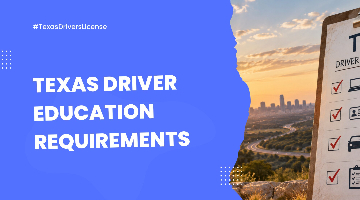
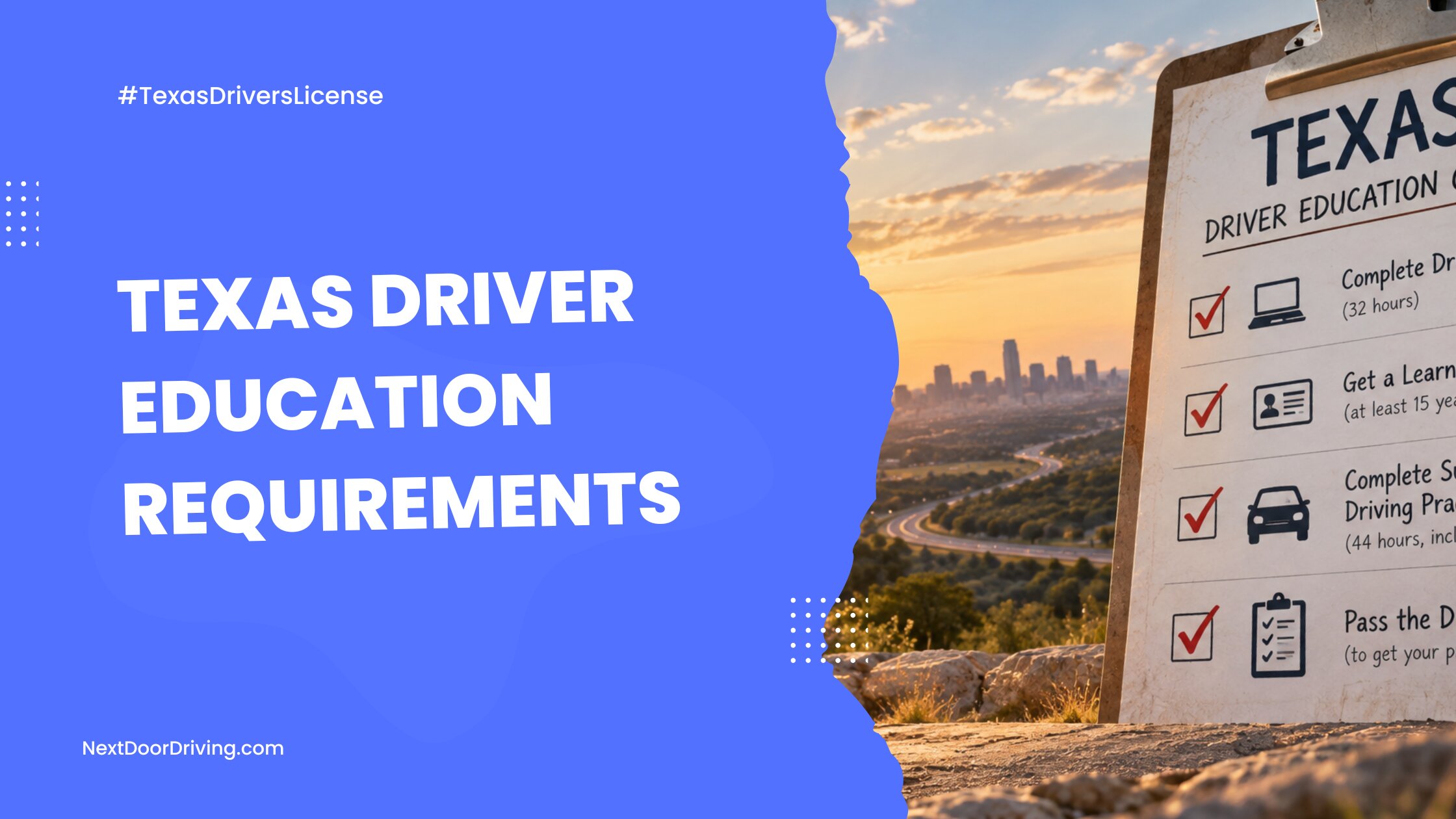
- Classroom theory (24 hours): Topics include Texas traffic laws, highway signs, and safe driving practices. Under updated state guidelines (16 TAC Chapter 84), the classroom requirement is 24 hours, down from the old 32-hour standard.
- Instructor-led driving and observation (14 hours): Once a student holds a learner’s permit, they complete 7 hours of direct in-car instruction alongside 7 hours of active observation from a passenger seat. In a PTDE course, the designated parent delivers both the instruction and observation hours at home.
- Supervised driving practice (30 hours): After initial training, teens must complete 30 additional practice hours supervised by a licensed adult age 21 or older. At least 10 of these hours must be at night. These hours must be recorded on an official 30-Hour Practice Log.
Daily Pacing Rules Set by TDLR
To prevent fatigue and ensure retention, Texas strictly limits how many instructional hours a teen can complete in a single day. Pacing rules mean:
- Combined classroom and behind-the-wheel instruction cannot exceed 6 total hours per day.
- Behind-the-wheel driving instruction is limited to 2 hours per day.
- For the 30 hours of supervised practice, only 1 hour of driving can be recorded on the official log per day.
Instructional Formats: Concurrent vs. Block Method
Texas gives teens two ways to sequence classroom hours and behind-the-wheel practice. Here is how these methods compare, so you can choose the method that best matches your timeline and learning style:
| Feature | Concurrent Method | Block Method |
|---|---|---|
| Initial Requirement | Complete the first 6 classroom hours (Module 1) | Complete all 24 classroom hours |
| Permit Eligibility | Eligible to apply for learner permit at age 15 after 6 hours | Eligible to apply for learner permit at age 15 after full 24 hours |
| In-Car Timing | In-car driving happens concurrently alongside remaining classroom modules | In-car driving begins after classroom work is complete |
| Best For | Students eager to start supervised road practice as early as possible | Students who prefer having all the information before driving, or who want professional lessons |
Approved Teen Driver Education Delivery Pathways
Texas recognizes four primary delivery pathways for teen driver education. While each approach requires the same total hours, they differ in cost, who delivers the instruction, and how in-car training is managed:
Parent-Taught Driver Education
The Texas Parent-Taught Driver Education (PTDE) program allows an eligible parent (or designated adult) to act as a teen’s primary driving instructor, using materials from an approved online Texas PTDE course provider. To oversee a parent-taught driving course, the parent must have held a valid driver license for the preceding three years with a clean driving record (no suspensions or convictions for motor vehicle offenses). Parents must order the PTDE Program Guide packet from TDLR ($20 fee) and be approved before a teen can begin driver’s ed instruction. The PTDE program is a popular choice because it is the most cost-effective and flexible option for teen driver education.
Online Driver Education Programs
A TDLR-approved Texas driving course for teens delivers the 24 classroom hours online through interactive modules. Online classroom instruction can be combined with parent-taught driving practice or behind-the-wheel lessons at a local driving school through a Texas Instructor-Led Teen Driver Education course.
Commercial Driving Schools
Traditional commercial driving schools offer instructor-led classroom sessions and professional behind-the-wheel lessons at licensed facilities. This is a good choice for families who prefer professional instructors to handle all 14 hours of in-car instruction and observation, although it is generally the most expensive option.
Public High School Driver’s Ed Programs
Some Texas public high schools and educational service centers offer state-sanctioned driver education courses as an elective or extra-curricular program. These school-based programs may include classroom instruction, behind-the-wheel training, or both, and may be free or fee-based.
Adult Driver Education (Ages 18–24)
Adult driver education in Texas consists of a streamlined 6-hour classroom course. The adult course covers Texas traffic laws, road signs, alcohol and drug awareness, and defensive driving principles. It can be completed in a single day through approved online or in-person providers. Adults are not required to complete or log a certain number of driving practice hours, but must pass the written knowledge and road driving tests to earn a license.
A big benefit of taking an approved Texas 6-Hour Adult Driver Education online course is that it includes an official written knowledge test. Passing this exam within your driver’d ed course satisfies the written exam requirement, so you will not need to take it in person at the DPS office.
Rules for Adults Age 25 and Older
First-time license applicants aged 25 and older are not legally required to complete a driver education course in Texas. However, many older adults still choose to take the Texas Adult Driver Education course online to learn Texas traffic laws at their own pace and to take an official knowledge test at home, skipping the permit test line at the DPS office.
Texas Drivers Ed Course Certificates (DE-964 vs. ADE-1317)
You must present an official driver education certificate at the DPS to process your Texas driving permit or full license application. Bring the form that matches your age and course type:
- Form DE-964: Issued to teen students upon finishing classroom and/or behind-the-wheel requirements.
- DE-964 “For Learner License Only”: A certificate of partial completion issued after the first 6 classroom hours for permit processing
- DE-964 “For Driver License Only”: The final certificate of course completion
- Form ADE-1317: Issued to adults (ages 18+) who complete the 6-hour adult course.
Certificate Pro-Tip: Double check that the legal name, date of birth, and Social Security Number on your driver’s ed certificate match your identification documents exactly to avoid processing delays at the DPS.
New Texas Residents
If you move to Texas, are at least 18 years old, and hold a valid, unexpired driver license from another U.S. state or territory, Texas waives the driver education requirement entirely. You simply surrender your out-of-state license during your Texas license application appointment. If you move to Texas with an out-of-state learner’s permit, you can exchange it for an equivalent Texas driving permit. However, you will need to complete a state-approved driver education program to earn a Texas driver license. Out-of-state driver’s ed hours that did not result in a full license do not transfer to Texas.