


Utah Permit Practice Test 3

4.8 out of 5 (252 votes)
80% Passing score
20 Questions
4 Mistakes allowed
A good Utah permit practice test should keep you focused on the actual permit test, not wander off into trivia. Still, it helps to know what is sitting around that test, because the written exam is only one piece of the appointment. You are dealing with the Utah Driver License Division, so yes, there will be documents, a vision screening, a fee, and a process that rewards people who arrive prepared instead of half-prepared. This Utah drivers permit practice test is based on the official Utah driver’s manual, which is the same source used for the real knowledge test. The practice version gives you 20 questions on Utah road rules, safe driving habits, traffic signs, and state-specific laws, including the rule against using a handheld mobile device while driving. You need 16 correct answers to pass here. That is a useful benchmark, because it tells you pretty quickly whether you are actually reading the material or just recognizing the easy stuff and skating past the rest. The real Utah learner permit knowledge test is larger: 50 questions, closed book, taken through DLD. Applicants schedule a Driver License office appointment, bring the required identity, Social Security, and Utah address documents, complete the eye test, pay the learner permit fee, and take the written test. The eye test is not a decorative step, either. For a regular Class D license, Utah expects 20/40 vision and 90 degrees of peripheral vision in at least one eye, with or without glasses or contacts. If that standard is not met, DLD may require a Certificate of Visual Examination from an eye doctor. The practice test is not timed, which sounds like a small detail until you use it properly. Slow down. Read the question twice if the wording feels a little stiff, because official test language often does. The point is not to rush into a passing score once and call yourself finished; the point is to get comfortable enough with Utah driving regulations that the real test feels familiar, maybe even slightly boring. That is a good sign. And after the permit, the licensing process keeps moving. Utah’s driving skills test can be completed at DLD, through driver education, or with an approved third-party tester. If you test at DLD, you need your learner permit and a properly registered vehicle with working seat belts. Only one driving skills test is allowed per day, and after three failures, another fee is required. So this learner’s permit practice test is not just warm-up material. It is the first clean step toward getting through Utah licensing with fewer surprises and a much better idea of what DLD is going to ask from you.
FREE DMV Practice Test App
Study for your Utah permit test or driver’s license with the NextDoorDriving app. 700+ DMV questions and answers, 100% free!
Download on the App Store

Sample Utah Permit Test Questions

Question 1

When passing a bicyclist, how much clearance should you provide?
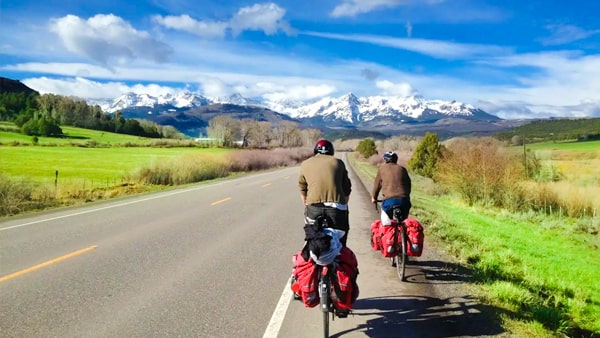
When passing a bicyclist, you should:
  1. A One foot if you sound the horn
  2. B At least three feet
  3. C No specific space if you remain in your lane
  4. D Only enough space to avoid touching the bicycle

Correct answer: B – At least three feet

The Utah handbook instructs motorists to leave at least three feet when passing a bicyclist or other vulnerable highway user. State law prohibits knowingly, intentionally, or recklessly operating within that distance. If adequate clearance cannot be provided safely, wait until road and traffic conditions permit a safe pass.

Source: Utah Code § 41-6a-706.5(1)(c)(v), (2)(a) – Definitions -- Operation of motor vehicle near a vulnerable user of a highway prohibited -- Endangering a vulnerable user of a highway prohibited., Utah Driver Handbook — § 14, “Bicycles”
Question 2

When turning right on a circular green signal, you must:

  1. A Maintain your speed through the turn
  2. B Stop even when the way is clear
  3. C Yield to pedestrians lawfully within the crosswalk or intersection
  4. D Accelerate to pass pedestrians before they enter your lane

Correct answer: C – Yield to pedestrians lawfully within the crosswalk or intersection

In Utah, a driver facing a circular green signal may turn right unless a sign prohibits the turn. The driver must yield to pedestrians lawfully within the adjacent crosswalk and to vehicles lawfully in the intersection. Begin the turn only after confirming that the path is clear.

Source: Utah Code § 41-6a-305(2)(a) – Traffic-control signal -- At intersections -- At place other than intersection -- Color of light signal -- Inoperative traffic-control signals -- Affirmative defense.

Question 3

Under Utah law, when may you cross double solid yellow center lines on a two-way road?

  1. A To make a lawful left turn into a private driveway when the movement is safe
  2. B To pass a vehicle traveling below the speed limit
  3. C Never, regardless of the maneuver
  4. D To move around a line of stopped traffic

Correct answer: A – To make a lawful left turn into a private driveway when the movement is safe

Double solid yellow lines prohibit passing in either direction, but they do not create an absolute barrier. A driver may make a left turn across them, including a turn into a private road or driveway. Before turning, the driver must determine that the movement can be made with reasonable safety and give the required signal.

Source: Utah Code § 41-6a-801(2)(c) – Turning -- Manner -- Traffic-control devices., Utah Code § 41-6a-707(2)(c) – Limitations on driving on left side of road -- Exceptions., Utah Code § 41-6a-804(1) – Turning or changing lanes -- Safety -- Signals -- Stopping or sudden decrease in speed -- Signal flashing -- Where prohibited.

Question 4

When driving at night on a poorly lighted road, which speed choice is appropriate?

  1. A Maintain the posted speed even if visibility is limited
  2. B Look directly at approaching headlights to track oncoming traffic
  3. C Use a reasonable, prudent speed that accounts for how far ahead you can see
  4. D Use high beams continuously, even near other vehicles

Correct answer: C – Use a reasonable, prudent speed that accounts for how far ahead you can see

Visibility is limited at night, and the posted speed may be too fast for the conditions. Drivers must use a reasonable and prudent speed after considering actual and potential hazards. Reduce speed as necessary for the distance you can see, and avoid looking directly into approaching headlights.

Source: Utah Code § 41-6a-601(1) – Speed regulations -- Safe and appropriate speeds at certain locations -- Prima facie speed limits -- Emergency power of the governor., Utah Driver Handbook — § 11.J, “Night Driving”

Question 5

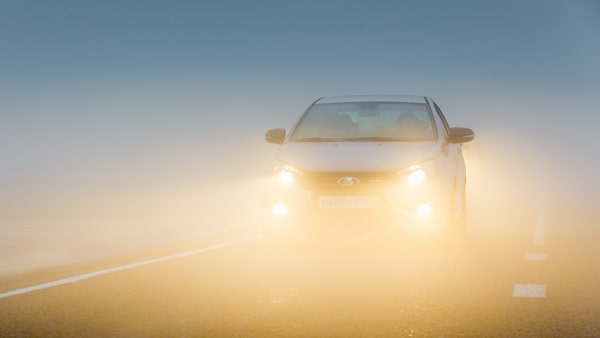
Which headlights should you use while driving through heavy fog?

When it is very foggy, you should slow down and turn on your:
  1. A Low-beam headlights
  2. B High-beam headlights
  3. C Parking lights without headlights
  4. D Hazard lights instead of headlights

Correct answer: A – Low-beam headlights

Use low beams in fog because they produce less reflected glare than high beams. Reduce your speed when visibility is poor and remain prepared for hazards that may appear with little warning. Headlights should remain on rather than relying only on parking lights or hazard flashers.

Source: Utah Driver Handbook — § 11.O, “Cold Weather”, Utah Driver Handbook — § 9.E, “Speed”

Question 6

Under Utah passing rules, what must be true before you return to the right lane after passing?

  1. A The overtaken driver has flashed the vehicle’s headlights
  2. B Your turn signal has been on for at least five seconds
  3. C You are safely clear of the overtaken vehicle
  4. D The overtaken vehicle has begun braking

Correct answer: C – You are safely clear of the overtaken vehicle

The passing driver must overtake at a safe distance and may return to the right only when safely clear of the other vehicle. The overtaken driver also has duties: that driver must give way to the right and may not increase speed until completely passed. These duties do not remove the passing driver’s responsibility to verify clearance.

Source: Utah Code § 41-6a-704(2)(a) – Overtaking and passing vehicles proceeding in same direction.