


Utah DMV Practice Test 7

4.9 out of 5 (116 votes)
80% Passing score
20 Questions
4 Mistakes allowed
Utah gives learner permit applicants plenty to study, and this seventh Utah DMV practice test is meant to make that studying feel a little less scattered. The real first-time Utah learner permit knowledge test is a 50-question, closed-book written exam through the Driver License Division, based on the Utah Driver Handbook. You need 40 correct answers to pass, which is another way of saying the margin for careless guessing is not huge. So, yes, the handbook matters. But working through practice questions first makes the handbook feel less like a wall of rules and more like something you can actually use. This Utah permit practice test gives you 20 questions on the material Utah drivers are expected to understand: traffic laws, road signs, signals, right-of-way, safe driving habits, speed limits, impaired driving, insurance requirements, and the driver-responsibility topics that tend to show up when you least feel like thinking about paperwork. To pass this practice test, you’ll need 16 correct answers. That keeps the scoring in line with the 80% standard used for the official knowledge test, just in a shorter, more manageable format. The answer explanations are doing a lot of the quiet work here. When you miss a question, you get more than a flat correction, which is good, because memorizing a letter choice is a pretty weak way to prepare for anything involving actual roads, actual signs, and actual other people. The feedback helps you slow down just enough to see why the rule works the way it does. Slightly boring? Maybe. Useful when the official test starts asking about signs, signals, and what you’re supposed to do at a messy intersection? Definitely. It is also worth knowing how this practice fits into the bigger Utah licensing process. First-time applicants take the written knowledge test at a DLD office, along with the required eye test, document check, and learner permit fee. Road signs are part of the main written test, not a separate Class D road-sign-only exam, so they deserve real attention. Use this Utah DMV permit practice test on a phone, laptop, or whatever screen is closest, and treat each question as a small check on whether you understand the rule well enough to recognize it later when it counts.
FREE DMV Practice Test App
Study for your Utah permit test or driver’s license with the NextDoorDriving app. 700+ DMV questions and answers, 100% free!
Download on the App Store

Sample Utah Permit Test Questions

Question 1

Before turning left across a two-way street, which oncoming vehicle must you yield to?

  1. A A vehicle legally parked at the curb
  2. B A vehicle stopped at a red light facing away from the intersection
  3. C A vehicle close enough to create an immediate hazard

Correct answer: C – A vehicle close enough to create an immediate hazard

Utah law requires a driver turning left to yield to an oncoming vehicle that is close enough to constitute an immediate hazard. Wait until the turn can be made without conflicting with that vehicle. The rule does not require yielding to every visible oncoming vehicle regardless of its distance.

Source: Utah Code § 41-6a-903(1)(a) — Yield right-of-way -- Vehicle turning left -- Entering or crossing highway other than from another roadway -- Merging lanes
Question 2

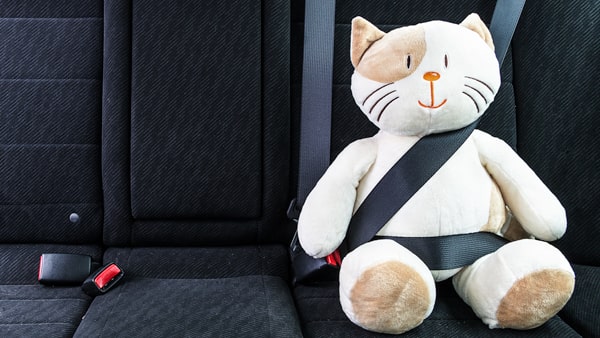
Unless a statutory exception applies, which statement is true for a driver operating on a Utah highway?

You must use your seat belt:
  1. A A safety belt is required only on freeways
  2. B A safety belt is optional when the vehicle has airbags
  3. C A properly fastened safety belt is required, and a violation may result in a fine
  4. D A safety belt is unnecessary when traveling below 25 mph

Correct answer: C – A properly fastened safety belt is required, and a violation may result in a fine

A motor vehicle operator must wear a properly adjusted and fastened safety belt unless an exception in the Motor Vehicle Safety Belt Usage Act applies. A violation is an infraction carrying a maximum fine of $45. The law does not limit the requirement to freeways or higher speeds.

Source: Utah Code § 41-6a-1803(1)(a)(i) — Driver and passengers -- Seat belt or child restraint device required, Utah Code § 41-6a-1805(1)(a) — Penalty for violation

Question 3

Why must drivers watch carefully for bicyclists in surrounding traffic?

  1. A Bicyclists always have priority over motor vehicles
  2. B Bicyclists may not be easily seen
  3. C Bicyclists are required to ride against traffic
  4. D Bicyclists are exempt from traffic rules

Correct answer: B – Bicyclists may not be easily seen

Bicyclists may be difficult to see in traffic, requiring motorists to remain alert and use extra care when approaching them. Bicycles are considered vehicles on the roadway, and their operators generally have the same rights and responsibilities as motorists. Check for bicyclists before turning, backing, or opening a street-side door.

Source: Utah Driver Handbook 2025–2026 — § 14, “Bicycles”

Question 4

During freezing weather, which road surfaces are likely to freeze before the surrounding roadway?

  1. A Dry pavement exposed to direct sunlight
  2. B Road surfaces after all ice has melted
  3. C Bridges, ramps, and overpasses
  4. D Only lanes used by heavy trucks

Correct answer: C – Bridges, ramps, and overpasses

The Utah handbook warns that bridges, ramps, and overpasses are likely to freeze first when sleet, freezing rain, or snow begins. Slippery areas may remain even after road crews have cleared nearby pavement. Reduce speed to a level that allows you to maintain control.

Source: Utah Driver Handbook 2025–2026 — § 11, “Winter Driving”

Question 5

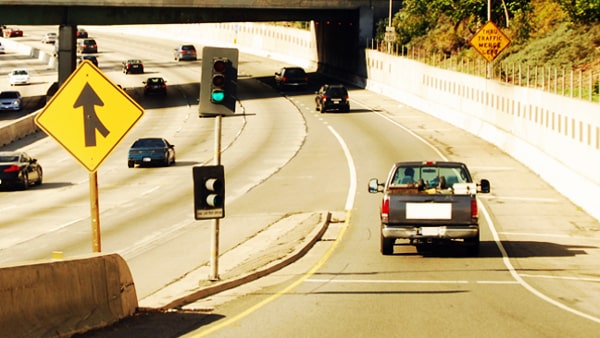
When using an acceleration lane to enter a multi-lane highway, what speed should you try to reach before merging?

When entering a freeway entrance that allows you to accelerate to merge, you should drive at:
  1. A About 10 mph slower than highway traffic
  2. B A speed matching the traffic on the highway
  3. C A complete stop at the end of the acceleration lane
  4. D A speed faster than every vehicle on the highway

Correct answer: B – A speed matching the traffic on the highway

Use the acceleration lane to bring your vehicle to approximately the speed of highway traffic without exceeding the posted limit. Find an adequate gap, signal, check surrounding traffic, and merge when safe. Drivers entering from a ramp must yield to traffic already traveling on the highway.

Source: Utah Driver Handbook 2025–2026 — § 9, “Entering a Multi-Lane Highway”, Utah Driver Handbook 2025–2026 — § 9, “Yielding Right-of-Way”

Question 6

Under Utah's implied-consent law, which statement about chemical alcohol testing is correct?

  1. A A breath sample may be tested to determine prohibited alcohol content
  2. B The driver has the right to select the test administered by the officer
  3. C Coffee or a cold shower immediately lowers the test result
  4. D Chemical testing is available only after a DUI conviction

Correct answer: A – A breath sample may be tested to determine prohibited alcohol content

The implied-consent law authorizes chemical testing of breath, blood, urine, or oral fluids to determine alcohol or drug content. The investigating peace officer determines which authorized test or tests will be administered; the driver does not select them. Chemical breath analysis is subject to state standards governing administration and interpretation.

Source: Utah Code § 41-6a-520(1) — Implied consent to chemical tests for alcohol or drug -- Number of tests -- Refusal -- Warning, report, Utah Code § 41-6a-515 — Standards for chemical breath or oral fluids analysis -- Evidence