Utah Drivers Ed Practice Test 8

4.9 out of 5 (113 votes)
80% Passing score
20 Questions
4 Mistakes allowed
This Utah driver’s ed practice test focuses on intersections, which is exactly where a lot of new drivers start realizing that “knowing the rule” and applying it in motion are not quite the same thing. Four-way stops, right-of-way decisions, left turns, cross traffic, cars arriving at nearly the same time — all of it can feel simple in the handbook and much less tidy when there are three impatient drivers waiting for someone else to make the first move. This eighth Utah DMV practice test gives you 20 multiple-choice questions built around those situations. Some questions use visual aids, which helps, because intersections are not learned especially well as abstract little rules floating around on a page. You need to see the lanes, the signs, the other vehicles, the order of movement. That is the point here: not just memorizing who goes first, but getting used to reading the whole setup before you answer. It also ties into Utah’s licensing process in a practical way. A learner permit is available at age 15, and the Utah written knowledge test has 50 questions. Drivers ages 15 through 18 must complete driver education, and teen applicants need 40 hours of practice driving, including 10 hours after sunset. A 15-year-old permit holder has to keep the permit for 6 months and until turning 16; ages 16 and 17 also have a 6-month permit holding period. So the written test is not some isolated hurdle. It is the front end of a longer process that eventually includes supervised driving, the skills test, and real decisions in real traffic. And Utah gives you plenty of traffic variety, which is maybe an obvious thing to say, but it matters. Salt Lake City intersections do not feel the same as quieter roads in Cache Valley, and winter visibility can make even familiar right-of-way rules feel a little less automatic. Provo, Ogden, the roads around the University of Utah — different pace, same need for clean judgment. Adult applicants should pay attention, too. At 18, first-time Utah applicants still need driver education. At 19 or older, driver education is optional, but without it, the learner permit must be held for 90 days. Use this Utah practice permit test until the intersection rules stop feeling like guesses. That is the real value here, honestly: passing the DMV written test, yes, but also building the calm, boring, necessary confidence that keeps you from hesitating at the wrong time.
FREE DMV Practice Test App
Study for your Utah permit test or driver’s license with the NextDoorDriving app. 700+ DMV questions and answers, 100% free!
Download on the App Store

Sample Utah Permit Test Questions

Question 1

The Utah Driver Handbook describes which alcohol-affected ability as using experience and knowledge to deal with a new problem?
If you drive after drinking, you should be aware that the first thing alcohol affects is:
  1. A Hearing
  2. B Alertness
  3. C Vision
  4. D Judgment

Correct answer: D – Judgment

The handbook identifies judgment as a brain-centered ability that uses stored experience and knowledge when a new problem arises. Alcohol reduces judgment along with vision, color distinction, and reaction time. Impairment begins with the first drink, making abstaining from driving after drinking the safest choice.

Source: Utah Driver Handbook — § 10.A, “Effects of Alcohol and Drugs”
Question 2

Which approach is appropriate when driving through a highway work zone?

  1. A Drive cautiously, obey signs and flaggers, and keep your attention on the roadway
  2. B Brake sharply immediately before reaching the workers
  3. C Slow down mainly to watch the construction activity
  4. D Honk to notify every worker that you are approaching

Correct answer: A – Drive cautiously, obey signs and flaggers, and keep your attention on the roadway

Work zones can contain narrowed lanes, rough pavement, equipment, and workers near traffic. Slow down, increase your following distance, and remain prepared to stop. Follow orange signs and any directions from a flagger, and keep your attention on safely navigating the work zone rather than watching the construction.

Source: Utah Driver Handbook — § 11.G, “Highway Work Zones”, Utah Driver Handbook — § 9.I, “Work Zone Signs”

Question 3

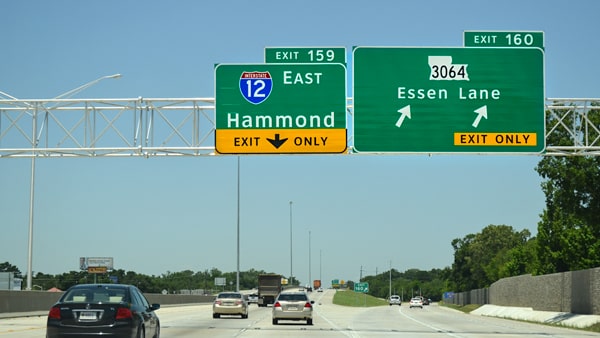
An overhead sign marks the lane beneath it “EXIT ONLY.” What must you do if you remain in that lane?

If you see this sign above your lane, you:
  1. A Continue through the interchange without exiting
  2. B Choose either the exit or the through roadway at the last moment
  3. C Stop beneath the sign and wait for an opening
  4. D Leave the freeway using the indicated exit

Correct answer: D – Leave the freeway using the indicated exit

An “EXIT ONLY” sign directs traffic in that lane onto the exit. Utah law requires drivers to obey properly placed traffic-control devices. If you want to continue on the freeway, move to a through lane before the exit, but change lanes only after determining that the movement is reasonably safe and giving the required signal.

Source: Utah Code § 41-6a-304(1) – Obeying devices -- Effect of improper position, illegibility, or absence -- Presumption of lawful placement and compliance with chapter., Utah Code § 41-6a-804(1) – Turning or changing lanes -- Safety -- Signals -- Stopping or sudden decrease in speed -- Signal flashing -- Where prohibited.

Question 4

A broken white or yellow line permits crossing when otherwise lawful. When must you remain in your lane?

  1. A When you have not reasonably determined that the movement can be completed safely
  2. B Whenever you intend to turn into a driveway
  3. C Whenever a vehicle ahead is disabled
  4. D Whenever you are driving on a one-way street

Correct answer: A – When you have not reasonably determined that the movement can be completed safely

A broken line may allow a lane change or pass, but it does not give an automatic right to cross. Under Utah lane rules, a driver must remain within one lane until the driver has reasonably determined that moving from it can be done safely. The driver must also provide the required signal before beginning the movement.

Source: Utah Code § 41-6a-710(1)(a) – Roadway divided into marked lanes -- Provisions -- Traffic-control devices., Utah Code § 41-6a-804(1) – Turning or changing lanes -- Safety -- Signals -- Stopping or sudden decrease in speed -- Signal flashing -- Where prohibited.

Question 5

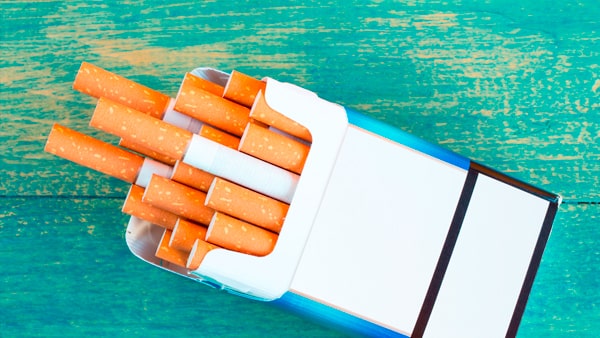
Lighting or handling smoking materials while operating a vehicle should be treated as:

Preparing to smoke and smoking while driving:
  1. A An activity that has no effect on driving
  2. B A dependable way to remain alert
  3. C A driving distraction
  4. D A substitute for taking a rest break

Correct answer: C – A driving distraction

A distraction is anything that takes your mind or body away from driving. Looking away from the roadway or removing a hand from the steering wheel can be dangerous. Lighting or handling smoking materials can create those attention shifts, so drivers should treat the activity as a distraction and pull over safely if they cannot give driving their full attention.

Source: Utah Driver Handbook — § 11, “Distractions and Driving Challenges”

Question 6

On a two-way Utah road, which maneuver may cross double solid yellow no-passing markings?

  1. A Passing a slower vehicle traveling in the same direction
  2. B Passing during daylight hours only
  3. C Crossing whenever no vehicle is immediately visible
  4. D Making a lawful left turn when the movement can be completed safely

Correct answer: D – Making a lawful left turn when the movement can be completed safely

Double solid yellow markings establish a no-passing zone for traffic moving in both directions. The law expressly allows a left turn across those markings. Before making the turn, the driver must determine that it can be completed with reasonable safety and must give the required signal.

Source: Utah Code § 41-6a-801(2)(c) – Turning -- Manner -- Traffic-control devices., Utah Code § 41-6a-804(1) – Turning or changing lanes -- Safety -- Signals -- Stopping or sudden decrease in speed -- Signal flashing -- Where prohibited.