


Utah Permit Test Simulator

4.5 out of 5 (1148 votes)
80% Passing score
50 Questions
10 Mistakes allowed
Utah’s learner permit test rewards people who actually study the state’s rules, not people who skim a few road signs the night before and hope the obvious answers carry them. The real first-time learner permit knowledge test is a 50-question, closed-book written exam based on the Utah Driver Handbook, and the working target is 40 correct answers — 80% — to pass. That gives you some breathing room, yes, but not enough to treat the exam casually. This Utah DMV practice test is meant to put you in the same general territory as the official written test: traffic signs, signals, lane use, speed limits, right-of-way decisions, safe following distance, impaired driving rules, insurance basics, and the driver-responsibility material Utah expects you to know. And because Utah driving is not all one kind of driving, the questions cannot just live in a flat, perfect-weather world. You need to be ready for city traffic in Provo or Salt Lake City, rural highways where speeds and judgment matter, and winter conditions that make canyons and mountain roads a little less forgiving than they look on a clear afternoon. Road signs are part of the main Utah knowledge test, not a separate Class D road-sign-only exam, so they should be studied as part of the full permit test mix. That matters more than people think. A sign question may look simple, then the next question may shift into right-of-way, DUI penalties, child restraints, or what you are supposed to do when road conditions turn bad. The practice test helps you move between those topics without getting thrown off by the change in pace. There is also a practical reason to prepare properly. Utah lets applicants take the written knowledge test twice in one day, but after three failures, a second fee is required. So, fine, you technically get retakes. Still, it is better to use those mistakes here, where immediate feedback can show you exactly what needs another pass through the handbook. The permit test is only one piece of licensing, of course. You may also need the vision test, required documents, the learner permit fee, driver education, supervised practice hours, and, for teen drivers, Utah’s graduated licensing rules. But the written test is the first real checkpoint. This Utah permit practice test gives you a cleaner, more useful way to get ready for it before you are sitting at the DLD trying to remember details you almost studied.
FREE DMV Practice Test App
Study for your Utah permit test or driver’s license with the NextDoorDriving app. 700+ DMV questions and answers, 100% free!
Download on the App Store

Sample Utah Permit Test Questions

Question 1

On a two-way road with double solid yellow centerlines, which maneuver may be lawful when the path is clear and no sign prohibits it?

  1. A Turning left into a private driveway
  2. B Traveling in either direction as on a one-way street
  3. C Using the area as a center travel lane
  4. D Crossing the lines to pass a slower vehicle

Correct answer: A – Turning left into a private driveway

Double solid yellow lines mark a two-direction no-passing zone. Utah law permits a driver to cross them when making a lawful left turn, including a turn into a private driveway. They may not be crossed merely to overtake a slower vehicle, and the turn must be signaled and made with reasonable safety.

Source: Utah Code § 41-6a-801(2)(c) — Turning -- Manner -- Traffic-control devices, Utah Code § 41-6a-708(2), (3)(b) — Signs and markings on roadway -- No-passing zones -- Exceptions, Utah Code § 41-6a-804(1)(a)-(c) — Turning or changing lanes -- Safety -- Signals -- Stopping or sudden decrease in speed -- Signal flashing -- Where prohibited
Question 2

When parking an automatic-transmission vehicle on any hill, which action applies whether facing uphill or downhill?

  1. A Place a rear tire against the curb
  2. B Shift into Park and set the parking brake
  3. C Keep the front wheels parallel to the road
  4. D Always turn the front wheels toward the curb

Correct answer: B – Shift into Park and set the parking brake

The Utah handbook directs drivers parking uphill or downhill to place an automatic-transmission vehicle in Park and set the parking brake. The direction in which the front wheels are turned depends on the slope and whether a curb is present. The parking brake is used in either situation.

Source: Utah Driver Handbook — § 8, “Hill Parking”

Question 3

Before changing lanes in Utah, which procedure is correct?

  1. A Signal and move after checking only the rearview mirror
  2. B Check mirrors, signal for at least two seconds, check the blind spot, and move when safe
  3. C Move quickly and activate the signal while crossing the lane line
  4. D Accelerate, signal, and change lanes without looking over your shoulder

Correct answer: B – Check mirrors, signal for at least two seconds, check the blind spot, and move when safe

A lane change must be made with reasonable safety, and the signal must operate continuously for at least two seconds before the movement begins. The handbook also directs drivers to check their mirrors and look over the appropriate shoulder for vehicles in the blind spot. Move only after confirming the lane is clear.

Source: Utah Code § 41-6a-804(1)(a)-(c) — Turning or changing lanes -- Safety -- Signals -- Stopping or sudden decrease in speed -- Signal flashing -- Where prohibited, Utah Driver Handbook — § 8, “Lane Changes”

Question 4

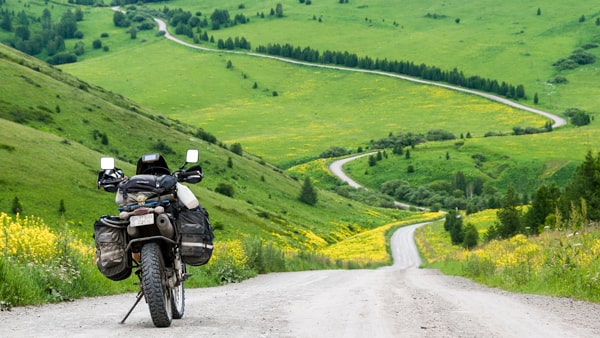
Which statement about motorcycles is accurate?

Which of these statements is true about motorcycles?
  1. A Their smaller profile can make them difficult to see
  2. B They are required to share a lane with passenger vehicles
  3. C Their turn signals always cancel automatically
  4. D They have priority over other vehicles at every intersection

Correct answer: A – Their smaller profile can make them difficult to see

Motorcycles are smaller than passenger vehicles and can be challenging to see in traffic. Drivers should check mirrors and blind spots carefully, especially before turning or changing lanes. Motorcyclists have the same general rights and responsibilities as other drivers and should be given an entire lane.

Source: Utah Driver Handbook — § 14, “Motorcycles”

Question 5

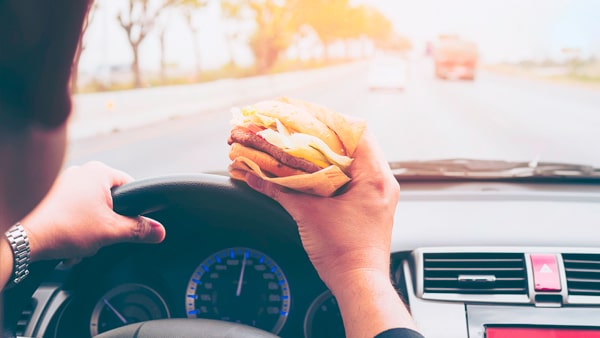
Eating while operating a vehicle can:

Drivers who eat and drink while driving:
  1. A Eliminate common driving errors
  2. B Make speed control easier
  3. C Improve the driver’s concentration
  4. D Take the driver’s attention or hands away from driving

Correct answer: D – Take the driver’s attention or hands away from driving

Eating is a driving distraction because it can take your attention or hands away from operating the vehicle. The handbook advises eating before departure and specifically tells drivers not to eat while driving. If something requires your attention, pull over safely rather than handling it while the vehicle is moving.

Source: Utah Driver Handbook — § 11, “Distractions and Driving Challenges”

Question 6

In Utah, when may a vehicle displaying disability plates or a qualifying placard use an accessible parking space?

  1. A Whenever the marked vehicle is being used
  2. B Only when the qualifying person is driving
  3. C Only while the vehicle is transporting the qualifying person
  4. D Whenever a member of the owner’s family has a disability

Correct answer: C – Only while the vehicle is transporting the qualifying person

An appropriately marked vehicle may use an accessible parking space only while transporting a qualifying person with a disability. The qualifying person may be the driver or a passenger. Misusing the space when that person is not being transported violates Utah Code § 41-1a-414(3)(a) and is a class C misdemeanor.

Source: Utah Code § 41-1a-414(3)(a)-(b) — Parking privileges for persons with disabilities