Vermont DMV Test Evaluation

4.4 out of 5 (94 votes)
80% Passing score
10 Questions
2 Mistakes allowed
Vermont’s learner permit test is not something you take at a DMV counter anymore, which is worth knowing before you get too far into your prep. The state now gives the learner permit knowledge test online through myDMV, and it is based on the Vermont Driver’s Manual. That means the official exam is going to pull from the usual driving-law territory—traffic signs, signals, right-of-way, safe driving habits, impaired driving rules, and the parts about sharing the road that people tend to skim because, honestly, they seem obvious until they are not. This Vermont DMV practice permit test is built as a quick readiness check, not a long, dramatic study session. You’ll get 10 randomly selected questions covering the same general material that appears on the real Vermont permit test, including road signs, road rules, traffic signals, pavement markings, work-zone situations, and basic driver responsibility. To pass this practice test, you need 8 correct answers out of 10. That lines up with Vermont’s 80% passing standard, although the real knowledge test is longer: 20 questions, four answer choices for each one, and at least 16 correct answers required. The value here is in the small mistakes. A missed sign question, a shaky right-of-way answer, a second-guess on a lane marking—fine, good, that is exactly what a practice test should expose. Better to catch it here than on the official online test, where you can miss only four questions before you are looking at a retake. And if you do fail the real knowledge test, Vermont requires you to wait at least 1 day before testing again, which is not disastrous, but still, nobody studies because they are hoping to schedule a second attempt. A few licensing details matter too. Vermont learner permit applicants must be at least 15 years old, and applicants who are 15, 16, or 17 generally need parent or guardian permission. Teen drivers have more steps later, including approved driver education, a 1-year permit holding period, 40 hours of supervised practice, and 10 hours at night. Adults skip those junior-driver requirements, but they still need to follow the learner permit process if they do not already have a valid license. Use this Vermont DMV permit practice test as your first honest check. Pass it, review whatever felt uncertain, and then keep going with a few more practice tests so the real Vermont DMV permit test feels familiar.

FREE DMV Practice Test App
Study for your Vermont permit test or driver’s license with the NextDoorDriving app. 700+ DMV questions and answers, 100% free!
Download on the App Store

Sample Vermont Permit Test Questions

Question 1

A large truck moves left before beginning a right turn. Which action should you avoid?

  1. A Driving between the truck and the right curb or shoulder
  2. B Waiting behind the truck until it finishes turning
  3. C Leaving additional following distance
  4. D Watching the truck’s turn signals

Correct answer: A – Driving between the truck and the right curb or shoulder

Large trucks often swing left before turning right because they need additional turning room. The driver may be unable to see a vehicle directly behind or beside the truck. Do not enter the space between a right-turning truck and the curb or shoulder; remain back and allow the truck to complete the maneuver.

Source: Vermont Driver’s Manual — Ch. 7, “Sharing the Road with Large Trucks—Wide Turn”

Question 2

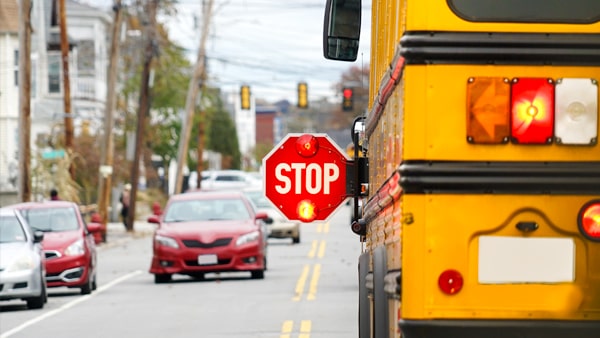
On an undivided Vermont roadway, what must you do when a stopped school bus is displaying flashing red lights?

What does it mean when a school bus is stopped and its red lights are flashing?
  1. A Pass if no children are visible
  2. B Stop and remain stopped while the red lights are operating
  3. C Pass when approaching the front of the bus
  4. D Proceed if the bus driver waves you around

Correct answer: B – Stop and remain stopped while the red lights are operating

Drivers meeting or overtaking the bus must stop immediately and remain stationary while its red lights flash. A bus driver cannot authorize motorists to disregard those lights; only a law enforcement officer may direct traffic around the bus. Statutory exceptions include a bus on a different, separately divided roadway and certain controlled-access loading zones where pedestrians cannot cross.

Source: 23 V.S.A. § 1075(a)–(b) – Passing school bus, Vermont School Bus Manual — “Passenger Loading and Unloading”

Question 3

An emergency vehicle displaying authorized warning lights is approaching from behind. What should you do?

  1. A Pull to the right of your traffic lane and stop until it passes
  2. B Accelerate until you find an exit
  3. C Remain in your lane and reduce speed slightly
  4. D Continue normally unless a siren is also sounding

Correct answer: A – Pull to the right of your traffic lane and stop until it passes

Vermont requires other vehicles to pull to the right of the traffic lane and stop completely when an authorized law enforcement or emergency vehicle approaches using the specified warning lights or siren. Remain stopped until the vehicle has passed. This rule concerns an approaching vehicle; different move-over requirements apply when passing a stationary emergency vehicle.

Source: 23 V.S.A. § 1050(a)–(b) – Operation on approach of law enforcement and emergency vehicles or when approaching stationary law enforcement and emergency vehicles or work zone

Question 4

Under Vermont law, how must a trailer be constructed and loaded before it is drawn on a highway?

  1. A It must be limited to 45 mph
  2. B It must not create a hazard to other highway users
  3. C It must always be covered by a special permit
  4. D It may sway if the towing vehicle stays below the speed limit

Correct answer: B – It must not create a hazard to other highway users

State law prohibits drawing a trailer or semitrailer unless the combination is constructed and loaded so that it creates no hazard to other highway users. Side-to-side movement that makes the combination hazardous would not satisfy this requirement. Drivers should ensure the trailer and its load remain stable and secure before continuing.

Source: 23 V.S.A. § 1454(a) – Securing loads

Question 5

If your vehicle begins skidding on a slippery road, which actions can help you regain control?

  1. A Ease your foot off the accelerator
  2. B Avoid sudden changes in speed or direction
  3. C Do not hit the brakes; steer where you want the vehicle to go
  4. D All of the above

Correct answer: D – All of the above

Ease off the accelerator and avoid abrupt changes that could further reduce traction. Once a skid begins, the Vermont manual instructs drivers not to hit the brakes and to steer in the direction they want the vehicle to travel. Several steering corrections may be necessary before the vehicle is fully under control.

Source: Vermont Driver’s Manual — Ch. 7, “Skidding—How to Avoid Skidding”, Vermont Driver’s Manual — Ch. 7, “Skidding—How to Control a Vehicle in a Skid”

Question 6

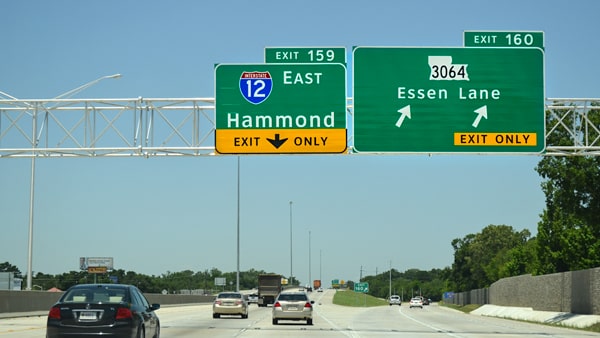
What does a yellow “EXIT ONLY” panel above an interstate lane tell you?

If you see this sign above your lane, you:
  1. A That lane cannot be used to reach the exit
  2. B The lane continues through and also serves the exit
  3. C The lane continues through the interchange
  4. D Traffic remaining in that lane must take the exit

Correct answer: D – Traffic remaining in that lane must take the exit

An “EXIT ONLY” panel identifies a lane that leaves the main roadway rather than continuing through the interchange. If you remain in that lane, you must follow it onto the exit ramp. Check traffic, signal, and move to a continuing lane when it is safe if you do not intend to exit.

Source: Vermont Driver’s Manual — Ch. 7, “Road Signs”, Vermont Driver’s Manual — Ch. 7, “Interstate Driving”