


Vermont Permit Practice Test 3

4.7 out of 5 (47 votes)
80% Passing score
20 Questions
4 Mistakes allowed
Vermont’s learner permit test is online now, which sounds convenient — and it is — but it also means you should know what you are walking into before you log in through myDMV and start clicking answers. This Vermont permit practice test gives you a focused way to do that, with 20 multiple-choice and true-or-false questions based on the kinds of rules, signs, and driving judgment Vermont expects new drivers to understand. The passing score is 80%, so you need 16 correct answers out of 20, just like on the real VT DMV written test. The test is free and untimed, and that matters more than people think. A timer can make you skim. Skimming is where you miss the little Vermont-specific details, like school-zone rules, safe following distance, right-of-way judgment, and the state’s restrictions on handheld mobile devices. New drivers under 18 also need to be especially careful with phone-use rules, since Vermont treats distraction seriously and does not leave much room for “I was only checking it for a second” excuses. This VT practice test for permit prep is also useful because the knowledge test is only one piece of the licensing process. Before a license is issued, Vermont requires a vision screening, and the Driver’s Manual lists 20/40 as the standard. Corrective lenses are allowed, but if you need them to meet the standard, that restriction can be placed on your license. If you do not meet the screening requirement, the DMV may send you to a licensed optometrist or ophthalmologist for a more complete evaluation, at your own expense. Not exactly thrilling information, no, but it is the kind of thing that is better to know before the appointment rather than during it. And yes, there is paperwork. Vermont applicants should be ready with proof of identity, date of birth, Social Security number or documentation showing ineligibility, Vermont residency, name-change documents if needed, and the required fee. The manual lists the learner permit exam and permit at $63 total as of July 1, 2024, though fees can change. Failed knowledge test? You wait at least one day before trying again. Use this Vermont practice test for permit review to get comfortable with the question style, tighten up the rules you half-remember, and spot weak areas before they become expensive or inconvenient.
FREE DMV Practice Test App
Study for your Vermont permit test or driver’s license with the NextDoorDriving app. 700+ DMV questions and answers, 100% free!
Download on the App Store

Sample Vermont Permit Test Questions

Question 1

Compared with passenger cars, large trucks generally:
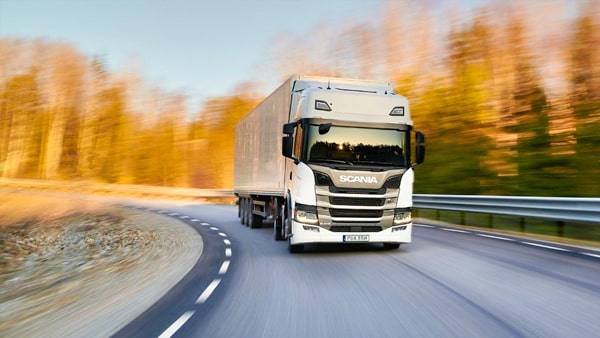
When sharing the road with a truck, it is important to remember that, in general, trucks:
  1. A Need more distance to stop
  2. B Can be passed more quickly on a downgrade
  3. C Need a smaller turning area
  4. D Can be passed more quickly on an incline

Correct answer: A – Need more distance to stop

The Vermont manual explains that larger trucks generally need more room to maneuver and take longer to stop. They also have larger blind spots and usually take longer for another driver to pass. Avoid moving back in front of a truck too soon after passing because the truck may have limited room to respond if you slow down.

Source: Vermont Driver’s Manual — Ch. 7, “Sharing the Road with Large Trucks”
Question 2

In Vermont, another road user is required to yield, but you are about to turn or move into another lane. What must you verify?

  1. A That traffic signs guarantee every driver will stop
  2. B That using your signal gives you the right-of-way
  3. C That your movement can be made with reasonable safety
  4. D That larger vehicles will yield before smaller ones

Correct answer: C – That your movement can be made with reasonable safety

A driver may not turn from a direct course or move right or left unless the movement can be made with reasonable safety. A signal communicates an intended movement but does not by itself make that movement safe. Check the roadway and proceed only after determining that the turn or lane movement can be completed safely.

Source: 23 V.S.A. § 1064(a)–(b), (e) – Signals required; general obligation to turn and move safely

Question 3

During which period is driving generally more dangerous because you cannot see as far ahead?

  1. A Morning daylight
  2. B Afternoon daylight
  3. C After dark
  4. D The risk is unchanged throughout the day

Correct answer: C – After dark

The driver’s manual states that nighttime driving is more dangerous because drivers cannot see as far ahead as they can during daylight. Reduced sight distance can leave less room to recognize a hazard and stop. Drivers should lower their speed as needed so they can stop within the area illuminated ahead.

Source: Vermont Driver’s Manual — Ch. 7, “Reduced Visibility—Night Driving”

Question 4

What is the proper way to begin passing another vehicle?

  1. A Wait for the other driver to signal that you should pass
  2. B Move abruptly into the passing lane
  3. C Signal, check that the passing path is clear, and pass when safe
  4. D Follow closely to shorten the passing distance

Correct answer: C – Signal, check that the passing path is clear, and pass when safe

Vermont requires a signal for a lane change, and the movement must be made with reasonable safety. When a pass uses the opposing lane, that lane must be visible and clear far enough ahead to complete the maneuver. The overtaken driver must give way to the right and not increase speed, but the passing driver remains responsible for passing at a safe distance and returning only when safely clear.

Source: 23 V.S.A. § 1033(a) – Passing motor vehicles and vulnerable users, 23 V.S.A. § 1035(a) – Limitations, 23 V.S.A. § 1064(b), (e) – Signals required; general obligation to turn and move safely

Question 5

Which driving situation triggers Vermont’s requirement to pull off the highway at the first opportunity?

  1. A Driving on a city street during rush hour
  2. B Traveling on a multilane interstate
  3. C Crossing a dry bridge at the posted speed
  4. D Driving slowly enough to impede traffic behind you

Correct answer: D – Driving slowly enough to impede traffic behind you

A motor vehicle that impedes other highway traffic must pull off at the first opportunity and allow traffic to pass before proceeding. Slow-moving vehicles must also remain as close to the right side of the highway as reasonably practicable. The manual notes that driving substantially slower than surrounding traffic can create a hazard when vehicles begin backing up behind you.

Source: 23 V.S.A. § 1082 – Slow-moving vehicles, Vermont Driver’s Manual — Ch. 7, “How to Drive Safely—Where Should I Start Driving?”

Question 6

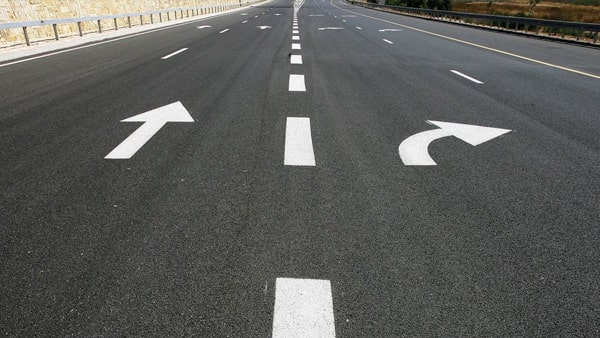
What does a broken white line separating two traffic lanes indicate?

A broken white center line on the roadway means:
  1. A Turning is prohibited
  2. B Every vehicle must reduce speed
  3. C The lanes carry opposing traffic
  4. D You may change lanes after determining that it is safe

Correct answer: D – You may change lanes after determining that it is safe

The Vermont manual explains that a broken white line separates lanes moving in the same direction. A driver may cross it to change lanes, unless another traffic-control device prohibits the movement. Before leaving the lane, the driver must determine that the movement can be made safely and use the appropriate lane-change signal.

Source: 23 V.S.A. § 1038(1), (4) – Driving on roadways laned for traffic, 23 V.S.A. § 1064(e) – Signals required; general obligation to turn and move safely, Vermont Driver’s Manual — Ch. 7, “Highway Markings”