


Vermont Permit Practice Test 5

4.8 out of 5 (44 votes)
80% Passing score
20 Questions
4 Mistakes allowed
This fifth VT permit practice test is built around a part of Vermont driving law that deserves more attention than it usually gets: DUI rules and impaired driving. It is not the flashiest section of the handbook, obviously, but it is one of the areas where the state expects permit applicants to know the details, not just the general idea. And yes, the general idea is simple. The details are where the test can start asking for real understanding. The practice test includes 20 questions and is updated for 2026, with a strong focus on Vermont DUI regulations, safe driving judgment, and the legal consequences of alcohol-related offenses. You will see material covering blood alcohol limits, including Vermont’s .02% BAC limit for drivers under 21, along with the stricter alcohol rules that apply to commercial drivers. Some questions deal with the law directly. Others lean into realistic driving situations — reaction time after drinking, poor judgment, penalties, and the practical damage an impaired-driving offense can do to your ability to stay licensed. For adult applicants, these rules sit inside a licensing process that is more direct than Vermont’s teen route, but still not something to treat casually. A driver age 18 or older with a valid learner permit does not have to complete teen driver education, hold the permit for a full year, or submit the 40-hour teen driving log. That part is simpler, fine. But before getting a Vermont driver’s license, an adult still needs to schedule and pass the road test, bring a qualified licensed and unimpaired accompanying driver, use a clean, legal, mechanically safe vehicle, show valid insurance and registration, and pay the required fees. It is a shorter path, not a paperwork-free path. This online drivers permit practice test gives you a practical way to review the DUI and licensing material before you are dealing with the real Vermont permit test. Work through it at your own pace, pause when the answers start blurring together, and pay attention to the explanations behind missed questions. A good practice permit test should do more than help you memorize answers. It should make the rules feel familiar enough that, on test day, the wording does not knock you off balance.
FREE DMV Practice Test App
Study for your Vermont permit test or driver’s license with the NextDoorDriving app. 700+ DMV questions and answers, 100% free!
Download on the App Store

Sample Vermont Permit Test Questions

Question 1

When using an acceleration lane to enter an interstate, what speed should you try to reach before merging?
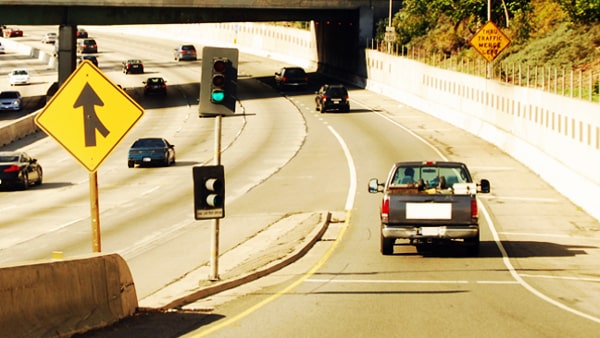
When entering a freeway entrance that allows you to accelerate to merge, you should drive at:
  1. A About 10 mph below the traffic flow
  2. B Approximately the speed of traffic, within lawful and safe limits
  3. C The posted maximum regardless of traffic conditions
  4. D A speed faster than every vehicle on the interstate

Correct answer: B – Approximately the speed of traffic, within lawful and safe limits

Use the acceleration lane to adjust toward the speed of vehicles in the lane you intend to enter, without exceeding a lawful or safe speed. Signal, check your mirrors and blind spot, and locate an adequate gap. Merge smoothly only after confirming that the lane movement can be made safely.

Source: 23 V.S.A. § 1038(1) — Driving on roadways laned for traffic, Vermont Driver’s Manual — “Interstate Driving”
Question 2

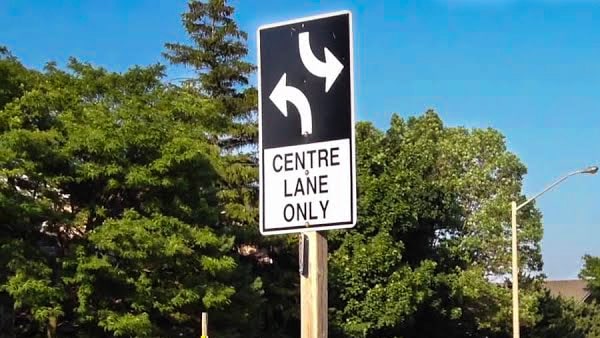
What is a continuous two-way center turn lane intended for?

From the center lane, what maneuvers can you perform?
  1. A Preparing for and making left turns
  2. B Traveling straight for an extended distance
  3. C Passing slower vehicles
  4. D Parking temporarily

Correct answer: A – Preparing for and making left turns

A continuous two-way left-turn lane is reserved for drivers preparing to turn left from either direction. Move into it only a short distance before the turn and proceed when the way is clear. It is not intended as a regular travel lane, passing lane, or parking area.

Source: Vermont Driver’s Manual — “Highway Markings”, 23 V.S.A. § 1038(3) — Driving on roadways laned for traffic

Question 3

On a Vermont highway, when may you sound your vehicle’s horn?

  1. A Whenever you are passing a bicyclist
  2. B When an audible warning is reasonably necessary for safe operation
  3. C When another driver is traveling below the speed limit
  4. D Whenever another road user annoys you

Correct answer: B – When an audible warning is reasonably necessary for safe operation

A horn should be sounded when an audible warning is reasonably necessary for the vehicle’s safe operation. State law prohibits otherwise using the horn while on a highway. It should not be used merely to express impatience or urge another road user to move faster.

Source: 23 V.S.A. § 1131 – Warning Signal

Question 4

A train is plainly visible and close enough to present an immediate hazard. What must you do?

  1. A Slow down and cross before the train arrives
  2. B Stop 15 to 50 feet from the nearest rail and wait until you can proceed safely
  3. C Cross if the location has no gate or flashing lights
  4. D Turn around and find a different crossing

Correct answer: B – Stop 15 to 50 feet from the nearest rail and wait until you can proceed safely

Vermont law requires a driver to stop between 15 and 50 feet from the nearest rail when a train is plainly visible and in hazardous proximity. The driver may not proceed until the crossing can be made safely. A driver also may not travel through, around, or under a gate while it is closed or moving.

Source: 23 V.S.A. § 1071(a)(4), (b) – Railroad Grade Crossings

Question 5

What does a driver signal by extending the left hand and arm downward?

  1. A A left turn
  2. B A right turn
  3. C A stop or decrease in speed
  4. D Movement from a parked position

Correct answer: C – A stop or decrease in speed

A hand signal given from the left side with the arm extended downward indicates a stop or decrease in speed. A horizontal arm signals a left turn, while an upward arm signals a right turn. Drivers should recognize these signals even when a vehicle’s electric signals are not being used.

Source: 23 V.S.A. § 1065(a) – Hand Signals

Question 6

Where should your vehicle be positioned as you approach and make a right turn?

  1. A Near the roadway’s centerline
  2. B Close to the left edge of the roadway
  3. C As close as practicable to the right curb or roadway edge
  4. D Beyond the center of the intersection before turning

Correct answer: C – As close as practicable to the right curb or roadway edge

Both the approach and the right turn must be made as close as practicable to the right-hand curb or edge of the roadway. The driver’s manual also instructs drivers not to swing left before beginning a right turn. Proper positioning helps the vehicle follow the intended turning path.

Source: 23 V.S.A. § 1061(1) – Turning at Intersections, Vermont Driver’s Manual — Ch. 7, “Right Turns”