Virginia DMV Practice Test 3

4.8 out of 5 (644 votes)
80% Passing score
20 Questions
4 Mistakes allowed
Virginia gives new drivers a fairly structured path into licensing, and the learner’s permit is the first real checkpoint. You can apply at 15 years and 6 months, but before DMV issues that permit, you still have to pass the vision screening and the two-part knowledge exam. That is where this Virginia permit practice test earns its keep. It gives you a way to work through DMV-style questions before the official test, without turning every missed answer into a small personal crisis. This practice test includes 20 questions, with 16 correct answers needed to pass. The format is meant to feel familiar: road rules, safe driving judgment, traffic signs, passenger safety, and Virginia-specific laws, including the state’s strict rules on cell phone and wireless device use while driving. Some of it feels straightforward when you read it in the manual. Then, well, the test version asks it in a tighter, more formal way, and that is usually where practice starts to matter. For drivers under 18, the permit test is only one piece of a longer process. Virginia requires a state-approved driver education program, and the full program is not a quick little formality. It includes classroom instruction, behind-the-wheel driving sessions, observation sessions, and a final road skills examination. Before a teen can move from learner’s permit to license, they must hold the permit for at least 9 months and complete 45 hours of supervised driving practice, with 15 of those hours after sunset. A parent or guardian has to certify those hours, too, which sounds simple enough until everyone is trying to remember which drives counted and which ones were just errands. The earliest a teen can receive a Virginia driver’s license is 16 years and 3 months. Even then, drivers under 18 still face curfew rules, passenger limits, and stricter device restrictions. So this VA DMV practice test is not just about clearing one exam and forgetting the material afterward. It is a practical rehearsal for the rules that follow you into the car, onto the road, and through the first stretch of licensed driving in Virginia.
FREE DMV Practice Test App
Study for your Virginia permit test or driver’s license with the NextDoorDriving app. 700+ DMV questions and answers, 100% free!
Download on the App Store

Sample Virginia Permit Test Questions

Question 1

Which statement about a breath-alcohol test is accurate?

  1. A It can estimate the probable alcoholic content of a person’s blood
  2. B It lowers BAC by removing alcohol through the breath
  3. C Coffee immediately before the test prevents an alcohol reading
  4. D Physical fitness prevents alcohol from appearing in the result

Correct answer: A – It can estimate the probable alcoholic content of a person’s blood

Virginia law authorizes preliminary breath analysis to determine the probable alcoholic content of a person’s blood. Following a qualifying DUI arrest, a chemical breath test may be required, with a blood test used when breath testing is unavailable or physically impossible. Coffee, exercise, or a cold shower does not remove alcohol from the body; only time decreases intoxication.

Source: Va. Code § 18.2-267 – Preliminary analysis of breath to determine alcoholic content of blood ([law.lis.virginia.gov](https://law.lis.virginia.gov/vacode/title18.2/chapter7/section18.2-267/?utm_source=openai)), Va. Code § 18.2-268.2 – Implied consent to post-arrest testing to determine drug or alcohol content of blood ([law.lis.virginia.gov](https://law.lis.virginia.gov/vacode/title18.2/chapter7/section18.2-268.2/?utm_source=openai)), Virginia Driver’s Manual — § 3, “Drunk and Drugged Driving” ([dmv.virginia.gov](https://www.dmv.virginia.gov/sites/default/files/forms/dmv39.pdf))
Question 2

You are several lanes left of a right-side freeway exit. How should you move toward the exit?

  1. A Cross every lane in one continuous movement
  2. B Accelerate past surrounding traffic before crossing
  3. C Brake sharply before moving across each lane
  4. D Make separate lane changes, checking and signaling before each move

Correct answer: D – Make separate lane changes, checking and signaling before each move

Before changing lanes, check the side and rearview mirrors for traffic and activate the proper turn signal. Just before moving, glance over your shoulder to check the blind spot. Repeat these steps for each lane change while working toward the exit, and continue only when the adjacent lane is clear.

Source: Virginia Driver’s Manual — § 3, “Changing Lanes” ([dmv.virginia.gov](https://www.dmv.virginia.gov/sites/default/files/forms/dmv39.pdf))

Question 3

Centerline yellow pavement markings generally separate:

  1. A Traffic traveling in opposite directions
  2. B Lanes traveling in the same direction
  3. C A travel lane from the right shoulder
  4. D A parking lane from a bicycle lane

Correct answer: A – Traffic traveling in opposite directions

Yellow centerline markings separate traffic moving in opposite directions. For example, double solid yellow lines mark the center of a two-way road and generally prohibit passing in either direction. Whether a driver may cross a yellow marking depends on whether the line is broken or solid and on the intended maneuver.

Source: Virginia Driver’s Manual — § 2, “Pavement Markings” ([dmv.virginia.gov](https://www.dmv.virginia.gov/sites/default/files/forms/dmv39.pdf))

Question 4

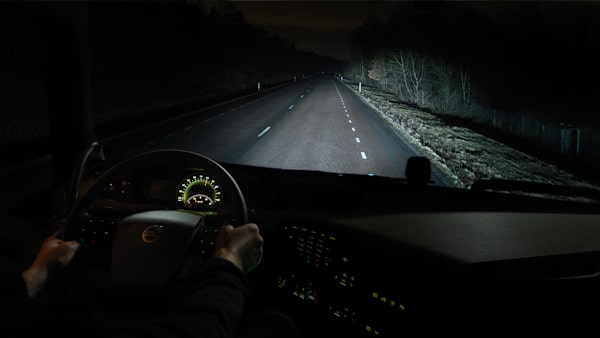
At night, which road user may be especially difficult to notice and requires extra attention?

At night, it is hardest to see:
  1. A Reflective road signs
  2. B Pedestrians
  3. C Vehicles displaying headlights
  4. D Lighted streetlamps

Correct answer: B – Pedestrians

Reduced light makes hazards and unexpected movement more difficult to identify. Drivers must remain alert for pedestrians and bicyclists, who may not be as conspicuous as lighted vehicles or reflective signs. Use the appropriate headlights, scan the roadway and its edges, and drive at a speed that allows you to respond within the visible area ahead.

Source: Virginia Driver’s Manual — § 3, “Visibility” ([dmv.virginia.gov](https://www.dmv.virginia.gov/sites/default/files/forms/dmv39.pdf)), Virginia Driver’s Manual — § 3, “Night Driving” ([dmv.virginia.gov](https://www.dmv.virginia.gov/sites/default/files/forms/dmv39.pdf))

Question 5

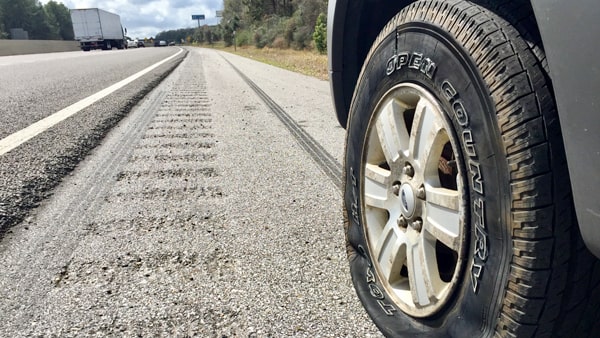
A tire suddenly goes flat on a highway. If you can move the vehicle safely, where should you stop?

Where should you park when you need help after your tire suddenly deflates while driving on a highway?
  1. A In the right travel lane
  2. B On the shoulder, outside the travel lanes
  3. C Anywhere the vehicle is visible from 200 feet ahead
  4. D Anywhere it is visible from 300 feet behind

Correct answer: B – On the shoulder, outside the travel lanes

A flat tire can create a mechanical breakdown. Virginia law directs a capable driver to move a movable vehicle from the roadway and onto the shoulder as soon as possible when it is safe and no injury or death has occurred. Turn on the emergency flashers if they are equipped and working, and arrange to remove the vehicle without unnecessary delay.

Source: Va. Code § 46.2-888 – Stopping on highways; removing motor vehicle from roadway ([law.lis.virginia.gov](https://law.lis.virginia.gov/vacodefull/title46.2/chapter8/?utm_source=openai))

Question 6

Even with a green signal, when should you wait before entering an intersection?

  1. A When traffic ahead leaves too little space to clear the intersection
  2. B Whenever a vehicle is visible on an intersecting street
  3. C Only when a police officer is present
  4. D Whenever you intend to turn right

Correct answer: A – When traffic ahead leaves too little space to clear the intersection

In Virginia, a green signal permits movement only when the way is clear. If stopped traffic ahead prevents your vehicle from clearing the intersection, remain behind the intersection until adequate space opens. Entering without enough space could leave your vehicle blocking traffic moving through the intersecting roadway.

Source: Virginia Driver’s Manual — § 2, “Traffic Signals” ([dmv.virginia.gov](https://www.dmv.virginia.gov/sites/default/files/forms/dmv39.pdf))