Virginia Road Signs Test 2

4.8 out of 5 (315 votes)
80% Passing score
20 Questions
4 Mistakes allowed
Virginia road signs are not a casual part of the DMV knowledge exam. They come first, they are scored separately, and they have a perfect-score requirement. The actual Virginia learner’s permit knowledge test begins with 10 road sign questions, and you must answer all 10 correctly before you are allowed to continue to the general knowledge section. That detail matters more than it sounds like it should. A single missed sign question can end the attempt before you ever get to the rest of the test. This Virginia road signs practice test gives you a more focused way to prepare for that first section. Instead of treating signs as background material, it puts them where they belong: front and center. The test includes 20 multiple-choice questions, so you get more practice than the real road sign section provides, with questions built around sign recognition, sign colors, shapes, meanings, and the kind of quick judgment drivers are expected to make on actual Virginia roads. The real DMV knowledge exam is based on the Virginia Driver’s Manual. After the 10-question road sign portion, the second part has 30 general knowledge questions covering traffic laws, safe driving practices, signals, pavement markings, alcohol and impaired-driving rules, sharing the road, and basic driver responsibility. To pass that second part, you need at least 24 correct answers out of 30. So the full exam may look like 40 questions overall, but it is not scored as one blended test. The signs section has its own standard, and it is stricter. This VA DMV road signs test is useful because it keeps your attention on the visual language of the road. Red signs usually tell you what is prohibited or required. Yellow signs warn you about conditions ahead. Green signs guide you toward routes, exits, and destinations. That sounds simple on paper, obviously, but in a testing situation the difference between “I recognize that” and “I know exactly what it means” starts to matter. You can take this DMV signs test on a phone, tablet, or computer, which makes it easy to work through a quick review or sit down for a more serious study session. For the best preparation, use it with the VA Driver’s Manual, road sign charts, flashcards, and other Virginia driving test practice materials. The point is to make sign meanings feel automatic before test day, not vaguely familiar.
FREE DMV Practice Test App
Study for your Virginia permit test or driver’s license with the NextDoorDriving app. 700+ DMV questions and answers, 100% free!
Download on the App Store

Sample Virginia Permit Test Questions

Question 1

A SHOULDER DROP-OFF warning sign alerts you to which hazard if your wheels leave the pavement?
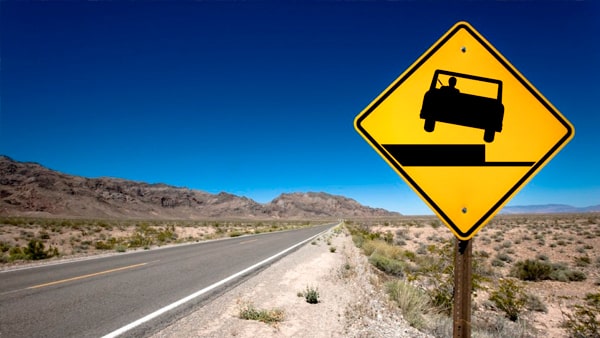
What should you be most concerned about when you see this sign?
  1. A Your headlights may become misaligned
  2. B Your tires will immediately become damaged
  3. C Your vehicle will automatically hydroplane
  4. D You could lose control by steering sharply back onto the road

Correct answer: D – You could lose control by steering sharply back onto the road

The sign warns of an elevation difference between the travel lane and the adjoining shoulder. Virginia’s manual explains that sharp over-correction can cause the rear wheels to slide and may result in loss of control. If you leave the roadway, gradually reduce speed, look where you want to go, and slowly steer back onto the pavement.

Source: Virginia Work Area Protection Manual — § 6H.26, “Shoulder Signs and Plaque”, Virginia Driver’s Manual — § 3, “Over-Correcting”
Question 2

What must you do when approaching a red-and-white triangular YIELD sign?

  1. A Stop only when an emergency vehicle approaches
  2. B Continue at the same speed after looking both ways
  3. C Always stop, even when no traffic is present
  4. D Slow down, yield, and stop if necessary

Correct answer: D – Slow down, yield, and stop if necessary

A YIELD sign requires you to reduce speed as you approach and be prepared to stop. Allow vehicles, pedestrians, and bicyclists with the right-of-way to pass safely before you proceed. If no conflicting traffic is present and stopping is unnecessary, you may continue cautiously.

Source: Va. Code § 46.2-821 — Vehicles Before Entering Certain Highways Shall Stop or Yield Right-of-Way, Virginia Driver’s Manual — § 2, “Sign Shapes—Triangle (Yield)”

Question 3

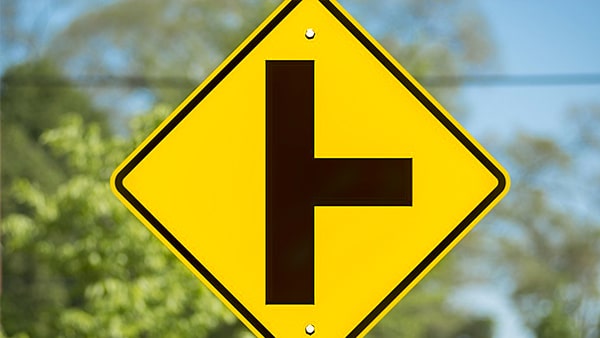
A yellow diamond sign showing a short road joining from the right means:

This sign means:
  1. A All traffic must turn right
  2. B A side road enters from the right
  3. C All traffic must continue straight
  4. D Right turns are prohibited

Correct answer: B – A side road enters from the right

This is an intersection warning sign showing that a side road joins the roadway from the right. Be alert for vehicles that may enter or leave the highway near that location. Because it is a warning sign, it does not require you to turn or prohibit a right turn.

Source: Virginia Driver’s Manual — § 2, “Intersections”

Question 4

Which sign shape generally warns of special conditions or hazards ahead?

  1. A Diamond
  2. B Interstate shield
  3. C Pentagon
  4. D Vertical rectangle

Correct answer: A – Diamond

Diamond-shaped signs warn drivers about special conditions or hazards ahead. They may identify curves, merging traffic, slippery pavement, intersections, or similar conditions. Slow down as appropriate, watch for additional signs or markings, and be prepared to stop.

Source: Virginia Driver’s Manual — § 2, “Sign Shapes—Diamond (Warning)”

Question 5

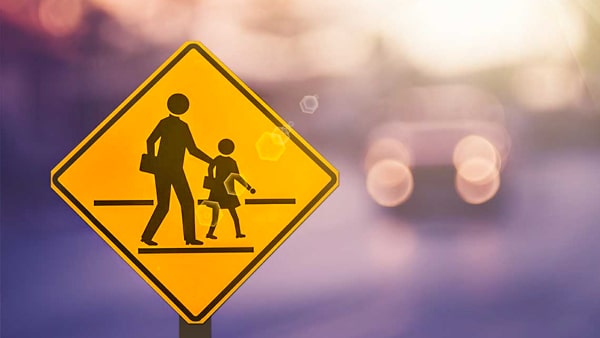
What action does a Pedestrian Crossing warning sign call for?

This sign means:
  1. A Watch only for children playing beside the road
  2. B Watch for people entering a crosswalk or crossing your path
  3. C Require pedestrians to remain on the sidewalk
  4. D Come to a complete stop at the sign

Correct answer: B – Watch for people entering a crosswalk or crossing your path

A Pedestrian Crossing sign warns that people may walk, bicycle, or use another device across your path. Slow down and be prepared to stop. A separate sign containing an arrow may identify the actual location of the crosswalk.

Source: Virginia Driver’s Manual — § 2, “Pedestrian Crossing”

Question 6

On a two-way Virginia highway, when may you drive on the left half of the roadway?

On a two-way highway, you are allowed to drive on the left half of the roadway when:
  1. A Whenever there are double solid yellow lines
  2. B Whenever a solid line is beside your lane
  3. C When passing is permitted and can be completed safely
  4. D Whenever you are approaching a curve

Correct answer: C – When passing is permitted and can be completed safely

Drivers generally must remain on the right half of a two-way highway. The left side may be used to overtake another vehicle when passing is permitted and sufficient clear roadway is visible. The driver must be able to complete the pass without interfering with approaching traffic or entering a prohibited passing area.

Source: Va. Code § 46.2-802 — Drive on Right Side of Highways; Penalty, Va. Code § 46.2-843 — Limitations on Overtaking and Passing